REVIEW · UFFIZI GALLERY
Florence: Uffizi Gallery Highlights Tour
Book on GetYourGuide →Operated by TUI Musement · Bookable on GetYourGuide
Uffizi can feel like art overload. This Florence Uffizi Gallery Highlights Tour is built to keep you moving with purpose, using express-entry tickets and a tight focus on the works most people come for.
I especially like the way the tour connects what you see to the Medici family and Renaissance context, so the galleries don’t just blur together. One real consideration: the meeting point can be tricky, so don’t assume the map pin is perfect—go for the Uffizi courtyard spot by door 3 and the TUI sign.
In This Review
- Key highlights you’ll feel right away
- Finding your way to the Uffizi courtyard before you even enter
- Entering the Uffizi with express access and a small-group plan
- A 90-minute itinerary that actually chooses what matters
- What you’ll notice when the guide explains the Medici story
- The Vasari building: when architecture becomes part of the experience
- Pacing and group dynamics: what up to 9 people really changes
- Price and value: is $79 worth it in a “pay admission too” world?
- Who this tour suits best (and who should consider other options)
- A quick note on guide quality and the one thing you can control
- Practical tips to get the most from your 90 minutes
- Should you book the Florence Uffizi Gallery Highlights Tour?
- FAQ
- How long is the Uffizi Gallery Highlights Tour?
- What group size should I expect?
- Is the tour in English?
- Where do I meet the guide?
- Do I need to provide my name for Uffizi entry?
- Is this tour suitable for wheelchair users?
Key highlights you’ll feel right away
- Small group (up to 9) keeps the pace human and the questions realistic
- Express entry / skip-the-ticket line helps when Uffizi crowds are intense
- A guide who ties art to story, including Medici collecting and the wider Renaissance world
- Curated 90 minutes aimed at big names like Leonardo, Raphael, Michelangelo, Caravaggio, Botticelli, and Titian
- Headsets when needed (for groups over 5) so you don’t strain to hear in busy rooms
Finding your way to the Uffizi courtyard before you even enter
The tour starts outside, at Via Lambertesca, 2. Plan to arrive early because you’ll meet your guide at the Uffizi courtyard, not at the main entrance, and you’ll be looking for a TUI destination insider holding a TUI sign or flag.
Here’s the practical trick I’d follow: use the meeting instructions exactly and don’t rely on Google Maps alone. One common snag is that the app may steer you toward the main entrance area, while the correct meet-up is opposite it, in front of door number 3. If you get turned around at the start, it can steal time you wanted to spend inside.
Also note the timing style here: the tour is only 1.5 hours. That makes the first 10–15 minutes matter. When everything runs smoothly at the meeting point, you get straight into the art while your attention is still fresh.
Other museum experiences in Uffizi Gallery


Entering the Uffizi with express access and a small-group plan
The big appeal of an Uffizi highlights tour is that it respects reality. The Uffizi has more than 2 million visitors per year and over 2,200 works on display, so walking in solo and trying to “see everything” is a fast route to exhaustion.
This format fixes that with two tools:
- Skip-the-ticket line so you’re not stuck waiting while the crowd energy builds
- A small group limited to 9, which makes it easier for the guide to keep control of the pace
If your group is over 5, you’ll get headsets, which is a thoughtful add-on in a museum where sound gets swallowed by crowds. And because you’re not dealing with a busload-sized group, you’ll typically have an easier time catching your guide’s explanations before you lose your place in front of the next painting or sculpture.
A 90-minute itinerary that actually chooses what matters
You get a guided tour for about 1.5 hours inside the Uffizi. Since there’s no time to cover everything, the tour is designed around the museum’s most “unmissable” names—then uses context to make those masterpieces feel connected instead of random.
In a highlights visit, the goal isn’t to master art history. It’s to walk out with a mental map: who the artists were, what the works were trying to say, and why the Medici mattered so much.
Expect your guide to focus on major Renaissance and Baroque-era figures, including:
- Leonardo da Vinci
- Giotto
- Raphael
- Michelangelo
- Caravaggio
- Sandro Botticelli
- Titian
If you only have a short window in Florence, I’d call this a smart trade. You’re not buying the fantasy of “seeing it all.” You’re buying the reality of seeing the most influential works with explanations that help you recognize themes and techniques.
What you’ll notice when the guide explains the Medici story
One of the strongest parts of this tour is the emphasis on context—especially how the collection relates to the Medici family and Renaissance Italy.
When you walk the Uffizi without help, you often end up doing two things: reading labels and trying to guess what matters. With this style of tour, you get a cleaner storyline. The guide frames works in terms of:
- why the Medicis collected them
- how they fit into Renaissance interests
- how the images reflect ideas that traveled across Europe
That context can change how you look. A painting isn’t just a pretty scene. It becomes a cultural signal—about power, taste, religion, mythology, and prestige.
This is also where the tour’s unique “small details, big meaning” approach shows up. For example, Botticelli’s The Birth of Venus is often discussed in terms of mythology and symbolism, and the tour shares a perspective tied to the Greek goddess legend of love (Aphrodite) rather than the Roman goddess of love (Venus). Even if you already know the painting’s subject, these nuances help your brain keep the artwork in focus.
The Vasari building: when architecture becomes part of the experience
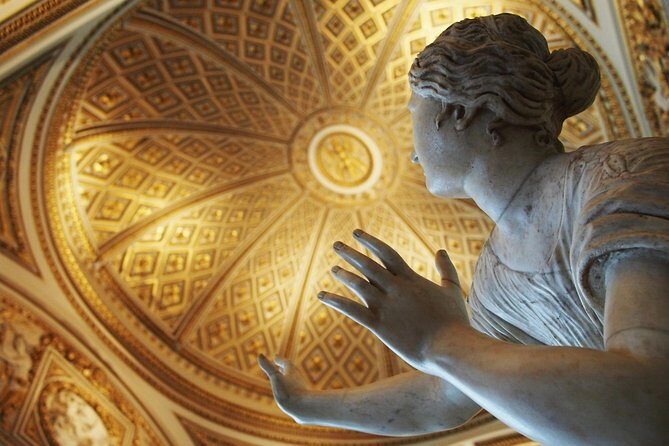
The Uffizi isn’t just a container for art; it’s also an architectural centerpiece. The collection sits inside a splendid building designed by Giorgio Vasari, and that matters because the museum layout shapes how you experience the art.
In practice, this means you won’t just be moving from one framed masterpiece to another. You’ll also be aware that you’re in a space built for showcasing—so the experience is part museum visit, part Renaissance “stage.”
This becomes especially valuable in a short tour. When time is limited, understanding the building and how you’re being guided through rooms gives you a framework. Instead of feeling like you’re rushing through halls, it’s easier to feel like you’re following a route with meaning.


Pacing and group dynamics: what up to 9 people really changes
A group capped at 9 participants isn’t just a comfort perk. It affects how well you can learn.
In a large group, explanations become general and you end up craning your neck to hear over other people. Here, the guide can keep things tighter and more focused because there are fewer competing questions and fewer people constantly blocking each other’s line of sight.
It also helps your attention. You can actually stand in front of a work long enough to notice details like composition, gesture, and symbolic elements—then hear the explanation before you’re moved along.
If you tend to get overwhelmed in big museums, this is the kind of structure that helps you keep control of the experience.
Price and value: is $79 worth it in a “pay admission too” world?
The tour price is $79 per person, and that’s where you’ll want to do one quick mental calculation.
You still pay the Uffizi admission fee separately:
- €29 for adults 25+
- €2 for EU citizens aged 18–25
- under 18 is complimentary
So the $79 isn’t covering the museum’s entry; it’s mainly paying for the guided experience plus services that make it workable—like the ticket to the Uffizi and the tour support.
Here’s how I’d judge the value:
- If you’re short on time and want to see the key works with context, paying for a guided highlights route can be efficient.
- If you’re comfortable wandering and using labels at your own pace, you might prefer a self-guided visit and save money.
- If you dislike crowds, the small-group pacing plus express entry can feel like the difference between a headache day and a good Florence day.
For many first-timers, the best value is when you treat this as an “entry point.” It gives you enough understanding to enjoy the rest of the Uffizi later—if you return—or at least enough to leave with a coherent sense of what Renaissance art is saying.
Who this tour suits best (and who should consider other options)
This works best if:
- you have limited time in Florence (this is built for a shorter visit)
- you want to see famous masterpieces without trying to cover the entire museum
- you prefer learning through story + context, not just reading museum labels
- you like asking questions in a setting where a guide can actually respond
It may not fit you as well if:
- you need wheelchair access (this activity is not suitable for wheelchair users)
- you want a free-form wandering day with long stopovers in every room
- you’re deeply focused on one niche (like only Leonardo or only specific sculpture groups), since this route is purposely highlights-based
A quick note on guide quality and the one thing you can control
Guide quality can be the whole experience. The included format puts you in front of the art with an expert local guide, and that’s the value engine.
You might hear guides like Francesca in the tour’s material, with an approach focused on connecting artworks to the Medicis and Renaissance Italy. And in at least one account tied to an operator tour, Camilla is described as particularly good at passing on passion for art and for Florence itself.
At the same time, the start matters. If you arrive late or end up at the main entrance by mistake, you could feel like the day starts off wrong. So your best move is simple: arrive a bit early and use the stated meeting location details instead of improvising.
Practical tips to get the most from your 90 minutes
You’ll get the best outcome if you treat the highlights tour as a guided “greatest hits with meaning.” To do that:
- keep your expectations realistic: you’re not seeing everything
- arrive on time so you don’t lose minutes before the first rooms
- pick one or two works you especially want to connect with ahead of time, then listen for what your guide points out (technique, symbolism, and why it mattered)
Also, remember there are museum identity rules. The Uffizi requires the name and surname of each visitor and the booking name can’t be changed. Bring an identity document that matches the name used to book. It’s one of those annoyingly strict details that can stop entry if you skip it.
Should you book the Florence Uffizi Gallery Highlights Tour?
Yes—if you want a time-smart way to experience the Uffizi’s top Renaissance and sculpture masterpieces with context that makes the art easier to remember. The small group size, express entry approach, and guide-led focus on works by Leonardo, Raphael, Michelangelo, Caravaggio, Botticelli, and Titian make this a strong first-timer option.
I would not book it if you’re hoping for a slow, wandering museum day or if you need wheelchair access. And if you’re the type who hates logistics, double-check the meeting spot at door number 3 in the courtyard area, because that’s the one part that can throw off the start.
If you’re traveling with limited time in Florence, this is exactly the kind of tour that turns a crowded museum into a manageable, meaningful visit.
FAQ
How long is the Uffizi Gallery Highlights Tour?
The tour lasts 1.5 hours.
What group size should I expect?
It’s a small group, limited to up to 9 participants.
Is the tour in English?
Yes, the live guide provides the tour in English.
Where do I meet the guide?
Meet your TUI destination insider 10 minutes before departure in the Uffizi courtyard in front of door number 3, with a TUI sign or flag. Do not go to the main entrance of the Uffizi; the meeting point is on the opposite end.
Do I need to provide my name for Uffizi entry?
Yes. The Uffizi requires the name and surname of each visitor, and you must present an identity document matching the booking name.
Is this tour suitable for wheelchair users?
No, it is not suitable for wheelchair users.