REVIEW · UFFIZI GALLERY
The Uffizi Gallery Florence Small group Guided tour
Book on GetYourGuide →Operated by italypasstours srl · Bookable on GetYourGuide
The Uffizi crowd can be a lot. This 90-minute small-group visit pairs skip-the-line tickets with an expert guide and a headset so you actually catch the story, even when the rooms get packed. The price is clear and the focus is tight: masterworks, not wandering for hours.
I especially like how the tour is built for first-time visitors who want the big names—Botticelli, Leonardo da Vinci, Michelangelo, Raphael, and Caravaggio—without losing the thread. You also get an audio device, which makes listening realistic when your group is stretched across a room.
One thing to consider: despite the skip-the-line promise, delays can happen (strikes and crowd-control issues are real in Florence). Also, this is a highlights-focused route, so you won’t see every corner of the museum.
In This Review
- Key things to know before you go
- Uffizi Unlocked: the 90-minute mindset that makes it work
- Meeting by the Giotto statue: where to start and how the pacing feels
- Skip-the-line tickets: what they actually mean at the Uffizi
- Inside the Uffizi: Medici power, Vasari corridors, and how the art is framed
- The highlights route: Birth of Venus and Medusa without the guesswork
- When the tour feels “just long enough” (and when it can feel short)
- What to expect from your guide and the audio device
- Price and value: $70 for a focused hit of Florence’s art power
- What to bring (and what to avoid) for a smoother visit
- First Sundays in Florence: free entry sounds great, but plan smart
- Should you book this Uffizi Gallery Florence small-group guided tour?
- FAQ
- How long is the Uffizi Gallery small-group guided tour?
- Is the entry really skip-the-line?
- What’s the group size?
- Where do I meet and where do I end?
- What languages are available?
- Does it include an audio device?
- Is the tour wheelchair accessible?
- What should I wear or bring?
- Are there any restrictions on food, drinks, or certain items?
- Is entrance free on the first Sunday of the month?
Key things to know before you go
Small group (up to 9) means you can hear the guide and ask questions
Pre-booked entrance tickets reduce the worst lines at the Uffizi
Headset/audio device helps you follow the talk even when the group is split
A highlights route keeps you moving through the most famous works
Wheelchair accessible makes it easier for people with limited mobility
First Sunday free entry exists, but it’s not guaranteed because tickets can’t be reserved ahead
Uffizi Unlocked: the 90-minute mindset that makes it work
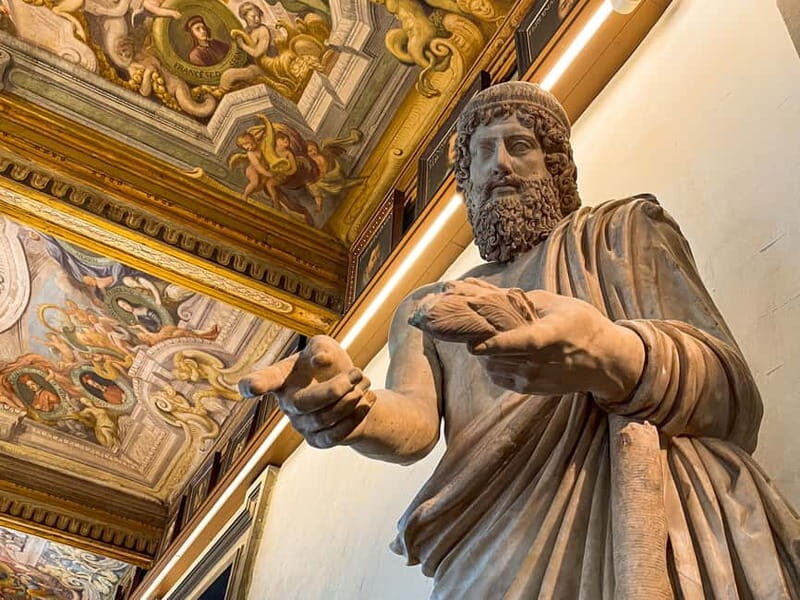
If you’ve ever tried to “see everything” at the Uffizi, you know the problem: the museum is legendary, so everyone shows up with the same plan. This tour leans into the smarter approach—hit the famous works with context, then let the building and the art do the rest.
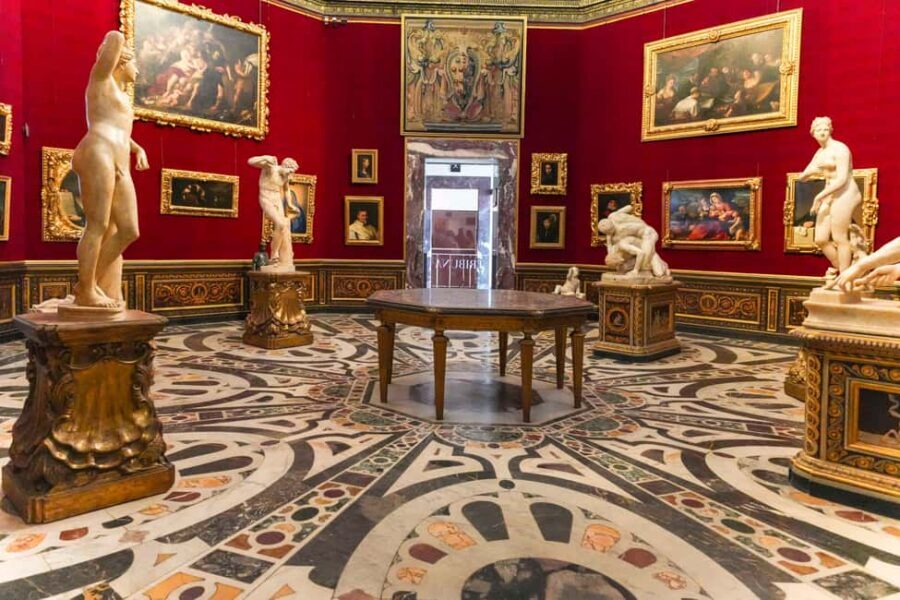
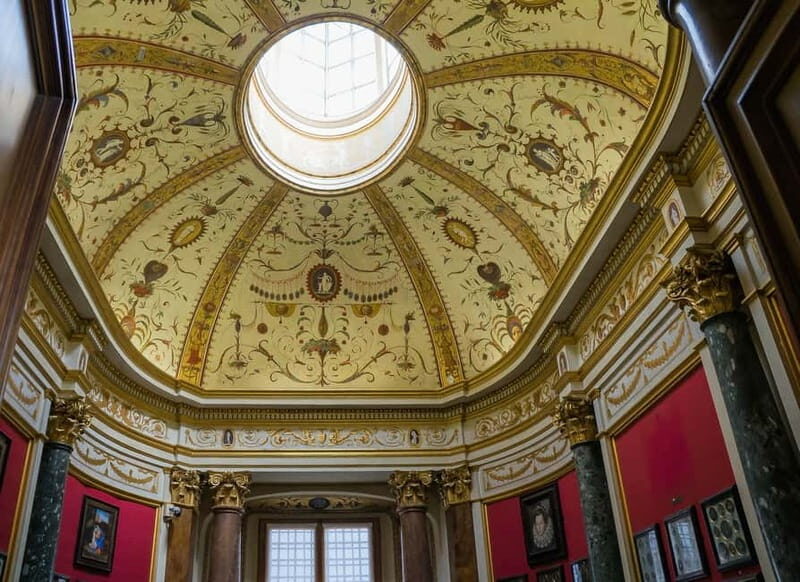
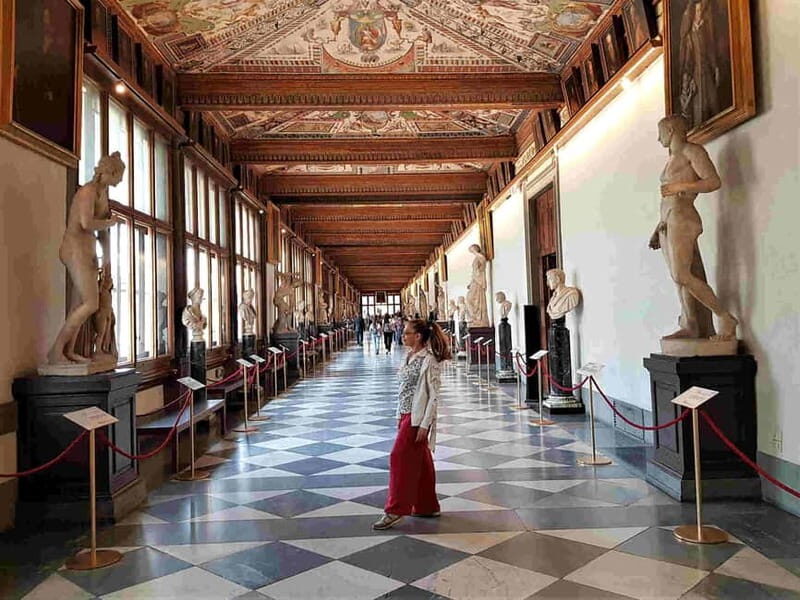
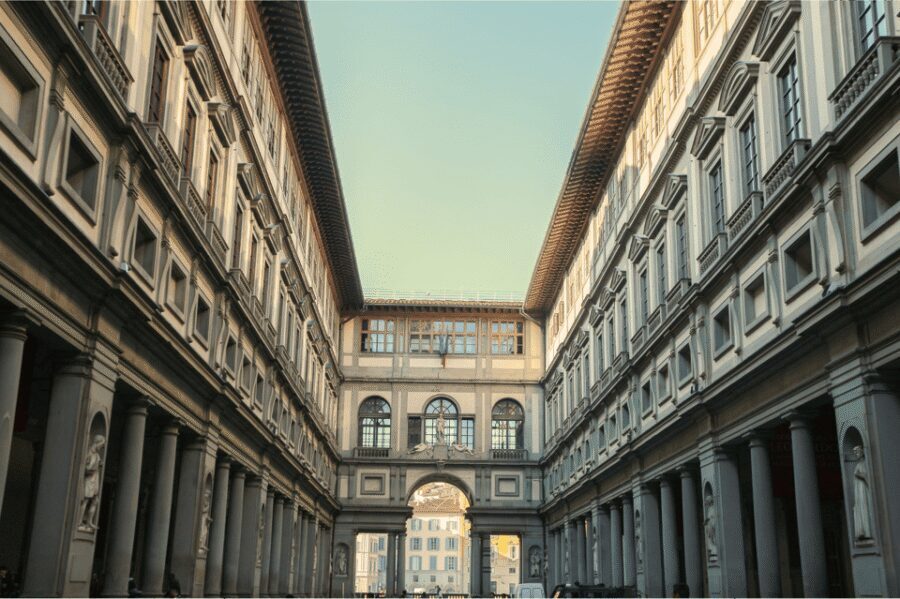
The Uffizi is not just a random collection. It was built as government offices for the Medici family, and later became the museum that lets you see their power expressed through art. The building itself is a big part of the experience. Giorgio Vasari designed the complex, and the corridors have that formal, almost theatrical feel. Add the views over the Arno river from inside the complex, and you get that sense you’re walking through Florence’s old political machine as much as its art temple.
This tour keeps your time budget realistic. Ninety minutes sounds short until you remember you’re not meant to cover the whole museum. You’re meant to leave with the major stories understood and your eyes trained on what to look for next.
Other small-group Uffizi tours in Uffizi Gallery


Meeting by the Giotto statue: where to start and how the pacing feels
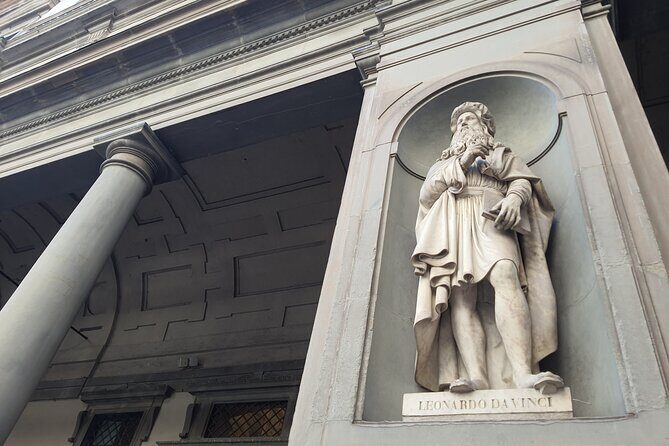
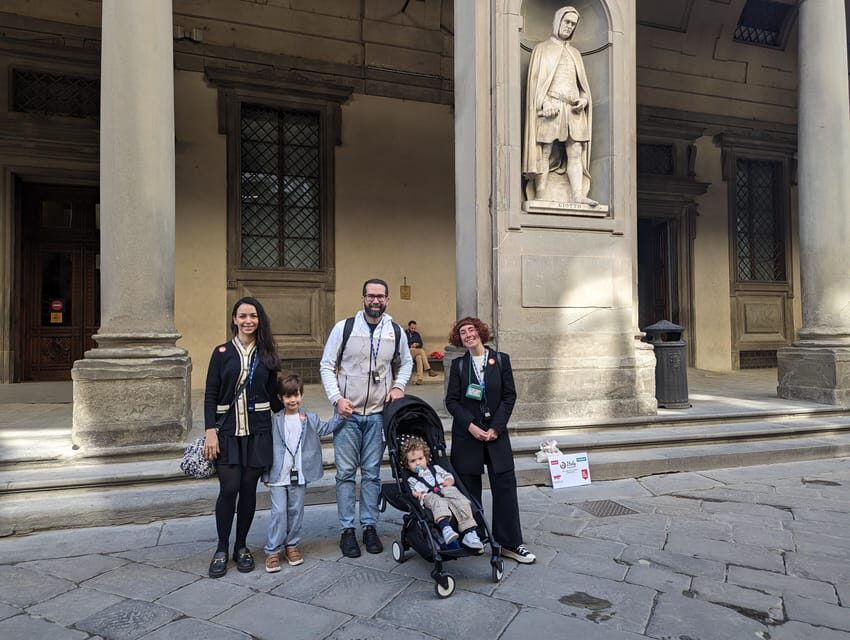
The meeting point is based on the option you book, and you’ll find yourself starting near the Uffizi Galleries area by the Statue of Giotto. The good news: the tour ends back at that same meeting point, so you’re not dumped into the city at the end with no plan.
Because the group is capped at nine, the tour style tends to be “move together, pause, look, listen,” rather than a long conga line of strangers. You’ll typically get instructions from the guide early, plus the headset/audio device so you can hear clearly as you move.
Pacing matters here. The Uffizi can feel like a slow-motion squeeze—slow because you want to stop and stare, squeeze because you can’t. This tour’s format is built to keep you moving without losing the main points. It also means you may get a slightly more structured experience than a pure self-guided visit, especially in the first rooms where people often feel lost.
Skip-the-line tickets: what they actually mean at the Uffizi
Pre-booked tickets are a real value at the Uffizi. The lines can be long and unpredictable, and time in Florence often matters more than you expect. Having your tickets arranged in advance usually cuts down the worst waiting and gets you into the museum with far less stress.
That said, skip-the-line is not a force field. If Florence has a strike or the museum’s operation gets disrupted, you might still face delays at entry. One theme from guide-led experiences is that the organizer can work to get people in as quickly as possible—but if the whole system slows down, your tour can lose a bit of its neat timing.
Also pay attention to what kind of tour you’re booking. This experience is marketed as a guided highlight tour with a live guide included, and the audio device helps you follow. But the internal flow can feel like guided emphasis plus time to look on your own for a portion of the visit. That mix can be great, as long as you understand you’re not getting a full-room-by-room interpretation of every gallery.
Inside the Uffizi: Medici power, Vasari corridors, and how the art is framed
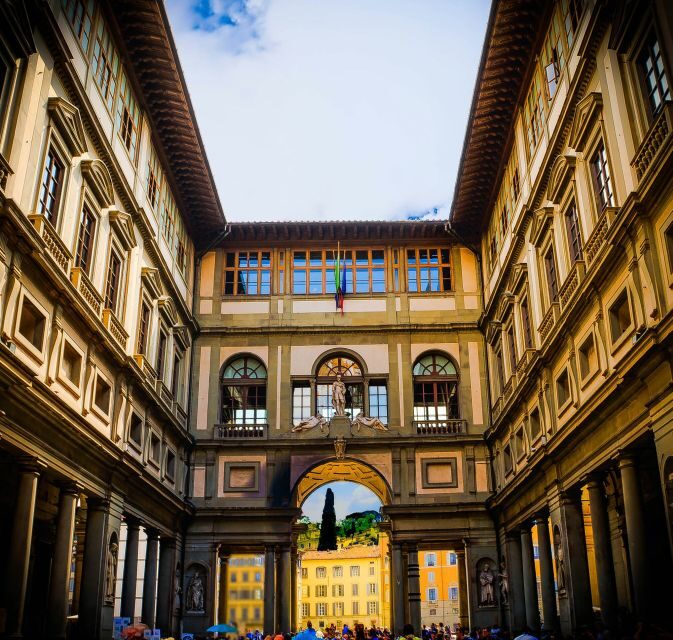
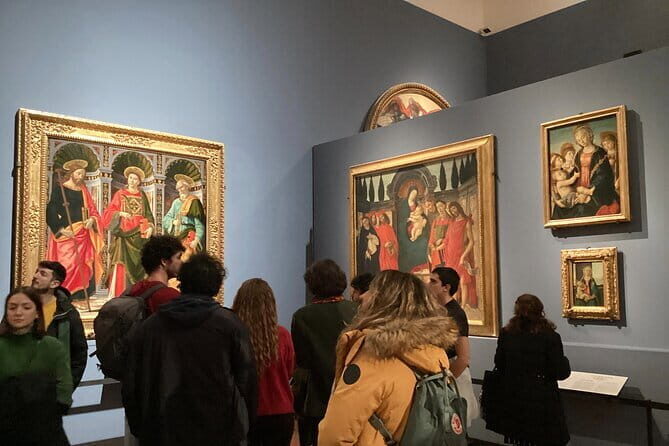
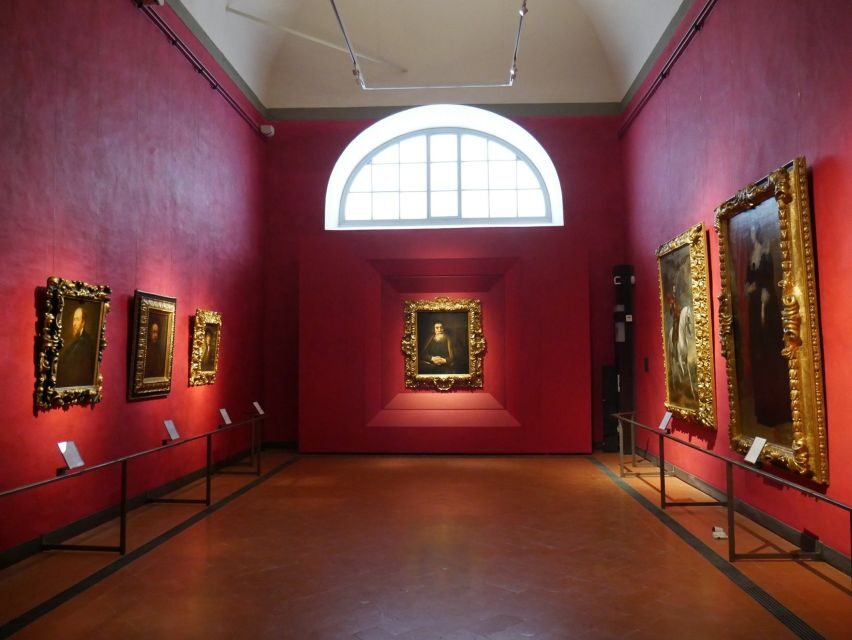
Once you’re inside, you’re not just looking at paintings—you’re learning how to read them. The guide’s job is to give you “why this matters” and “what to notice,” so the masterworks stop being just famous names and start being vivid scenes with logic.
Here’s the big context you’ll pick up on the tour:
- The Uffizi grew out of Medici government offices before becoming a museum, so the art is tied to status, patronage, and politics.
- The museum building, designed by Giorgio Vasari, shapes how you experience the collection. Those long corridors and formal spaces encourage you to slow down in the right places.
- Many of the artists you’ll hear about shaped the Renaissance from different angles: workshop craft, scientific observation, dramatic lighting, and myth as storytelling.
The guide will point you toward key works and help you understand the visual language: symbolic figures, borrowed myths, and the way artists engineered emotion—especially when a story like Birth of Venus is involved.
And because this is a small group, you’re less likely to feel like you’re competing with everyone else for attention. You can actually focus on the art rather than surviving the crowd.
The highlights route: Birth of Venus and Medusa without the guesswork

You’ll see two names almost everybody comes for: Birth of Venus and Medusa. These paintings aren’t just “cool to photograph.” They’re also packed with meaning, and the difference between staring at a famous image and understanding it is huge.
With Birth of Venus, the value is in learning what the composition is doing. The famous figure is only part of the story. You want to notice the arrangement, the gestures, and how the myth is translated into Renaissance style and ideas about beauty and desire. A good guide helps you see why this work became a cultural reference point, long after Botticelli’s time.
Then there’s Medusa, which tends to hit people in a different way. Myth here is not gentle. It’s a warning, a transformation, a turning point. The guide’s explanations help you connect what you’re seeing with the artist’s choices—how terror is staged and how the viewer is pulled into the scene.
The headset/audio device is surprisingly helpful here. The Uffizi rooms can scatter groups, and without the audio you’d lose half the story every time someone steps aside. With audio, you keep hearing the commentary even if the group breathes and reorganizes around a popular artwork.
Other guided tours in Uffizi Gallery

When the tour feels “just long enough” (and when it can feel short)
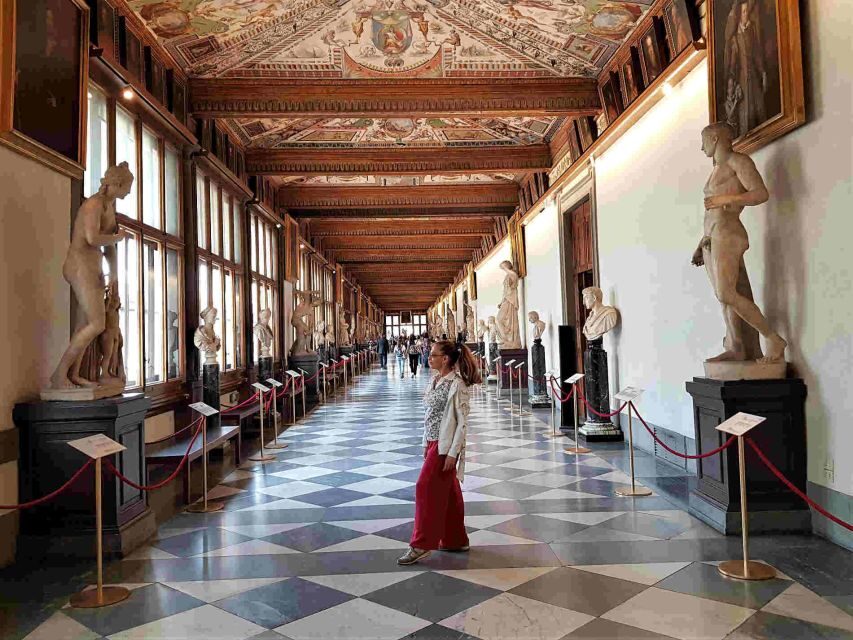
Ninety minutes works best for people who want a strong start. If you have a first afternoon in Florence and you’re deciding what to fit in, this is one of those tours that respects your energy. You’re not stuck in the museum until sunset, and you’re not left with the vague feeling of having “passed through” something important.
You’ll also get expert interpretations without needing prior art knowledge. One practical thing I like: guides on this type of tour often explain what matters in plain language, then connect it to the bigger Renaissance story. Names I’ve seen attached to excellent experiences include Olga, Anna, Manuela, Vittoria, Matteo, and Alex. The common thread is that these guides teach you how to look, not just what to look at.
Possible drawback: because this tour is highlights-focused, you’ll miss a lot. If you’re the kind of visitor who wants every room, every artist, and every side detail, you may feel you’re skipping too much. That’s not a defect—it’s just a mismatch of expectations. Think of this as an orientation and shortlist, not a museum completion medal.
What to expect from your guide and the audio device
A live guide makes the art make sense fast. In a small group, the guide can keep track of who is following and who needs a quick catch-up. When the guide is excellent, you’ll feel like the paintings have subtitles.
The audio device adds another layer of comfort:
- You can hear the guide’s explanation more clearly than you would in a crowded room.
- Your group can split slightly to get a better view, without everyone losing the thread.
- You still feel connected to the tour even when you’re not standing shoulder-to-shoulder with the leader.
If you’re traveling with teenagers or anyone who gets restless in museums, this matters. A compressed route with clear storytelling is easier to stick with than a silent self-guided sprint.
Price and value: $70 for a focused hit of Florence’s art power
At $70 per person for about 1.5 hours, this isn’t a bargain ticket. But it also isn’t trying to be one. Here’s the value math that makes sense for many people:
- You pay for pre-booked skip-the-line entry, which saves time and stress.
- You pay for a live guide who filters the museum down to what’s worth your attention.
- You pay for an audio device that keeps you from missing key points.
If you’d otherwise show up on your own and lose an hour negotiating entry lines and crowd flow, the tour often starts to look like good sense. And if you’re only in Florence briefly, a guided highlights approach can outperform a self-guided plan because it reduces decision fatigue. You don’t have to guess which masterpieces matter most first.
If you’re the type who loves slow museum wandering with total freedom, you might get more art per hour by going fully self-guided. But for most visitors who want a strong start and a plan that doesn’t fall apart, this hits a sweet spot.
What to bring (and what to avoid) for a smoother visit
Keep it simple. Wear comfortable shoes. The Uffizi experience involves walking and standing in front of crowded galleries, so your feet will let you know quickly if you chose wrong.
Also note the basic rules:
- No weapons or sharp objects.
- No food and drinks.
- No alcohol and drugs.
Those rules sound obvious, but it helps to pack like you’re going into a serious museum building, not a casual stop. If you’re thinking of bringing a snack “just in case,” plan to eat before or after your visit.
Wheelchair accessible is also a real plus. If mobility is part of your planning, this tour is designed to accommodate it.
First Sundays in Florence: free entry sounds great, but plan smart
On the first Sunday of each month, entrance is free. It’s a fantastic deal in theory. The catch is important: tickets can’t be reserved ahead of time, so entry isn’t guaranteed.
If you’re visiting around that schedule, treat free entry like a lucky opportunity, not a dependable plan. A tour with pre-booked access can reduce uncertainty and help you keep your day on track.
Should you book this Uffizi Gallery Florence small-group guided tour?
Book it if you:
- want a high-impact introduction to the Uffizi in about 90 minutes
- care about hearing clear explanations, using headsets in crowded rooms
- prefer a small group capped at nine rather than a large herd
- like seeing Birth of Venus and Medusa with context, not just as photos
Skip or rethink it if you:
- want to see a huge portion of the museum and need lots of time per gallery
- get irritated when tours don’t control everything, like crowd control or a strike that affects opening
- expect the experience to be a full, room-by-room guided marathon
For most first-timers, I think this is a smart way to start. You get the key masterworks, you learn how to look, and you leave with enough context to enjoy the rest of Florence with a clearer eye.
FAQ
How long is the Uffizi Gallery small-group guided tour?
The tour lasts about 1.5 hours.
Is the entry really skip-the-line?
Your tickets are pre-booked to help with faster access. If the museum has disruptions, delays can still happen.
What’s the group size?
This is a small group limited to 9 participants.
Where do I meet and where do I end?
You start at a meeting point near the Uffizi Galleries area by the Statue of Giotto (it may vary by option). The tour ends back at the meeting point.
What languages are available?
The live guide is available in French, Spanish, Italian, and English.
Does it include an audio device?
Yes. You get an audio device for an enhanced listening experience.
Is the tour wheelchair accessible?
Yes, it is wheelchair accessible.
What should I wear or bring?
Wear comfortable shoes.
Are there any restrictions on food, drinks, or certain items?
No food or drinks are allowed, and weapons or sharp objects are not allowed. Alcohol and drugs are also prohibited.
Is entrance free on the first Sunday of the month?
Entrance is free on the first Sunday of each month, but because tickets can’t be reserved ahead of time, entry is not guaranteed.