REVIEW · UFFIZI GALLERY
Florence: Private Uffizi Gallery Tour
Book on GetYourGuide →Operated by Inside Out Italy · Bookable on GetYourGuide
Two hours can change how you see Florence. In the Uffizi Gallery, this private format pairs a guided run through major Renaissance works with express security so you spend more time staring at paintings and less time waiting at gates. You also get the option to keep walking after the tour, which matters when the museum really gets under your skin.
What I like most is the personal pace. With a guide at your disposal, the visit feels built around your questions, not a fixed group rhythm. Another big win: you get clear access to some of the museum’s biggest names, including The Birth of Venus, The Spring, Michelangelo’s Tondo Doni, Leonardo da Vinci’s The Annunciation, and Caravaggio’s The Shield with the Head of Medusa.
One consideration: this experience is not suitable for people with mobility impairments, so if mobility is an issue, you’ll want to look at other options.
In This Review
- Key things to know before you go
- Uffizi in a private 2-hour window: why it works
- The two-hour reality check
- Meeting point on Via De’ Castellani: find the office fast
- Skip-the-line express security: what to expect at the gate
- Your guided art route: the Renaissance highlights you’ll focus on
- Botticelli: myth and beauty, including Venus and Spring
- Michelangelo: form and power in the Tondo Doni
- Leonardo da Vinci: The Annunciation and the pause before action
- Caravaggio: drama and shock, including the Medusa shield
- The “other masters” layer: Giotto, Vasari, Raffaello, Donatello
- A private guide is more than translation: it’s how your eyes learn
- How long should you stay? Using the time after the tour
- What the experience is like in practice (and who it suits)
- Not ideal for everyone
- Price and value: what you’re really paying for
- Should you book the Private Uffizi Gallery Tour?
- FAQ
- How long is the Florence: Private Uffizi Gallery Tour?
- Is this a private tour?
- Does the tour include an express security check?
- Which languages are available for the live guide?
- Where is the meeting point?
- What should I bring for entry?
- Can I stay in the gallery after the tour ends?
- Are headsets provided, and do I need to return them?
- What happens on the first Sunday of each month?
- What is the cancellation policy?
Key things to know before you go
- Private, guide-at-your-pace: you can linger where your interest pulls you
- Express security check: designed to reduce waiting time at entry
- Two-hour hit list of masterworks: Botticelli, Michelangelo, Leonardo, Caravaggio, plus other key Renaissance artists
- Multilingual live guide: English, German, Italian, Portuguese, Russian, French, Spanish
- Time to stay after the tour: you don’t have to sprint right back out
Uffizi in a private 2-hour window: why it works
The Uffizi is one of those museums where you could easily spend an entire day and still feel like you missed something important. This tour takes the opposite approach: it focuses your time on a concentrated sweep of top Renaissance heavyweights. For many people, that’s the sweet spot. You get the emotional wow factor without turning the visit into a marathon you’ll regret later.
I also like that the experience is designed to feel responsive. Because it’s private, your guide can adjust how much time you want on the most famous pieces versus the supporting works that explain how Renaissance art developed. That matters, since the Uffizi isn’t just a museum of famous paintings—it’s a museum of how ideas, patronage, technique, and storytelling evolved.
And yes, you’re looking at big names on the included highlight list, not random picks. You’re specifically set up to see works linked to Botticelli, Michelangelo, Leonardo da Vinci, and Caravaggio. Add the emphasis on other major artists in the Renaissance orbit—Giotto, Vasari, Raffaello, and Donatello—and you get a broad picture of why this museum is famous for more than just star power.
If you're still narrowing it down, here are other tours in Uffizi Gallery we've reviewed.

The two-hour reality check
Two hours is short enough that you’ll want to show up ready to pay attention. If you tend to read every label line-by-line, you may still find it helpful to save the extra reading for after the tour, when you can stay as long as you like.
Meeting point on Via De’ Castellani: find the office fast
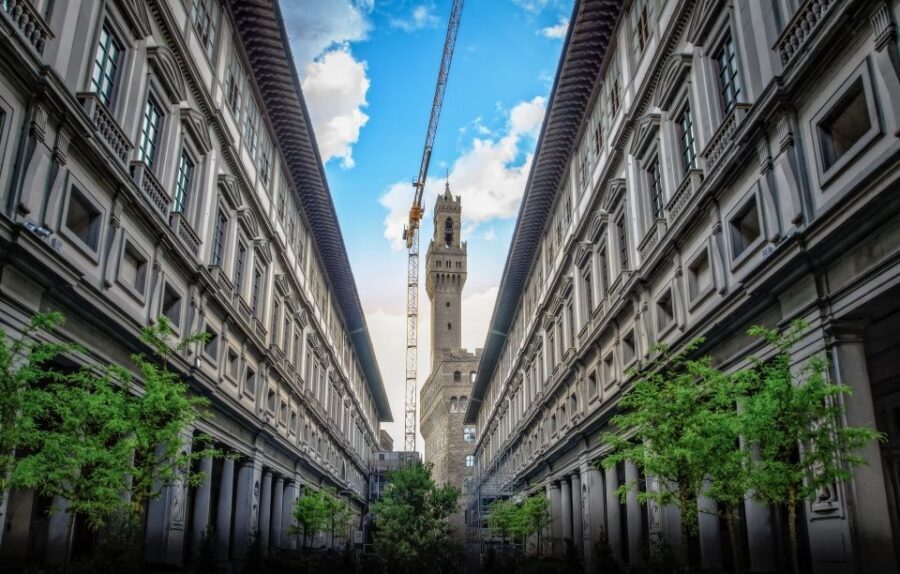
The meeting point is very specific, and that’s a good thing when you’re trying to line up a timed museum visit in a crowded area. You’ll look for the local partner’s office next to number 14 of Via De’ Castellani, precisely at number 18/red, in front of the general exit of the Uffizi Gallery.
If you’re using navigation, the coordinates given are 43.7681999206543, 11.256505012512207. I suggest you treat that like your “arrival target,” not something to figure out after you’re already late. The office is your anchor point before you move into the museum flow.
Also note the timing logic around free entry days. On the first Sunday of each month, entrance is free, but tickets can’t be reserved ahead of time and entry isn’t guaranteed. If you’re traveling on that date, keep your expectations flexible.
Skip-the-line express security: what to expect at the gate
This tour includes a way to reduce friction at entry: skip the line through express security check. That’s valuable in Florence because security lines can eat up the first part of your visit.
Still, keep one realistic expectation: you may still be subject to security checks. Express usually means faster movement, not zero screening. That’s why it pays to have your ID ready and keep it easy to hand over.
Another small but important detail: headsets must be returned at the end of the tour. If you forget that, you could end up dealing with a last-minute hassle when you’d rather be lingering with a painting you love.
Your guided art route: the Renaissance highlights you’ll focus on
Even without a room-by-room map in the details you get, the highlight list is clear about where the guide is steering the conversation. In a two-hour private tour, your time gets aimed at a set of famous works that represent key Renaissance themes—beauty and myth, sacred narratives, human anatomy and form, and dramatic realism.
Here’s what to look for in the included masterworks.
Other museum experiences in Uffizi Gallery

Botticelli: myth and beauty, including Venus and Spring
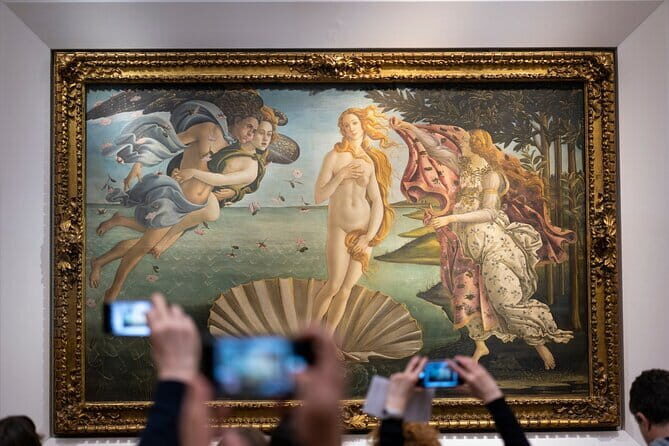
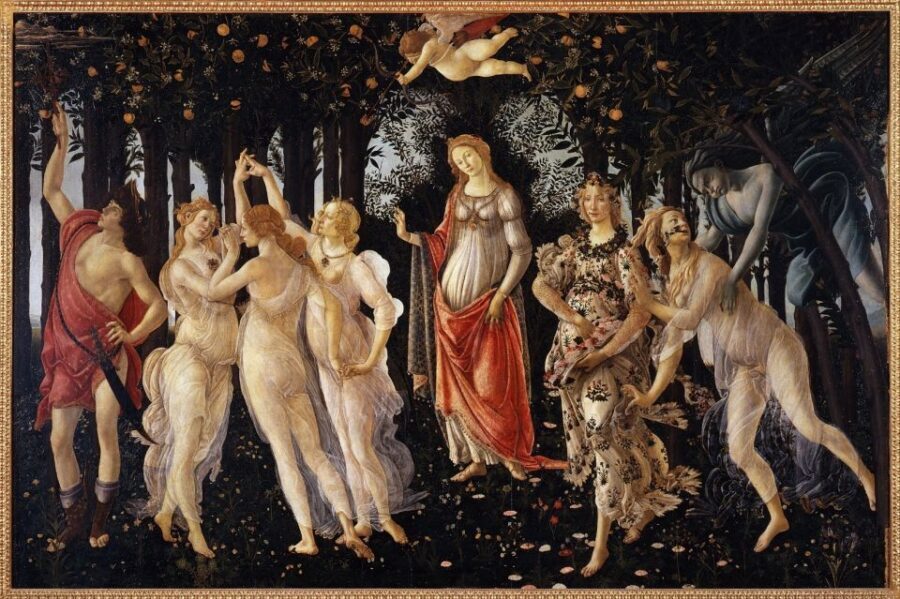
Botticelli is one of the main reasons many people fall in love with the Uffizi fast. You’ll specifically be guided to The Birth of Venus and The Spring.
The Birth of Venus is famous for its polished idealism—Venus doesn’t feel like she’s stepping into a messy world. She feels like she’s made for contemplation: pose, gesture, and story all tuned for meaning. With a good guide, you’ll usually get more than the obvious “myth painting” label—you’ll get help connecting Renaissance taste (and the cultural reasons people wanted images like this) to how the work looks.
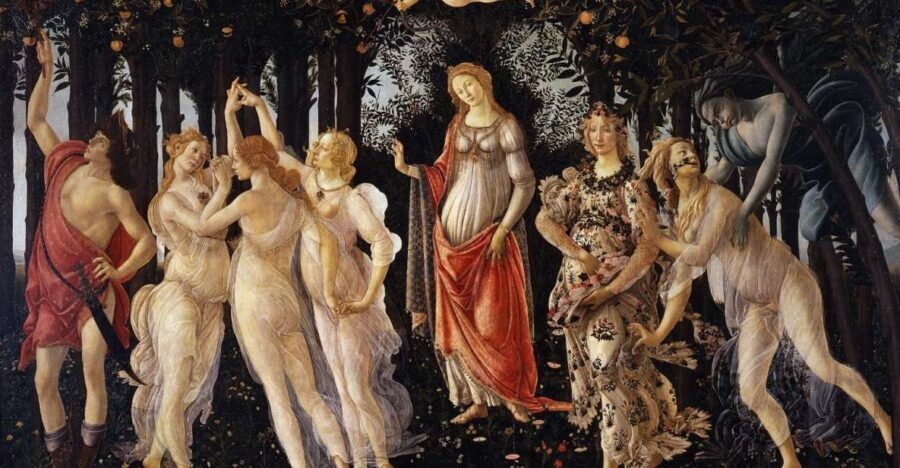
The Spring is more complex in what it’s trying to communicate. It’s filled with figures and relationships, and it rewards viewers who want help sorting what’s what. This is a perfect example of why a private guide is useful: you can ask your own questions instead of hoping the group timing lines up with your confusion.
Michelangelo: form and power in the Tondo Doni
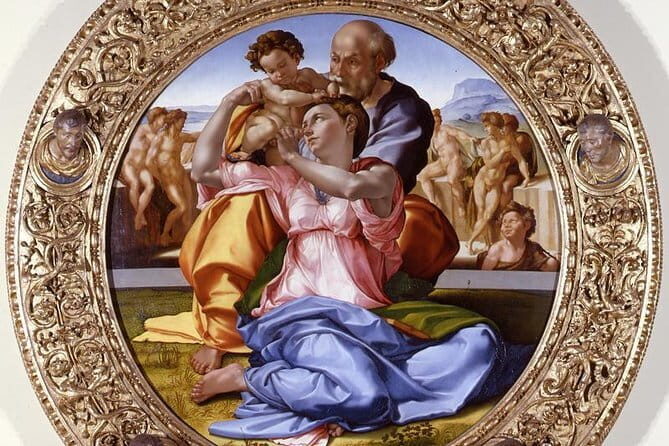
Michelangelo’s Tondo Doni brings a different kind of strength to the tour. It’s a work where you can feel the artist’s focus on physical presence and structure.
In a guided setting, you’ll likely spend time on how Michelangelo uses composition to organize the scene, and how that organization affects what you notice first. Even if you’re not a “technical art person,” this is one of the works where you start seeing muscles, weight, and volume as part of the storytelling—not just anatomy for anatomy’s sake.
Leonardo da Vinci: The Annunciation and the pause before action
Leonardo’s The Annunciation is on your highlight list. That title alone tells you a lot: it’s about a moment, not an explosion. The power of this kind of scene is how it handles tension—what’s happening emotionally while the figures remain composed.
With a guide, you’ll get help reading the story signals: who is reacting, who is delivering the message, and how the arrangement of the scene supports the meaning. Leonardo’s work often rewards this slower, interpretive approach, and private pacing helps because you can linger without worrying about falling behind.
Caravaggio: drama and shock, including the Medusa shield
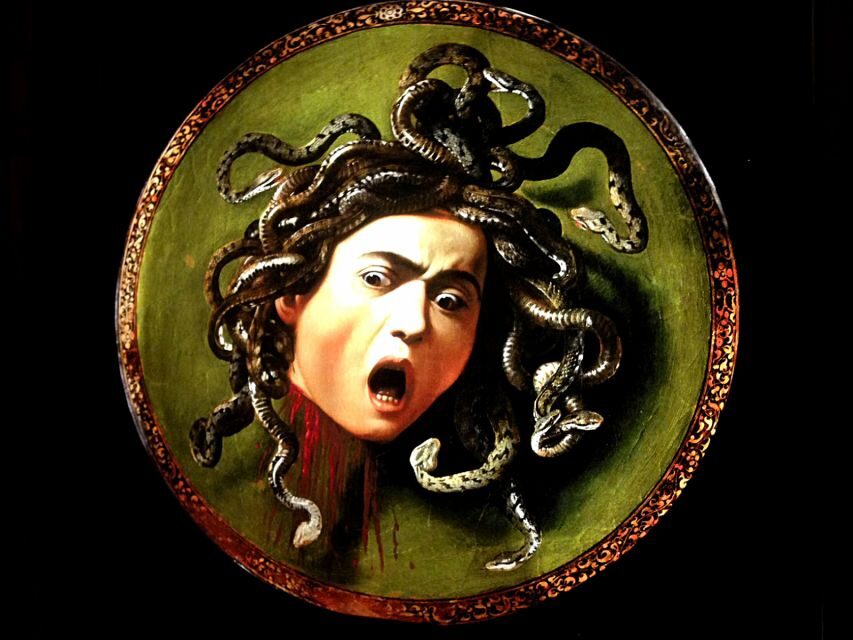
Caravaggio is the curveball that keeps the Uffizi from feeling like one long polite slideshow. You’ll see The Shield with the Head of Medusa.
Caravaggio is known for dramatic impact, and this piece is built for it. If you like art that feels like it’s happening right now, this is the one that usually grabs attention quickly. The guide’s job here is often to connect Caravaggio’s intense storytelling choices to the broader shift in how artists pursued realism, emotion, and audience reaction.
This is also a good point in the tour to recalibrate your expectations. If you came for classic Renaissance sweetness, Caravaggio can feel like a new temperature in the room.
The “other masters” layer: Giotto, Vasari, Raffaello, Donatello
Beyond the specific masterpieces listed above, the tour also points you toward works by other major figures: Giotto, Vasari, Raffaello, and Donatello. Even when you aren’t staring at a single “everyone knows this title” painting, these artists help you understand the museum’s bigger story.
Think of this as the connective tissue. Botticelli, Michelangelo, Leonardo, and Caravaggio give you four headline styles. Giotto, Vasari, Raffaello, and Donatello help explain how those styles fit into the Renaissance machine—what came before, what was influential, and how artists were building reputations inside Florence’s cultural world.
A private guide is more than translation: it’s how your eyes learn
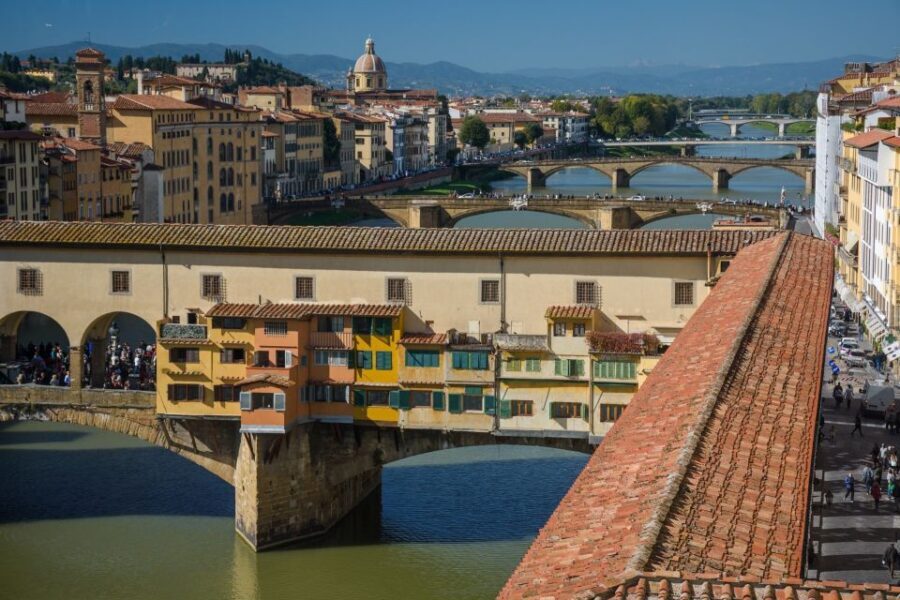
This tour is powered by one thing: the guide. And that’s not a generic claim. You’re getting a live guide in one of several languages—English, German, Italian, Portuguese, Russian, French, Spanish—so explanations can land directly instead of getting filtered through awkward guesswork.
In the feedback tied to this experience, guides have been highlighted for doing two things well: making art history feel clear, and adjusting their approach to match the group. One guide named Manuela is described as terrific and able to deliver strong education about art and history. Another guide named Steffi is called out as amazing, with special credit for the benefit of a private tour that lets you move at the pace of your interests. There’s also an example of a guide being effective even with children, which tells me the tour format can handle different attention spans.
That last part is a huge practical advantage. The Uffizi can be mentally heavy: lots of symbolism, religious storytelling, mythological references, and artistic technique. A good guide helps you avoid two extremes—either you only absorb famous names, or you get so lost in details you stop enjoying the art.
Private also means you can ask follow-ups as they occur. If you wonder why a scene is arranged a certain way, you can ask then, not later.
How long should you stay? Using the time after the tour
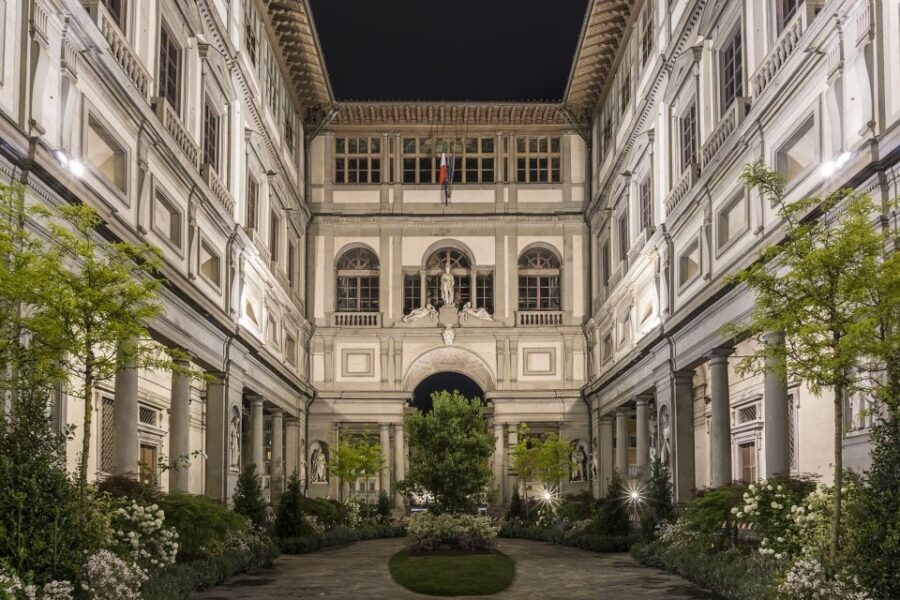
The tour runs for 2 hours, but you aren’t forced to leave when it ends. You can remain in the gallery for as long as you like after your guided portion.
I like this structure because it solves a common Uffizi problem: the guided part gives you direction, and the extra time lets you turn that direction into personal attention. Maybe there’s one painting you want to see again now that you understand what the guide emphasized. Or maybe you want to compare two works side-by-side without listening to your group’s pacing needs.
One detail to keep in mind: headsets are part of the guided experience, and they need to be returned at the end. After that, you’re free to explore in your own tempo.
What the experience is like in practice (and who it suits)
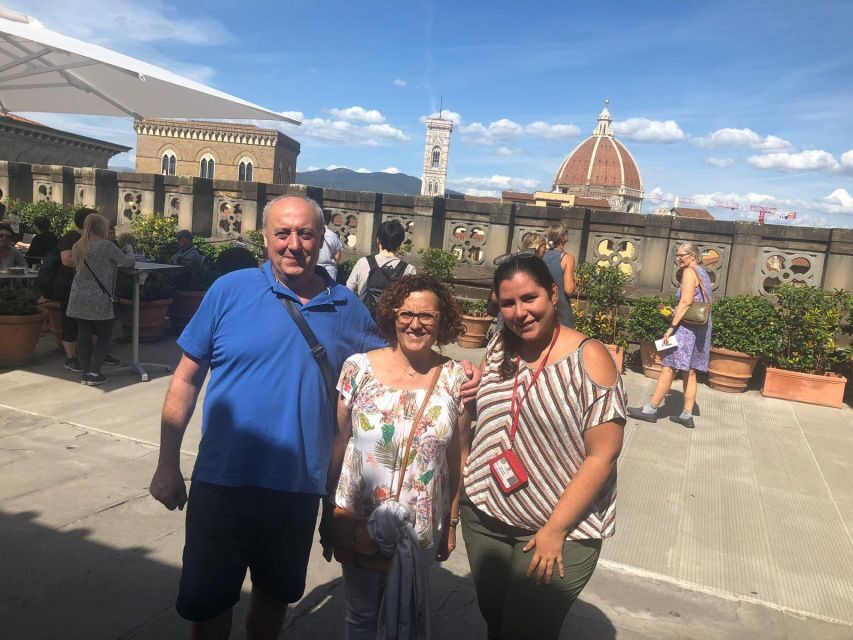
This is a private group experience, which typically means less time negotiating where to stand and more time seeing the works clearly. If you’ve ever visited a museum with a larger crowd, you know how fast it can become a “move along” exercise instead of a “look closer” experience. Private makes it easier to slow down when something grabs you.
The highlight list also suggests a tour that works well for first-timers who want a greatest-hits sweep. You get key pillars of Renaissance art and drama in a compact format, including major works by the most famous names on the list.
It can also fit people who want structure. Even though it’s private, you still get guided choices that keep the day from feeling random. You’re not just walking around hoping your instincts pick the right paintings first.
Not ideal for everyone
Since it’s marked as not suitable for people with mobility impairments, that’s the clearest “who should skip it” callout.
Price and value: what you’re really paying for
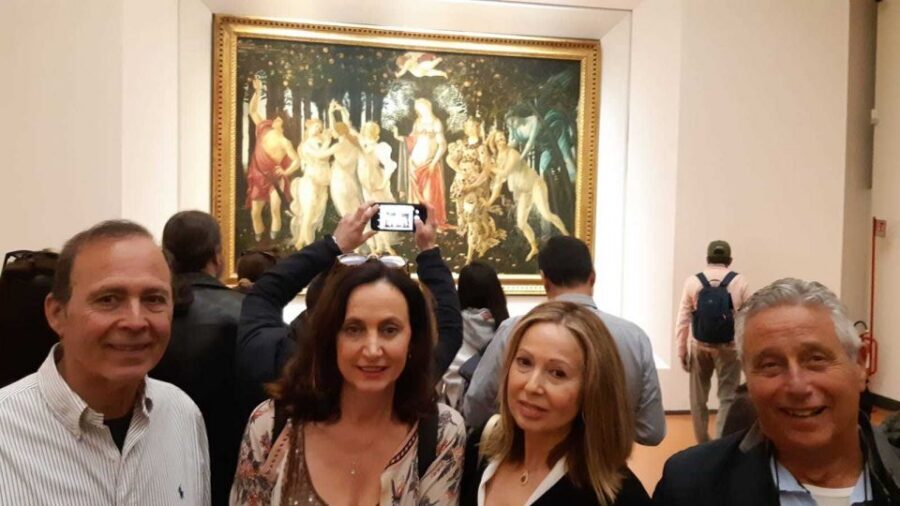
There’s no price shown in the details provided, so I can’t tell you if it’s cheap or expensive. But I can tell you what drives value here.
You’re paying for three value engines:
- A professional live guide for a focused 2-hour session
- Express security to cut down waiting time
- A private format, so time isn’t wasted herding a group or competing for listening moments
The second value point matters more than it sounds. When you arrive at Uffizi at the wrong moment, the museum can feel like a waiting game before you even start looking. Express security check helps keep the day moving.
And the private format turns the same art into a different experience. The guide can respond to your questions in real time. That can make famous paintings feel less like icons and more like stories you understand.
Should you book the Private Uffizi Gallery Tour?
Book it if you want a smart, time-efficient way to see major Uffizi masterpieces with a guide who can explain them in your chosen language. It’s especially appealing if you like the idea of a private pace and you’d rather spend your limited Florence time on art than on logistics.
Consider skipping it if mobility is a concern, since this experience is not suitable for people with mobility impairments. Also keep an eye on the first Sunday of the month: free entry exists, but entry can’t be guaranteed on that day.
If you’re an art lover who gets excited by Botticelli, Leonardo, Michelangelo, and Caravaggio, this tour is a strong match because the highlight works are spelled out clearly and your guided time is long enough to matter.
FAQ
How long is the Florence: Private Uffizi Gallery Tour?
The tour duration is 2 hours.
Is this a private tour?
Yes, it’s a private group experience.
Does the tour include an express security check?
Yes, it includes skip the line through an express security check.
Which languages are available for the live guide?
The live guide is available in English, German, Italian, Portuguese, Russian, French, and Spanish.
Where is the meeting point?
Look for the local partner’s office next to number 14 of Via De’ Castellani, precisely at number 18/red, in front of the general exit of the Uffizi Gallery. Coordinates: 43.7681999206543, 11.256505012512207.
What should I bring for entry?
Bring a passport or ID card. For children, a passport or ID card is required. A copy is accepted.
Can I stay in the gallery after the tour ends?
Yes. After the tour, you may remain in the gallery for as long as you like.
Are headsets provided, and do I need to return them?
Headsets are used during the tour, and they must be returned at the end.
What happens on the first Sunday of each month?
Entrance is free of charge on the first Sunday of each month, but tickets can’t be reserved ahead of time, so entry is not guaranteed.
What is the cancellation policy?
Free cancellation is available up to 24 hours in advance for a full refund.