REVIEW · FLORENCE
Florence: Uffizi Skip-the-Line Ticket & Digital Audio Guide
Book on GetYourGuide →Operated by Tours About · Bookable on GetYourGuide
Art moves faster when lines don’t. This Uffizi skip-the-line ticket gives you a reserved entry time and a separate entrance, so you spend less of your Florence day watching other people shuffle. I especially liked the self-paced format (you don’t have to keep up with a group), and the Pop Guide setup means you can keep the experience on your phone while you walk. One thing to watch: the app experience depends on your phone, your headphones, and working internet, and the museum doesn’t offer Wi‑Fi inside.
You start right in the thick of it, meeting your host in front of Leonardo da Vinci’s statue with a white flag marked ENJOY ROME. From there, you’ll exchange your voucher for a physical ticket, go through security, and step into the Uffizi’s world-class collection housed in Giorgio Vasari’s historic building. My big consideration for you: since there’s no tour guide included, you’ll want to be comfortable using the audio and choosing what to focus on in a museum this large.
In This Review
- Key things to know before you go
- Skip the Uffizi Line: What Timed Entry Really Buys You
- Finding Your Host: Leonardo Statue, ENJOY ROME Flag, Voucher Exchange
- Security Check Reality: Plan for the 15–20 Minute Buffer
- Pop Guide on Your Phone: How the Audio Works in Practice
- What you’ll experience
- The one caution: app friction
- The Uffizi at Work: How to Prioritize the Masterpieces
- Botticelli’s Primavera and Birth of Venus
- Michelangelo, Leonardo, and Raphael
- Caravaggio’s Medusa
- Raphael’s Madonna Del Cardellino
- Rembrandt self-portraits (Dutch Golden Age)
- The Building Matters: You’re Touring Vasari’s Offices Too
- How Long to Plan: Don’t Try to Win a Speed Contest
- Price and Value: Is $47.71 a Smart Trade for Your Time?
- Who Should Book This Uffizi Experience (and Who Might Not Love It)
- Should You Book This Uffizi Skip-the-Line Ticket?
- FAQ
- Where do I meet the host?
- How do I get my ticket?
- Is there a tour guide included?
- What do I need for the Pop Guide audio?
- Will I still go through security at the museum?
- How long should I plan for this Uffizi visit?
- Can I cancel for a full refund?
Key things to know before you go
- Separate entrance + timed entry cuts the worst of the waiting
- Self-paced rooms let you linger with Botticelli and move on before you get museum fatigue
- Pop Guide audio on your phone is built for independent exploration (headphones needed)
- Uffizi is massive, and you’ll feel it even with skip-the-line access
- Security check can still take 15–20 minutes at busy times
- App reliability matters: some people had download or playback issues
Skip the Uffizi Line: What Timed Entry Really Buys You

The Uffizi is famous for one reason: it’s packed with art you came to see. But it’s also famous for crowding. This ticket tackles the practical problem—getting in—by giving you a pre-reserved timed-entry slot and letting you use a skip-the-line route through a separate entrance.
That means you’re not wasting your prime morning energy standing in a queue that barely moves. It’s the kind of upgrade that’s worth it even if you’re the type who likes doing museums at a slow pace. You’re still going to hit busy rooms once you’re inside, but at least your time and energy are spent where it counts: in front of the paintings and sculptures.
If you’re traveling in peak season (or even just on a busy weekday), the skip-the-line part tends to feel like an actual itinerary tool. It’s less about comfort and more about control.
Other skip-the-line Uffizi tickets we've reviewed in Florence



Finding Your Host: Leonardo Statue, ENJOY ROME Flag, Voucher Exchange
Logistics matter in Florence, and this one starts with a very specific meeting spot. You meet in front of Leonardo da Vinci’s statue, where a staff member is holding a white flag that says ENJOY ROME. You exchange your GetYourGuide voucher for a physical ticket there.
A couple of practical notes from what I’d prepare for:
- The meeting point is precise. If you’re wandering around the area without orientation, you can lose time.
- The process is designed to be quick and straightforward once you locate your host.
It also helps that the host is an English greeter (not a full guide). That’s good news if you want independence. If you’re expecting a narrated, step-by-step walkthrough, you’ll be slightly disappointed—because your ticket mainly covers entry, not a guided commentary.
Security Check Reality: Plan for the 15–20 Minute Buffer
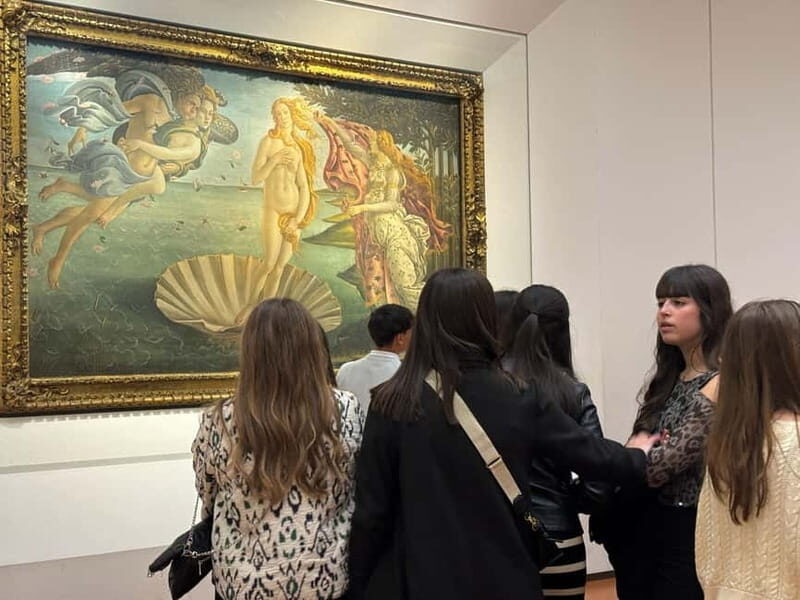
Skip-the-line gets you past the entry queue, but it doesn’t erase the museum’s rules. Expect a security check for all visitors. During peak hours, the wait for that checkpoint is around 15–20 minutes.
So the realistic way to think about your plan is:
- You have a timed slot for entry.
- You still need time for security.
- Then you can focus on art.
This is one of those “don’t fight the machine” moments. You’ll enjoy the day more if you assume you’ll spend that chunk of time before you’re fully in museum mode.
What to bring helps here: you’ll want your passport or ID card, since it’s required for museum entry. And since you’ll be relying on audio, bring what you need before you get stuck in security lines with a phone that can’t play.
Pop Guide on Your Phone: How the Audio Works in Practice

This experience includes a digital audio guide through an app called Pop Guide. Here’s the key: you’re expected to download the app on your mobile before you go, and at the meeting point the staff gives you login credentials.
The instructions also explicitly mention what to bring:
- Headphones
- Internet access
That last part is important because several reviews pointed out that Wi‑Fi isn’t available inside the museum. If your data plan is limited or expensive where you are, consider whether you can avoid relying on cellular access while you’re inside.
What you’ll experience
Inside, you explore at your own pace through rooms and works highlighted by the audio guide. Reviews also mention that the audio helps with understanding big themes and making sense of what you’re looking at, especially when you’re trying to move through lots of rooms.
Other audio-guide Uffizi tours in Florence




The one caution: app friction
Not every phone behaves the same way in a crowded building. Some people reported issues like:
- trouble getting the app downloaded in time
- map updates that stalled the experience
- audio that didn’t play properly inside
Here’s the simple prevention plan: download before you leave, test your audio once, and make sure your headphones work. If you forget earbuds, you’ll be stuck looking for an alternative while everyone else is enjoying the museum.
And yes, some visitors ended up paying for a museum handheld audio option when the app didn’t cooperate. That’s not the default outcome, but it’s a real backup you might consider in your own risk planning.
The Uffizi at Work: How to Prioritize the Masterpieces
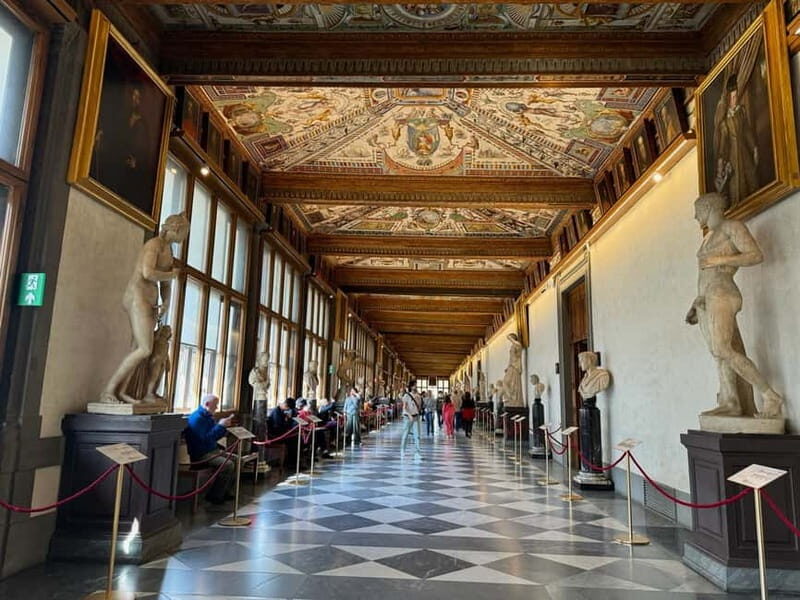
The Uffizi collection is huge, so your success depends on strategy. This ticket doesn’t force a route; it lets you roam. That’s great for repeat viewing and personal preference, but it can also lead to museum overload if you try to see everything.
Use the included highlights as your backbone. Then decide what you want to go deep on.
Botticelli’s Primavera and Birth of Venus
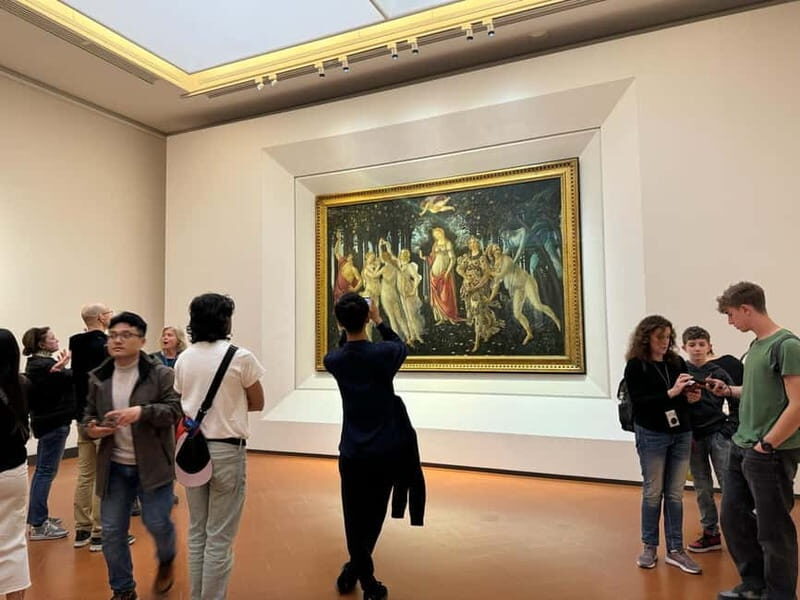
If you want the classic Uffizi moment, you’ll come across Botticelli’s Primavera and The Birth of Venus. The Birth of Venus is described as a national treasure and the museum’s emblem, which matches the way people talk about it: this is not a “quick glance” painting.
What I like about including both works in the highlight list is the contrast. Primavera feels like energy and symbolic storytelling. Birth of Venus hits a slower emotional tone. Even if you only have a few hours, these two give you the Uffizi emotional payoff.
Michelangelo, Leonardo, and Raphael
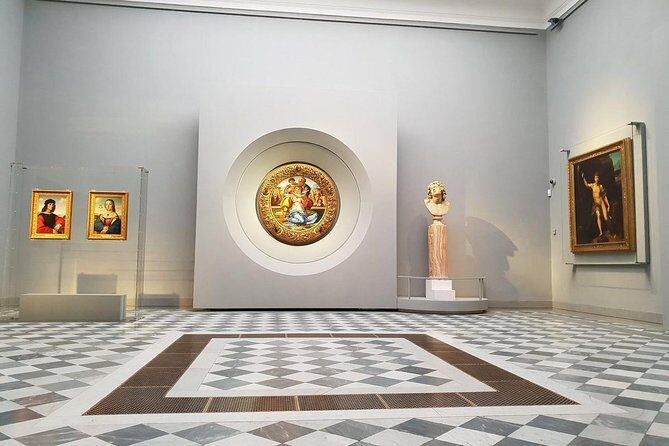
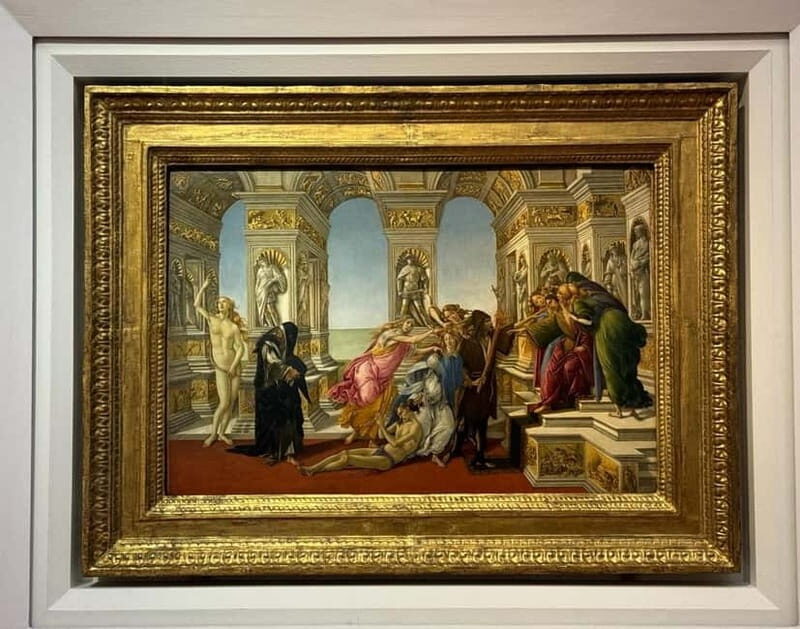
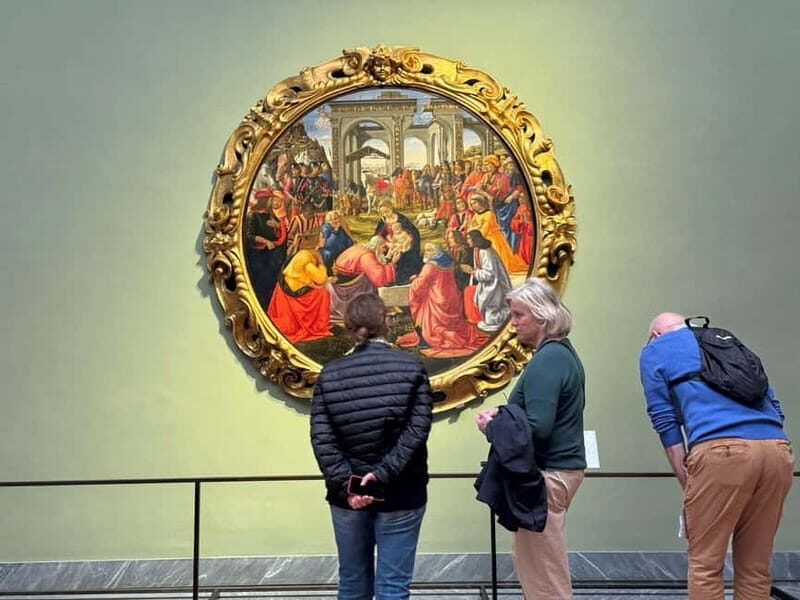
You’ll also see major works by Renaissance heavyweights like Michelangelo, Leonardo da Vinci, and Raphael. The Uffizi’s reputation isn’t just built on one artist or one room; it’s built on the concentration of talent you don’t usually get in a single museum.
Since you’re self-paced here, you can pause longer on the artists you care about most and skip the works that don’t click. That’s a real benefit versus a group tour that tries to hit everything on schedule.
Caravaggio’s Medusa
Caravaggio’s Medusa is called out as another notable stop. This is the kind of work that changes the vibe of a room. Caravaggio’s style tends to feel more dramatic and immediate than much of the smoother Renaissance idealization around it, so it’s a great “tone reset” if you’ve been in one aesthetic headspace for a while.
Raphael’s Madonna Del Cardellino
Raphael’s Madonna Del Cardellino also makes the highlight list. If you love fine facial expressions and careful composition, this is the type of work where you’ll stop moving and look for details. Even in a crowd, you can usually find a moment to focus.
Rembrandt self-portraits (Dutch Golden Age)
One standout included in the highlights is Rembrandt’s self-portraits, specifically described as examples from the Dutch Golden Age. That’s a nice surprise if you came expecting only Renaissance Florence energy.
It’s also a smart way to break up the experience. You can spend hours with Renaissance masters and still end your visit feeling you saw something broader than the obvious names.
The Building Matters: You’re Touring Vasari’s Offices Too
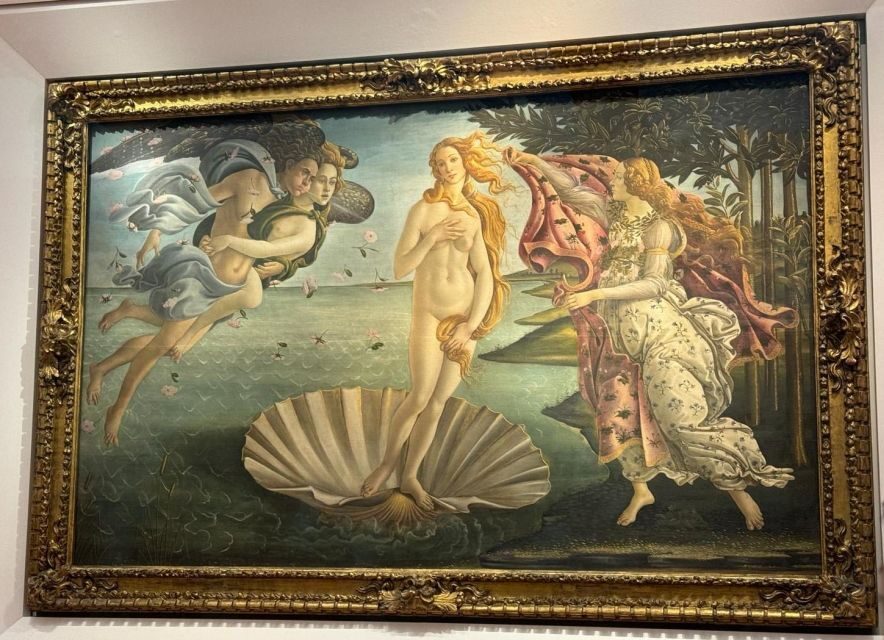
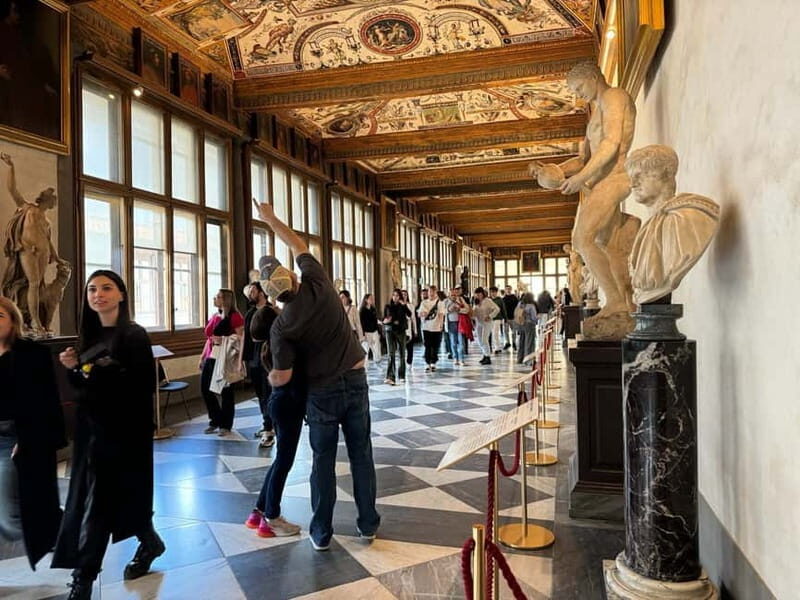
The Uffizi is not just a place for art. It’s a historic space. The building itself was designed in the 16th century by Giorgio Vasari as offices for magistrates. Now it houses the masterpieces you’ll spend your day with.
That means the museum experience isn’t only visual. You’re walking through a designed interior meant for administration, now adapted for art viewing. The result is a sense of long corridors and room-to-room movement that helps explain why the museum can feel endless: the structure was built to handle lots of people, just for a different purpose.
How Long to Plan: Don’t Try to Win a Speed Contest
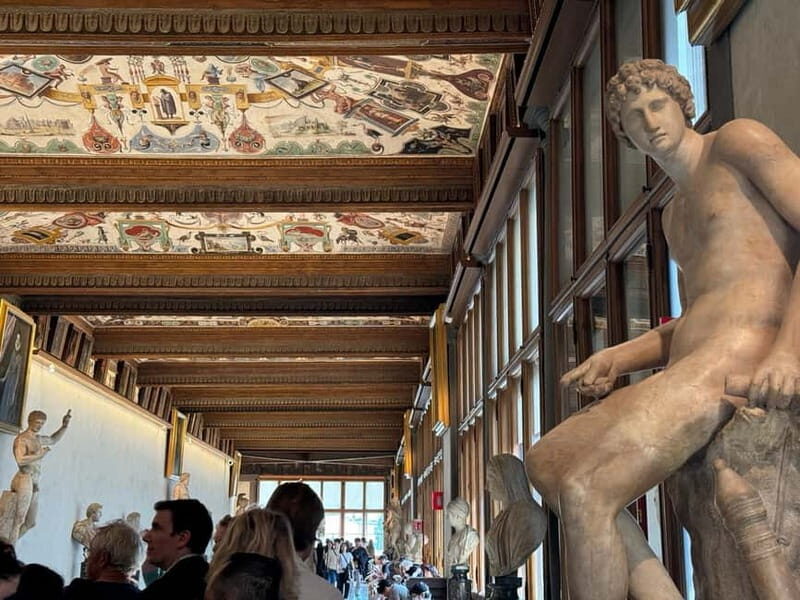
Uffizi time planning should be honest. The museum is massive, and even when you skip the entry line, you still have to see (or at least try to see) a lot.
A useful reality check from the experience: some people tried to finish in around 3 hours, while others recommended giving yourself closer to 6 hours if you want it relaxed.
My practical advice:
- If you’re confident with self-guided museum wandering and you’re picking only the core highlights, 3–4 hours can work.
- If you want to actually look—at faces, details, symbolism—and not feel rushed, target about 6 hours.
You’ll enjoy the day more if you treat the Uffizi like a slow meal, not a snack. Once you’re inside, the pacing choice becomes yours.
Price and Value: Is $47.71 a Smart Trade for Your Time?
At $47.71 per person, the big question is what you’re paying for besides the museum ticket. The answer here is mostly time certainty.
This price includes:
- the skip-the-line timed-entry ticket
- and the digital audio access via the Pop Guide system
It does not include a tour guide.
Some visitors noted the price can feel high compared to the museum’s official ticket cost if you’re able to book directly. But if the official site doesn’t work for your schedule—or you missed the chance to grab timed tickets—you’re effectively paying for a solution that fits your plan.
So when does it feel like good value?
- When you want to arrive at a specific time and avoid line chaos.
- When you’re visiting in busy periods and you want predictable entry.
- When you’re comfortable exploring on your own with audio.
When might it feel less worth it?
- If you hate phone-based audio and prefer a live guide to explain the works.
- If you want a very structured route and don’t want to make choices inside.
Who Should Book This Uffizi Experience (and Who Might Not Love It)
This ticket style—skip-the-line plus self-paced audio—fits certain travelers best.
You’ll probably love it if you:
- want independent art time without a group schedule
- like using audio to frame what you’re seeing
- care about skipping the most annoying part of the day: entry lines
You might not love it as much if you:
- want someone to answer questions in real time
- rely on the app working perfectly and don’t want any tech uncertainty
- show up without working headphones or without a way to access the Pop Guide app content
Also, if you’re the type who needs context delivered by a human guide to feel fully satisfied, you may find the no-guide format a bit thin. Several notes suggest that people who prefer a more guided narrative can feel that a real guide adds value.
Should You Book This Uffizi Skip-the-Line Ticket?
Yes—if your priority is getting in fast and seeing major highlights at your own pace. The skip-the-line timed entry is the core benefit, and the included Pop Guide audio is a solid match for a self-directed visit.
Before you hit book, do three things:
- Plan to arrive with your ID and your headphones.
- Download and test the Pop Guide audio in advance so you’re not fighting updates at the entrance.
- Set expectations: this is entry + audio, not a narrated tour, so you’ll be the one choosing what gets your time.
If that sounds like your style of travel, this is an efficient way to experience the Uffizi’s biggest names—Botticelli, Michelangelo, Leonardo, Raphael—plus the interesting curveball of Rembrandt’s self-portraits, all without losing your morning to the wrong kind of waiting.
FAQ
Where do I meet the host?
You meet your host in front of Leonardo da Vinci’s statue. A staff member will be there holding a white flag that says ENJOY ROME.
How do I get my ticket?
You’ll exchange your GetYourGuide voucher for a physical ticket at the meeting point.
Is there a tour guide included?
No. This experience does not include a tour guide. You’ll explore the gallery on your own with the digital audio guide setup.
What do I need for the Pop Guide audio?
Bring headphones and internet access. You’re also expected to download the Pop Guide Audio Guide application on your mobile, and at the meeting point you’ll receive login credentials.
Will I still go through security at the museum?
Yes. All visitors must go through a security check. During peak hours, the wait for security is about 15–20 minutes.
How long should I plan for this Uffizi visit?
The activity duration is listed as 1 day. A relaxed pace recommendation mentioned is around 6 hours for the Uffizi.
Can I cancel for a full refund?
Yes. Free cancellation is offered up to 24 hours in advance for a full refund.