REVIEW · FLORENCE
Florence: David & Uffizi Gallery Guided Tour for Small Group
Book on GetYourGuide →Operated by Babylon Tours Florence · Bookable on GetYourGuide
David makes the crowds worth it. This Florence small-group combo strings together the Accademia and Uffizi highlights, plus the Duomo complex sights and Ponte Vecchio in one efficient 5.5-hour loop.
I like two things right away: you’ll have a professional art historian guiding you through the big art moments, and you get a planned break before Uffizi so the afternoon museum time feels manageable. You can also see how the guides work with different needs—Elena’s style was praised for being accommodating, and Lucie’s leadership was noted as personable with explanations that helped people think about what they were seeing.
One consideration: the tour keeps the Duomo experience outside only. If your dream is climbing inside or going deeper into the cathedral complex with a ticketed visit, you’ll need to add that separately.
In This Review
- Key things that make this tour work
- Starting at Giotto: a smart way to get your Florence bearings
- Accademia Gallery: Michelangelo’s David without the rush
- Piazza del Duomo and the Cathedral complex: see it like a local
- Via dei Calzaiuoli to Piazza della Signoria: Florence in public squares
- Palazzo Vecchio and Il Porcellino: the quick stops that add up
- Ponte Vecchio: the WWII-survivor bridge with Medici gravity
- Lunch break before Uffizi: the smart pacing choice
- Uffizi Gallery: guided viewing that helps you see
- Group size, languages, and the kind of day to expect
- What’s included, what’s not, and where the real value is
- Logistics that can affect your day (and how to handle them)
- Should you book this Florence combo tour?
- FAQ
- Where do I meet the guide for this tour?
- How long is the tour?
- Does the tour include skip-the-line access?
- Is the Duomo included inside, or only outside?
- What’s the group size for the semi-private option?
- What should I bring and what should I avoid?
- What happens if the semi-private tour doesn’t meet the minimum number of guests?
Key things that make this tour work
- Skip-the-line at Accademia and Uffizi so you spend more time looking and less time queuing
- Michelangelo’s David at the Accademia plus context about the 16th-century works around it
- Duomo complex views from the outside with key details about what you’re seeing
- Ponte Vecchio and the Medici story tied to how Florence became Florence
- Uffizi for about 3 hours with a full guided visit after a included lunch break
- Small groups (semi-private max 8) for questions and a calmer pace than big-bus tours
Starting at Giotto: a smart way to get your Florence bearings
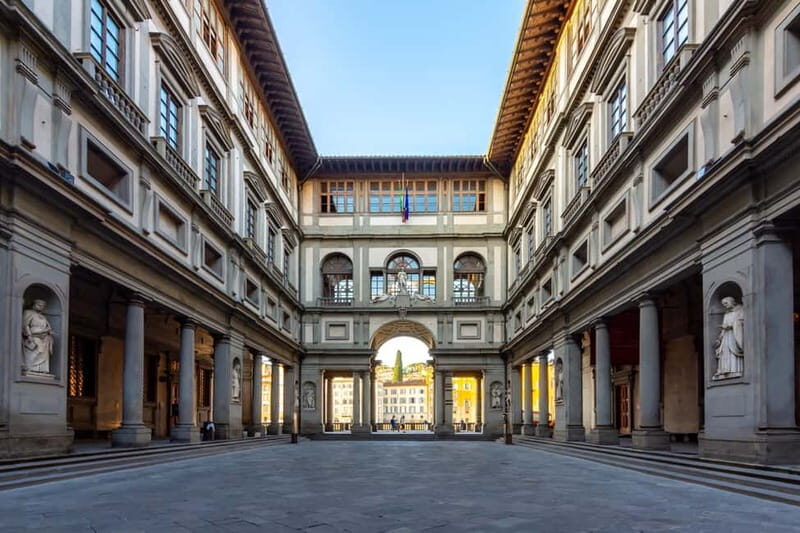
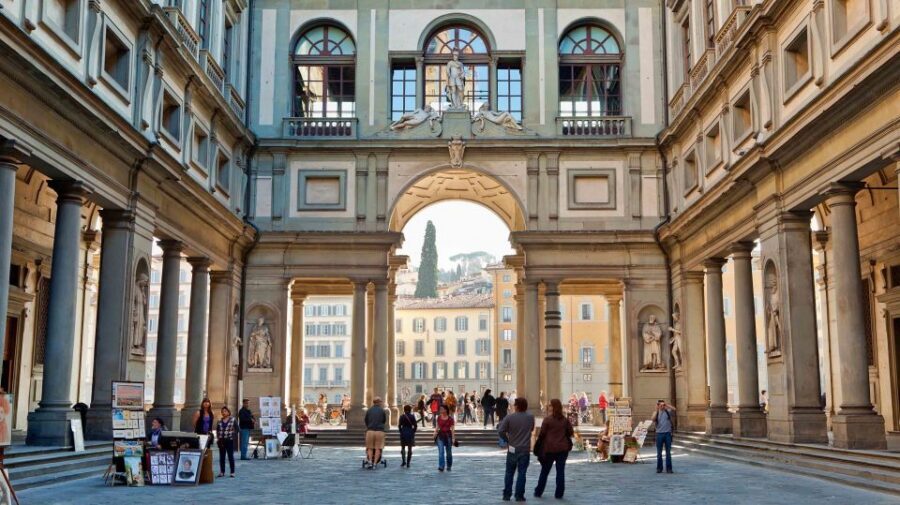
You meet your guide by the Giotto statue in the Piazzale area of the Uffizi (outside). That location is a handy choice because it puts you near the center of the action without forcing you to battle the busiest streets before the tour even begins.
From there, the tour quickly builds momentum. It doesn’t waste time with random stops. Instead, it moves you into the places that make Florence feel like a living museum: public squares, landmark architecture, and the art collections that shaped how people in Europe learned to look at beauty.
Also, the tour is built for a practical day. It’s long enough to do real sightseeing—5.5 hours—but not so long that you’re dragging by the time you reach the big museum. If you’ve got limited time in Florence, this is a good way to “hit the essentials” without turning it into a checklist you forget five minutes later.
Other small-group Uffizi tours in Florence
Accademia Gallery: Michelangelo’s David without the rush
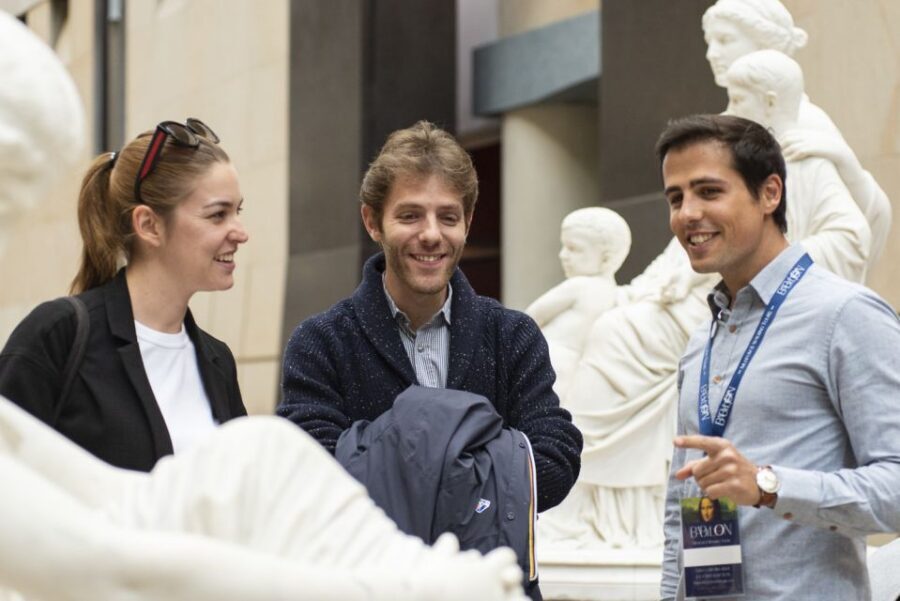
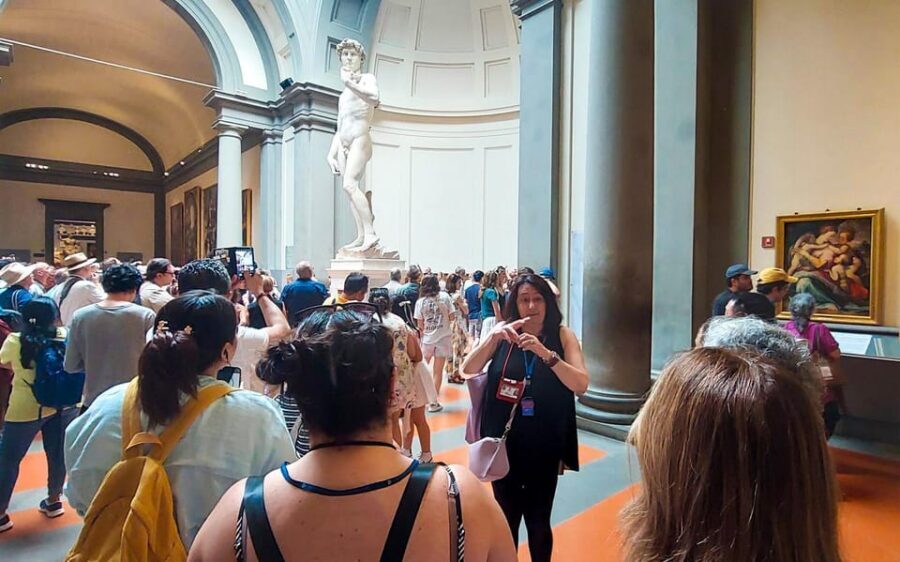
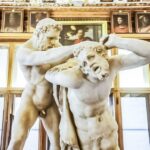
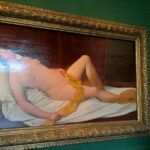
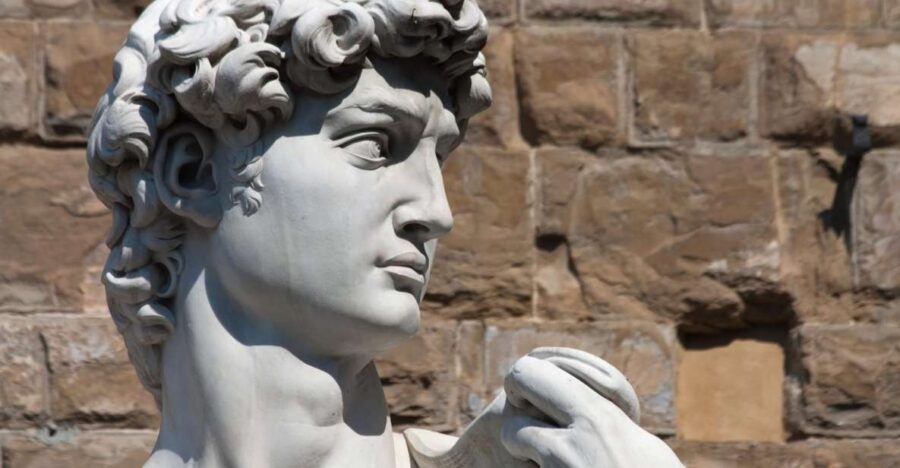
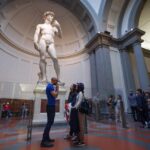
The first major museum stop is the Accademia Gallery. You’ll spend about an hour here, with a photo stop and then a guided visit. And yes, the star is Michelangelo’s David—but the tour’s value is that you’re not just standing in front of it while everyone else just stares.
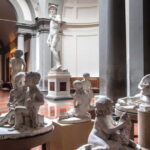
Expect your guide to connect David to Michelangelo’s thinking as an artist, and to the surrounding works in the museum, which include other significant pieces from the same era. That matters because David is famous enough to feel familiar even before you see it. A good guide helps you notice what’s actually in front of you: the proportions, the expression, the way the sculpture carries tension even though it’s completely still.
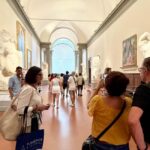
A second benefit of going early in the day is simple. Accademia can get crowded fast. With skip-the-line entrance included, you’re less likely to lose your best focus time waiting outside in the heat (or the cold, if Florence is having one of its mood swings).
Piazza del Duomo and the Cathedral complex: see it like a local
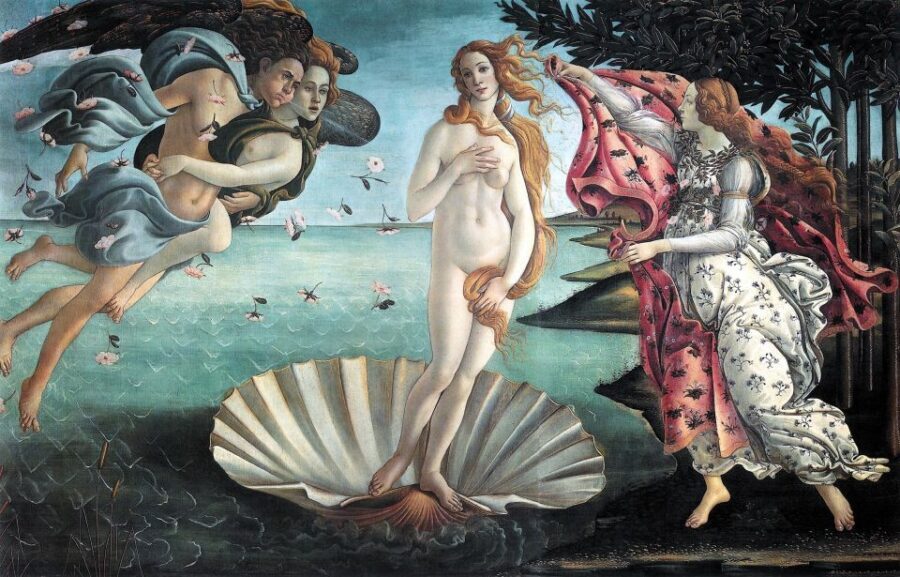
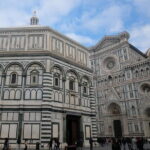
Next comes the Piazza del Duomo area and then the Duomo complex viewpoints. The tour schedule gives you short windows—about 10 minutes in each segment—so you won’t feel stuck in a single spot. Instead, you’ll get the kind of orientation you need to understand why Florence’s main church complex dominates the skyline.
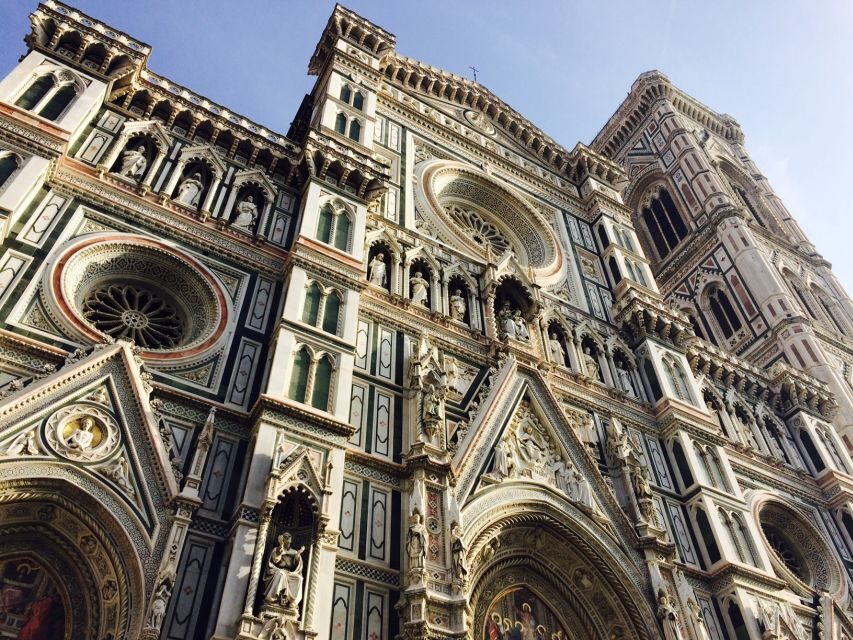
You’ll also learn the key names and details that make these structures click. The Duomo is the headline, but the tour also points your attention toward the surrounding elements, including the bronze Baptistery Doors. Even if you’re not going inside, this is one of those “exterior visits” that still pays off because architecture is part of the story.
One more practical note: this tour does not include entrance to the Duomo. So you’ll appreciate it from the outside—views, scale, and context. If you want to step inside, that’s a separate plan. For many people, the exterior-first approach is exactly what they need, especially when you’re also doing two major museums the same day.
Via dei Calzaiuoli to Piazza della Signoria: Florence in public squares
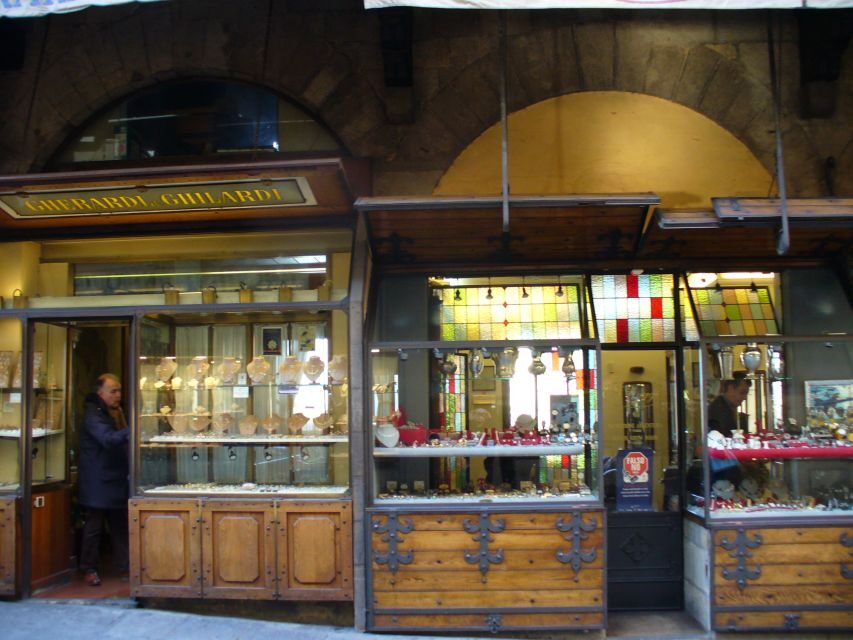
After the cathedral area, you move through the city’s everyday walking rhythm—Via dei Calzaiuoli for a quick photo stop and then toward Piazza della Signoria. This is the part of the tour that helps Florence stop feeling like separate attractions and start feeling like a connected place.
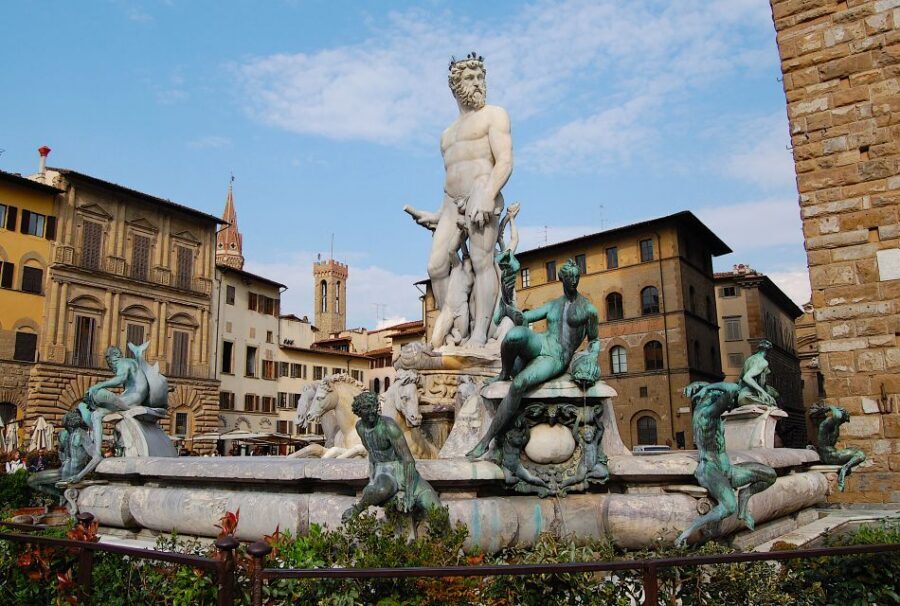
Piazza della Signoria is where political power, artistic display, and public life overlap. The tour gives you guided time here rather than treating it as a quick photo moment. It’s also where the narrative shifts toward the people who shaped the city’s reputation, including the Medici family.
Why this matters: Florence didn’t just build famous buildings. It built a way of thinking about art, power, and reputation in public. When a guide ties what you see in the square to that bigger story, the statues and palaces stop being scenery and start being evidence.
Palazzo Vecchio and Il Porcellino: the quick stops that add up
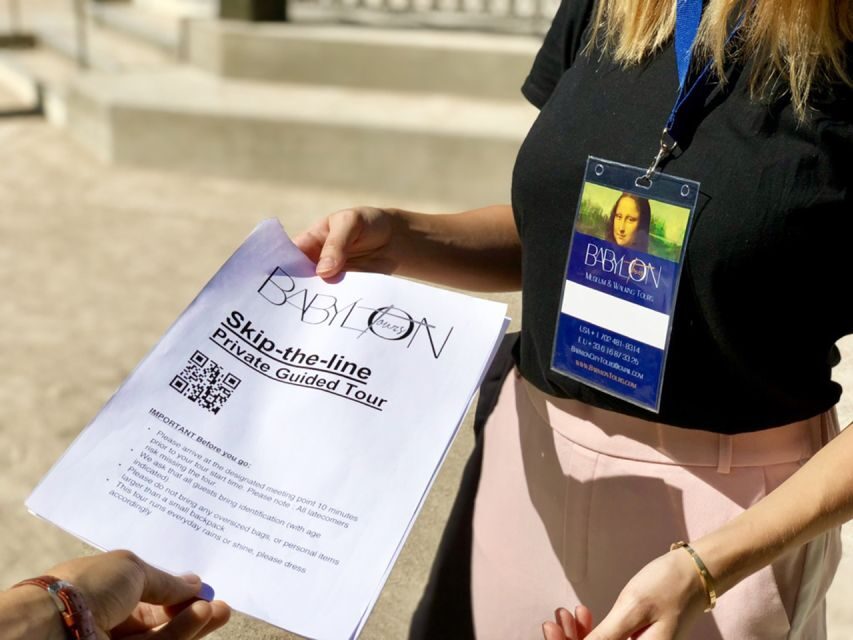
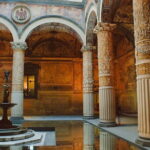
From Piazza della Signoria you continue into the Palazzo Vecchio area with another short photo stop and guided visit. You’ll also have time at Il Porcellino (the boar statue). These stops are brief, but they’re not empty.
Palazzo Vecchio reinforces the theme of Florence as a stage for civic life. Il Porcellino, on the other hand, is the kind of detail that makes you feel like you’re walking with someone who knows how locals notice the city. It’s also a fun moment to pause, reset, and refocus before you reach Ponte Vecchio.
If you’re the type who enjoys small-but-specific moments (the kind you remember later), these short segments are often what keep the day from feeling rushed.
Other Uffizi + Accademia (David) tours in Florence
Ponte Vecchio: the WWII-survivor bridge with Medici gravity
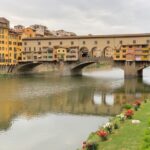
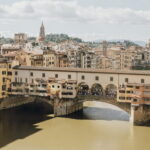
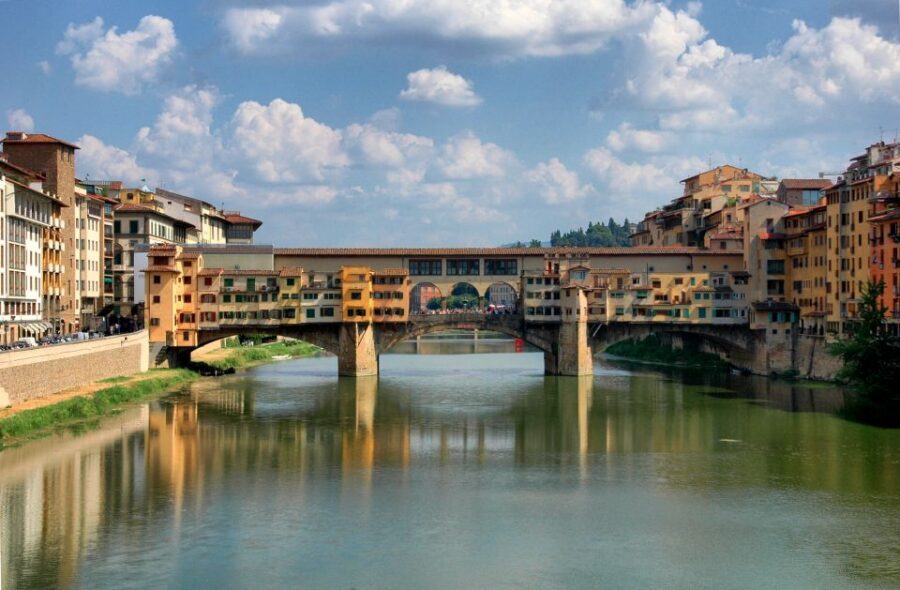
Then comes Ponte Vecchio, Florence’s most famous bridge—and one with an unusually dramatic backstory. Your guide will talk about why it became such a symbol, including the fact that it was the only bridge to survive World War II.
Ponte Vecchio also matters because it’s tied to the Medici family’s influence. Florence’s rise as an art and power center isn’t abstract here; it shows up in what people chose to protect, build, and display. You’ll get guided time on the bridge with photo stops, and the tour even gives you two passes that feel like built-in “time to look.”
This is where I’d pay extra attention if you’re more than just a quick visitor. Look down at the river, look at the buildings, and notice how the bridge functions like a narrow corridor between eras. A good guide helps you see the bridge not as a postcard, but as an object that has carried Florence’s changing stories.
Lunch break before Uffizi: the smart pacing choice
A big part of the tour’s practicality is that it includes a lunch break before entering Uffizi. You’re not thrown from street to museum to street without a reset. With about 3 hours inside Uffizi afterward, that break helps you arrive with enough energy to actually enjoy art instead of just absorbing names.
The tour includes the lunch break, but it doesn’t list food and drinks as included. So plan to cover your meal costs if needed, or have a flexible plan with your guide’s timing.
If you hate “museum days” that feel like constant standing, this pacing is a real value. Uffizi gets serious, and you’ll want your brain switched on for it.
Uffizi Gallery: guided viewing that helps you see
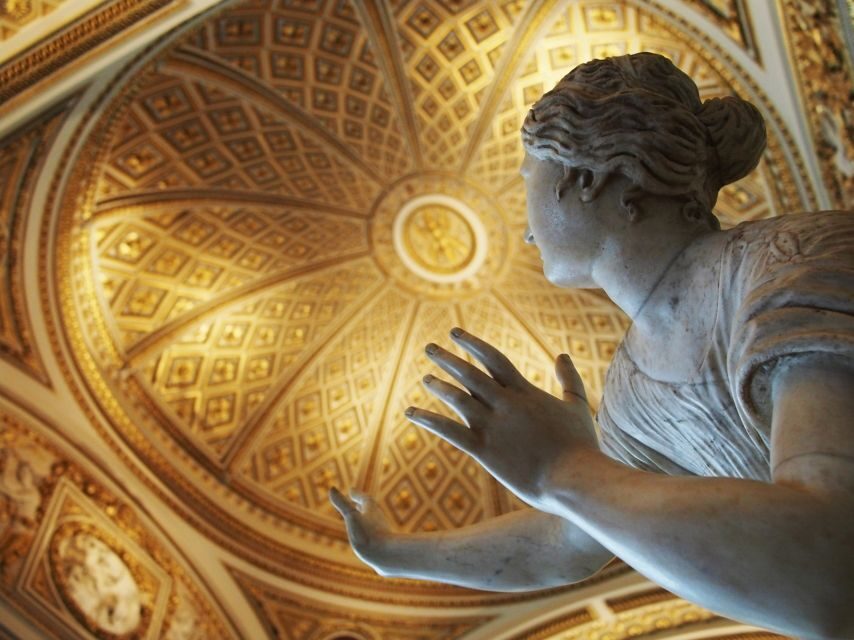
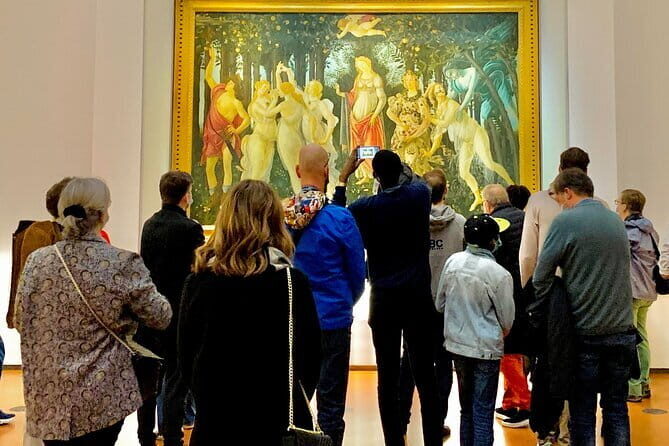
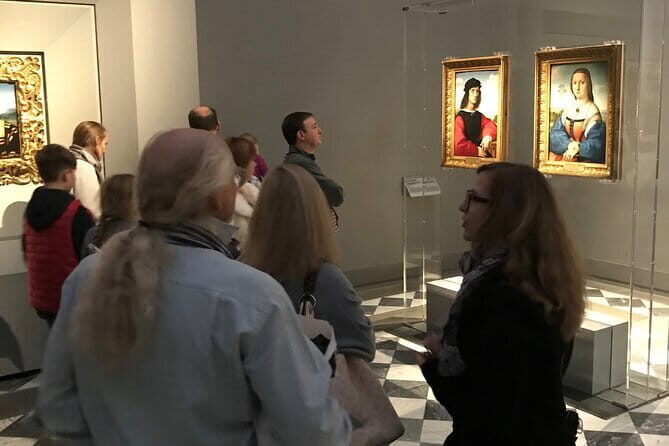
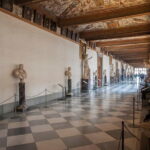
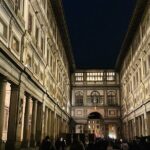
The Uffizi Gallery visit is a major chunk: about 3 hours with a guided tour. You’ll start with a photo stop, then move through the collection with your art historian guide leading the way.
The Uffizi is one of those places where a guided approach pays off quickly. There are too many works and too many connections for most people to fully catch on without help. With a guide, you’re more likely to understand what you’re looking at and how the artworks relate to each other.
What you’ll get here is not just “this painting is famous.” It’s the kind of explanation that turns galleries into a coherent experience. And since you’re doing the tour as a small group, you can usually ask questions without the guide talking only to the front of a crowd.
This is also where the tour’s skip-the-line value really shines. Uffizi lines can be long. Cutting that time means your guided time starts sooner—and you’re not losing the best hours of the day to waiting.
Group size, languages, and the kind of day to expect
This tour runs as either a private or semi-private option, with semi-private designed for a maximum of 8 people. That size matters. It keeps things interactive and makes it easier for the guide to adjust pacing if someone needs an extra moment.
The tour also runs with English and several other languages, including Portuguese, Spanish, Italian, Russian, French, and German. If you’re traveling with mixed language needs, having those options is a plus.
In the provided reviews, the guides were praised for being flexible and attentive. Elena was highlighted for being caring toward children and accommodating for someone with a knee issue, which tells you the day isn’t just about a strict pace. Lucie was noted as personable and skilled at answering questions. That’s the kind of guide you want for Florence, where every corner has meaning.
What’s included, what’s not, and where the real value is
For a price of $281 per person and a duration of 5.5 hours, the “value math” works best because you get a lot bundled in:
Included
- Entrance fees to the Accademia and Uffizi
- A professional art historian guide
- Skip-the-line entrance to the Accademia and Uffizi
- A lunch break before entering Uffizi
- Private or semi-private guided tour options
Not included
- Hotel pickup/drop-off
- Food and drinks
- Entrance to the Duomo (this tour keeps it outside)
- Special event access
- Temporary exhibition access
- Access to closed areas
So where’s the win? You’re paying for guided time plus the time-saving skip line plus museum entry. If you tried to recreate this on your own, you’d still need timed tickets for Accademia and Uffizi, and you’d spend extra time managing logistics. Here, you’re trading your effort for a structured route with key context.
Logistics that can affect your day (and how to handle them)
Florence is great, but it isn’t always predictable. Two things can change the exact flow:
- Museum closures can happen occasionally. If the Accademia or Uffizi opening is delayed by more than 1 hour from the start time, you’ll get an alternative plan. If delays are outside that window, refunds or discounts aren’t promised.
- National celebrations can affect the route. You’ll receive an alternative route covering most highlights, but changes may not come with refunds or discounts.
Also keep in mind the walking. Even though some stops are short, you’ll be moving through multiple areas of central Florence.
A couple of rules to plan around:
- Bring a passport or ID card.
- Don’t bring luggage or large bags.
- Appropriate dress is required for entry into some sites.
Should you book this Florence combo tour?
If you want a smart, efficient half day that covers Michelangelo’s David, the Uffizi, and the core Florence landmarks without spending your vacation time fighting lines, this is a strong choice. The skip-the-line access for both museums and the guided explanations are where the tour earns its cost.
Skip it only if Duomo interior access is your top priority. This route is exterior-focused for the cathedral area, and you’d need extra arrangements to go inside.
If you’re traveling in a small group or want a guided day that still feels human-sized, the private or semi-private format is exactly what you’re looking for. And if you care about having your guide answer questions—while still seeing the big sights—this is a practical way to do Florence without overthinking your schedule.
FAQ
Where do I meet the guide for this tour?
Meet your guide by the Giotto statue in the Piazzale of the Uffizi (outside).
How long is the tour?
The duration is 5.5 hours.
Does the tour include skip-the-line access?
Yes. The tour includes skip-the-line entrance to both the Accademia and the Uffizi galleries.
Is the Duomo included inside, or only outside?
The tour does not include entrance to the Duomo. You see it from the outside.
What’s the group size for the semi-private option?
The semi-private tour is for a maximum of 8 guests.
What should I bring and what should I avoid?
Bring a passport or ID card. Avoid luggage or large bags.
What happens if the semi-private tour doesn’t meet the minimum number of guests?
For semi-private tours, a minimum of 2 guests is required to run. If it doesn’t meet that minimum, you’ll be offered an alternative date or a full refund.