REVIEW · FLORENCE
Florence: Accademia Gallery & Statue of David with Uffizi Gallery
Book on Viator →Operated by The Tour Guy · Bookable on Viator
Michelangelo and Botticelli in one smooth art loop.
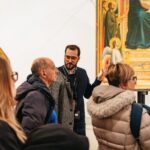
This tour packs skip-the-line entry into Florence’s biggest hits, with an expert guide who connects the dots between Renaissance power and the art you’re seeing. I like that the group stays small (max 15), so the pace feels controlled instead of chaotic.
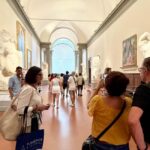
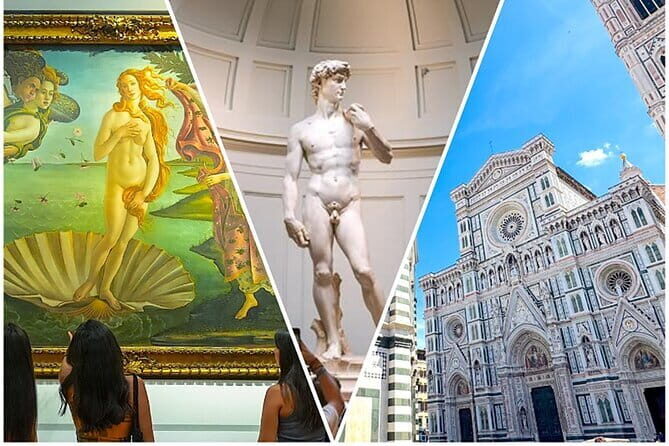
You’ll also get the kind of commentary that makes iconic works click fast. Stops include Michelangelo’s David and the Accademia’s Prisoners, then Uffizi highlights like Botticelli’s Birth of Venus and Primavera, with extra context on artists such as Raphael, Caravaggio, and Leonardo da Vinci. One consideration: even with priority entry, the museums can be crowded, and the schedule moves through only selected rooms.
In This Review
- Key Takeaways Before You Go
- Skip-the-Line Access for David and Uffizi Highlights
- Meeting at Piazza della Santissima Annunziata and Walking the City Core
- Galleria dell’Accademia: Michelangelo’s David and the Prisoners
- The Duomo and Palazzo Vecchio Area: Why the Walk Matters
- Le Gallerie Degli Uffizi: Birth of Venus, Primavera, and the Renaissance Story
- Small Group Size, English Guidance, and How to Use the Time
- Price and Value: What You’re Really Getting for $46.45
- Who Should Book This Florence Art Tour
- Should You Book It? My Take
- FAQ
- How long is the tour?
- Where does the tour start and end?
- Is skip-the-line access included?
- What art highlights will I see at the museums?
- Do I need an ID to enter the Uffizi?
- What language is the tour offered in?
- Is food included?
- Is the walking difficult?
- What’s the group size?
Key Takeaways Before You Go
- Skip-the-line access for both Accademia and Uffizi cuts out the worst queue time.
- David plus the Prisoners gives you more than one famous moment in Accademia.
- Florence walking loop past Ponte Vecchio, Palazzo Vecchio, and Porcellino Market helps you learn the city while moving.
- Uffizi highlights first, free wandering after means you get a guided path and then time on your own.
- English guides and a max group of 15 keeps questions possible and the tour feeling personal.
Skip-the-Line Access for David and Uffizi Highlights
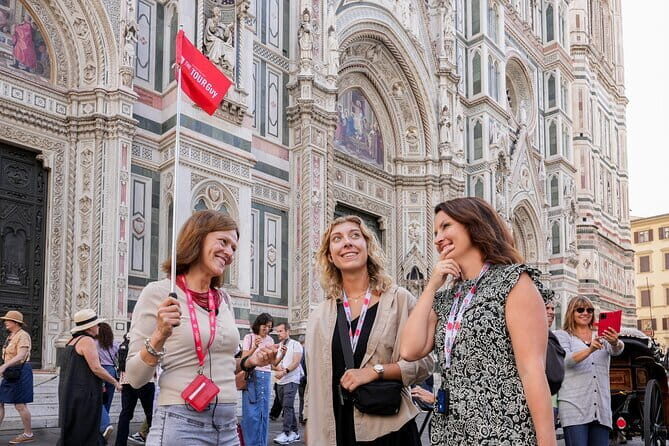
Florence can eat time. The Uffizi and Accademia are two of the toughest museums to plan without long waits, and that’s where this tour earns its keep.
You’re buying more than admission. You’re buying flow: priority entry at the main gates, a guide who holds the thread of the story, and a route that keeps you moving between major stops instead of getting stuck deciding what to do next. For art lovers, that’s a big deal—because the hard part in Florence isn’t finding masterpieces. It’s fitting them in around lines, crowd levels, and limited vacation time.
Also, I appreciate the structure: Accademia first (where David draws most of the attention), then Uffizi after, when you’re primed for Renaissance art and symbolism. The guided portion gives you “what you’re looking at” and “why it matters,” and then Uffizi doesn’t end at the last sentence. You get time afterward to linger.
Other Uffizi + Accademia (David) tours in Florence
Meeting at Piazza della Santissima Annunziata and Walking the City Core
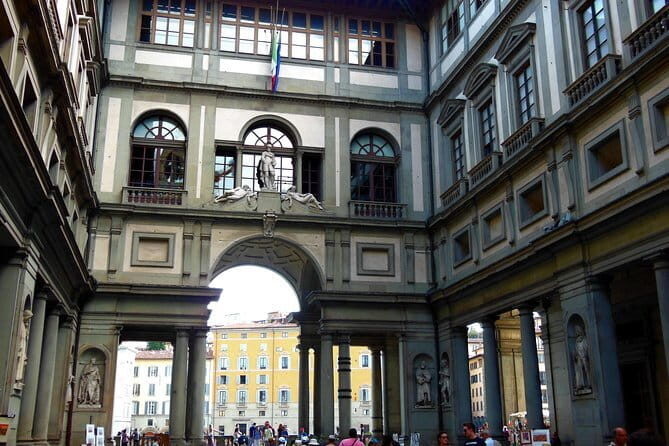
The tour starts in the historic center at Piazza della Santissima Annunziata and ends inside the Uffizi Gallery. That matters because you avoid backtracking across Florence after museums. You’re essentially guided from the Accademia area into the heart of the city and then delivered right into the Uffizi experience.
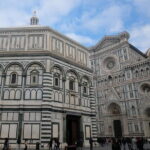
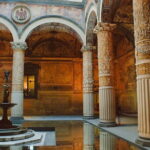
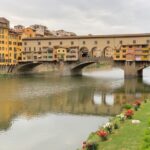
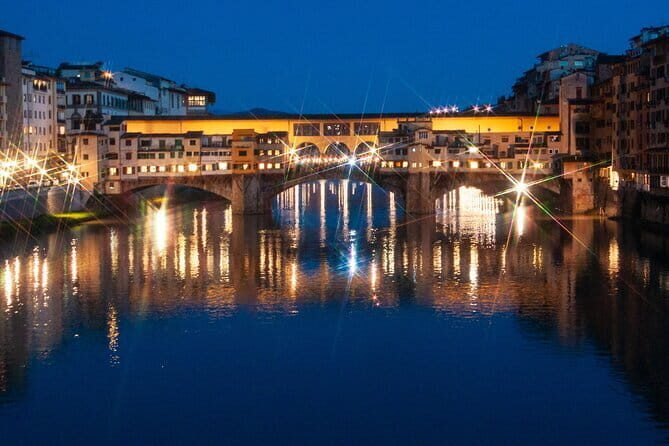
You’ll walk through key public spaces connected to Florence’s political and artistic identity. Expect the route to include major landmarks such as the area around the cathedral (including Brunelleschi’s massive terracotta dome as the skyline marker), the outdoor sculpture-filled context of Palazzo Vecchio, and a stop near Porcellino Market. You also pass through the river-adjacent scenery tied to Ponte Vecchio.
Practical note: the walk is described as mild overall, but the Uffizi can involve stairs and dense indoor corridors. Wear shoes that handle uneven stone and museum-level walking, and keep water nearby if your body runs warm in summer crowds.
Galleria dell’Accademia: Michelangelo’s David and the Prisoners
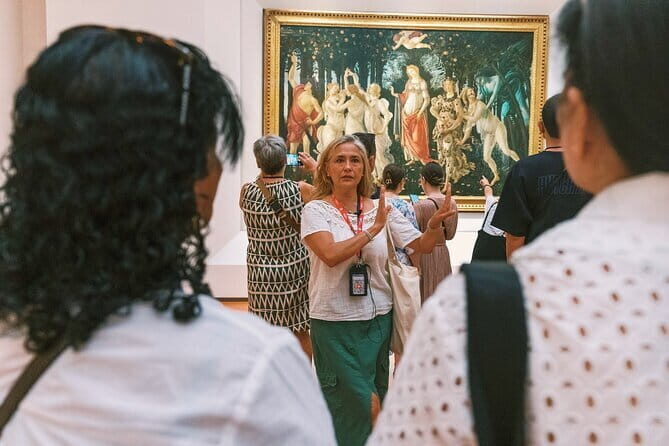
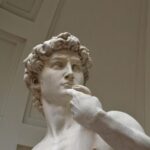
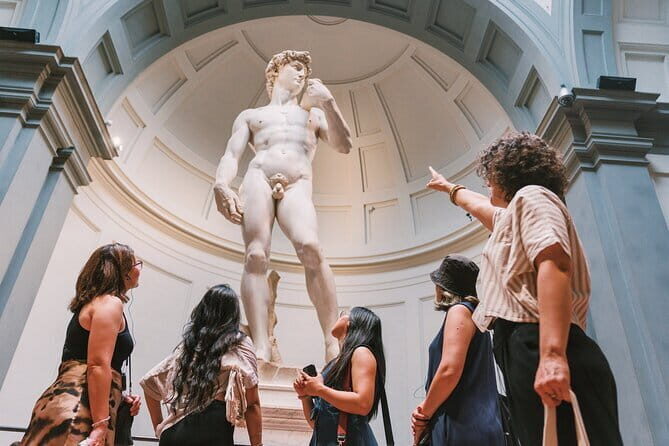
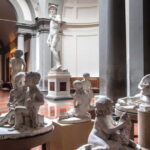
Accademia is where Florence puts its art on display like a headline. The centerpiece is Michelangelo’s David, and the tour is built around getting you close to why this statue became so famous—and why it still hits hard.
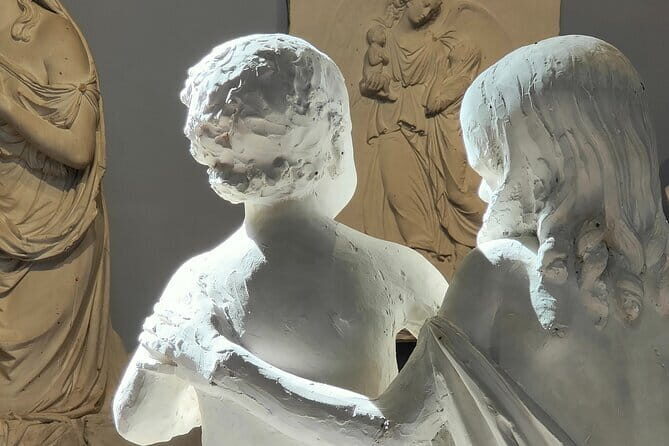
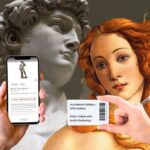
What makes this stop especially valuable is the added layer beyond the famous photo. You don’t just get a quick look. You’re guided through David with story and context, and then you also see the Prisoners series (unfinished works that show Michelangelo working through form). That second part changes how you see the first.
Here’s what you gain when the guide brings up both:
- You understand David not as a single object, but as part of Michelangelo’s broader sculpting thinking.
- You get to see how unfinished pieces can still reveal genius—because the process becomes visible.
- You’re less likely to feel like you sprinted past a masterpiece after the crowd grabbed it for you.
In the same way that a great speaker makes a song lyrics make sense, a strong Accademia guide helps you notice details you’d probably miss alone. People have highlighted guides such as Marco and his art-and-symbolism explanations, and Guido also comes up in feedback for strong guidance on both art and architecture.
Expect around 30 minutes at Accademia on the shorter version of this itinerary. That’s enough time to see the key works with direction, but not enough to do a slow, full-gallery read. If you want to stay inside the Accademia longer than your schedule allows, treat this as the fast, high-impact introduction.
The Duomo and Palazzo Vecchio Area: Why the Walk Matters
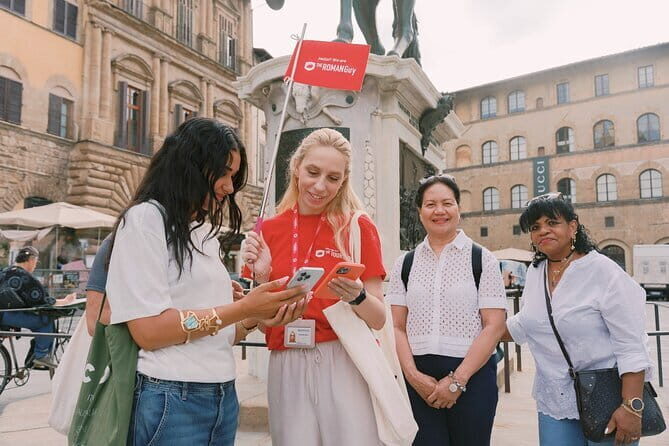
Some Florence tours treat the walk like filler. Here, the street time has a purpose. The guide uses the city’s visible markers—the dome, the square setting, the political stage of Palazzo Vecchio—to connect what you’re learning in the museums to real places.
You’ll hear about the cathedral’s dominant terracotta dome designed by Brunelleschi, and why it became a symbol of Florence’s wealth and ambition during the Renaissance. You also get the human political angle: the guide shares stories tied to the Medici family and the power struggles around the main square.
This is the kind of context that makes museum art feel less random. A painting or sculpture dated 1500 years ago stops being a distant “artifact,” and becomes a product of a specific city’s money, arguments, and pride.
A small heads-up: the tour is not marketed as a Duomo interior experience. You’ll pass by the cathedral as part of the walk, so if you’re dreaming of a full inside Duomo visit, you’ll want a separate plan for that.
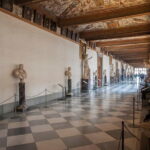
Le Gallerie Degli Uffizi: Birth of Venus, Primavera, and the Renaissance Story
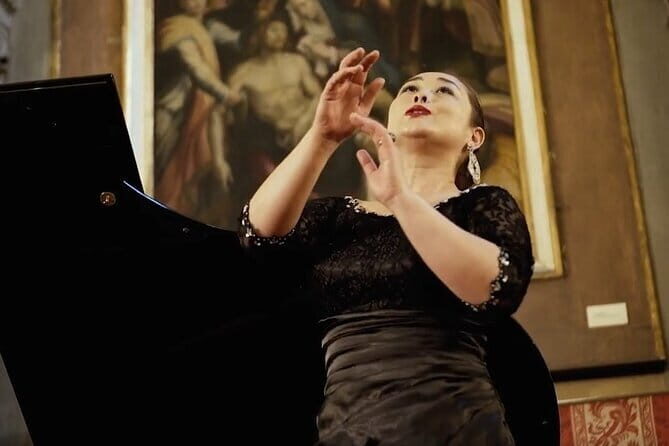
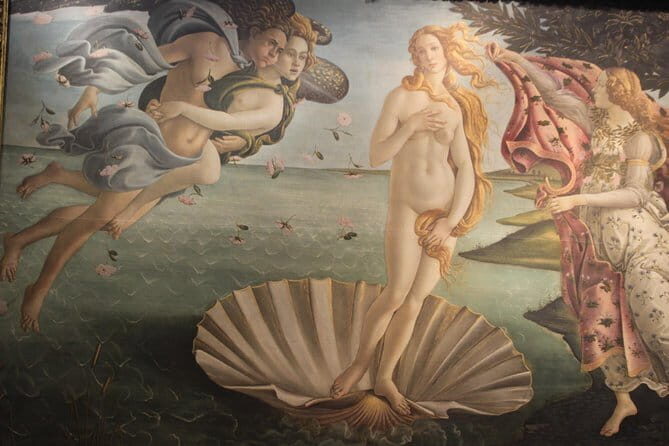
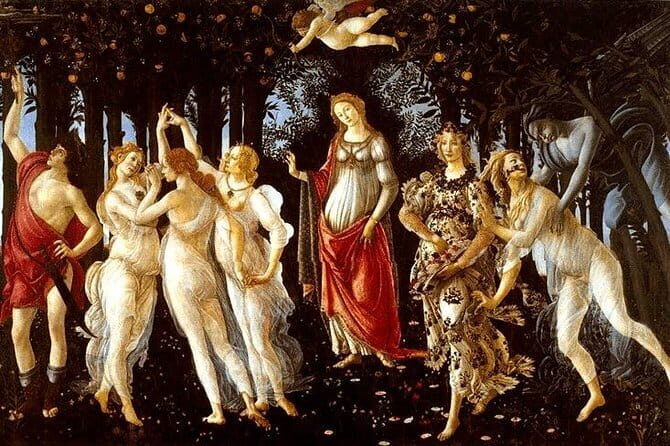
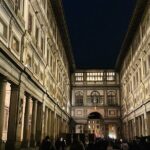
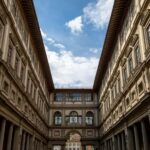
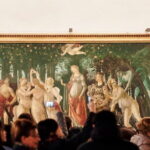
Uffizi is the big one. Botticelli’s works are built to be seen in person, and this tour puts two heavy hitters right at the start: Birth of Venus and Primavera. You don’t just move past them; the guide provides the setup—how Florence earned the nickname birthplace of the Renaissance, and why these images fit that moment in time.
After Botticelli, you’ll explore other key names tied to the museum’s reputation—Raphael, Caravaggio, and Leonardo da Vinci are explicitly included. The guide’s job is to show you what links them: artistic choices, cultural signals, and the shifting tastes that shaped what got painted and why.
Then there’s the structure that I really like for Uffizi: the guided portion ends, and you’re free to linger in the museum on your own for additional galleries. That option helps in two ways:
- If one painting catches you, you can stay longer without the guide steering you away.
- If you’re tired of being talked at, you can switch to self-paced looking.
One scheduling reality to keep in mind: even with priority access, you may still encounter crowding and slower movement inside. In at least one real-world example, people noted an hour wait for Uffizi after Accademia. I’d treat that as a reminder to build a flexible mindset. Skip-the-line isn’t magic, but it often keeps the line from being your biggest problem.
Other museum experiences in Florence

Small Group Size, English Guidance, and How to Use the Time
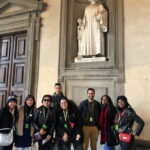
This is offered in English, with a small group maximum of 15. For museums this size, that group size helps more than you might think. With a smaller group, the guide can move you through bottlenecks faster and you’re more likely to hear explanations clearly.
The guide is also doing two jobs at once:
- giving you the story behind what you see (David’s creation and symbolism, Michelangelo’s process, Botticelli’s place in Florence)
- shaping your attention so you don’t just scan faces and move on
If you’ve ever walked through a museum and felt like you needed subtitles, this is the fix. Feedback repeatedly points to guides such as Marco (art made lively, strong symbolism) and Claudia (city art and architecture explained) as reasons the experience worked.
My practical advice: come ready to choose. With limited time at each stop, you’ll enjoy Uffizi more if you pick a couple “must-sees” besides the headliners. Use the guided segment to get grounded, then use your free time to follow your curiosity.
Price and Value: What You’re Really Getting for $46.45

At $46.45 per person (about 3 hours 30 minutes), this isn’t trying to be the cheapest ticket in Florence. What you’re paying for is the combination of:
- Skip-the-line admission for both Accademia and Uffizi
- guided explanations at both museums
- a walking route through Florence’s historic center
- a small group capped at 15
- English-speaking guidance
The tour notes that the Uffizi entry fee is €29 on its own. That alone hints at the main value: you’re not buying two basic admissions and hoping for the best. You’re buying the guide and the time-saving entry method as a package.
Is it worth it? For most people who want the biggest art hits without turning vacation into a queue day, yes. The biggest value comes when you:
- don’t want to gamble on self-planning and timing
- want context fast (especially for David and the Uffizi highlights)
- prefer a structured “see the key works + move through the city” plan
If you’re the type who wants to wander every room slowly with zero schedule, you might prefer an independent museum plan. But if your goal is to make smart use of limited hours, this is priced like a “decision made easy” option.
Who Should Book This Florence Art Tour
This tour is a strong match if you:
- want Michelangelo’s David and Uffizi highlights in one connected day plan
- like getting historical and artistic context without spending your entire trip reading wall text
- prefer small group pacing over huge bus-tour crowds
- don’t want to manage two museum entries on your own
It may feel less perfect if you:
- want an extended, full-gallery exploration of Accademia or Uffizi
- are expecting a full Duomo interior visit (you pass by the cathedral area instead)
- need ultra-slow museum time for accessibility reasons beyond mild walking
Should You Book It? My Take
If you’re going to Florence for a short stay—or you just don’t want to waste your best museum hours waiting—this is one of the better ways to get traction fast. The skip-the-line setup plus the guide-led story at Accademia and the Uffizi is exactly what most people wish they’d done when they realize how long Florence lines can be.
I’d book it if your priority is art impact with good explanations and a guided city thread linking Renaissance money, power, and what got made. Just go in knowing the schedule is selective: it’s designed to show the greatest hits with context, not to cover every room you could possibly walk into.
FAQ
How long is the tour?
It runs about 3 hours 30 minutes. The shorter version of the day typically spends about 30 minutes at Accademia and about 1.5 hours at the Uffizi.
Where does the tour start and end?
It starts at Piazza della Santissima Annunziata, Firenze FI, Italy, and ends inside the Uffizi Gallery at Piazzale degli Uffizi, 6, 50122 Firenze FI, Italy.
Is skip-the-line access included?
Yes. You get skip-the-line entry for both the Accademia Gallery and the Uffizi Gallery, along with guided time inside each.
What art highlights will I see at the museums?
In Accademia you’ll see Michelangelo’s David and the Prisoners series. In the Uffizi, you’ll focus on highlights including Botticelli’s Birth of Venus and Primavera, plus works by artists such as Raphael, Caravaggio, and Leonardo da Vinci.
Do I need an ID to enter the Uffizi?
Yes. Each traveler must present a valid passport or ID document that matches the name provided at booking for successful entry to the Uffizi Gallery.
What language is the tour offered in?
The tour is offered in English.
Is food included?
No. Food and beverages are not included, so you’ll need to plan meals on your own during any break time.
Is the walking difficult?
The tour is described as suitable for moderate physical fitness, with walking considered mild overall, though the Uffizi area can involve stairs.
What’s the group size?
The group size is limited to a maximum of 15 travelers.