REVIEW · FLORENCE
Florence: Uffizi Skip-the-Line Guided Tour
Book on GetYourGuide →Operated by Tourismotion · Bookable on GetYourGuide
Art in Florence, with fewer headaches. This 2-hour Uffizi Gallery guided tour in Spanish pairs skip-the-line entry with an expert, licensed guide, so you can focus on the paintings instead of the queue. I love that you get pre-booked tickets and a true guide-led route through the Renaissance big hitters, and I also love the small-group feel (up to 25) that helps the tour stay personal. One thing to consider: it is not wheelchair accessible, and the museum security check means you should arrive ready and on time.
If your Spanish is solid, this is a smart way to do the Uffizi. The tour is built around major works you’ll recognize immediately, like Botticelli, Michelangelo, Leonardo da Vinci, and Raphael, with an explanation of the Medieval-to-Renaissance story that gives the rooms more meaning. The main drawback is practical rather than artistic: if you’re delayed, you may not be able to join the group, so timing matters.
In This Review
- Key things to know before you go
- Why the Uffizi in Spanish Works So Well
- Meeting at Piazzale degli Uffizi and the Security Reality Check
- Inside the Uffizi: Botticelli and the Renaissance Story You’ll Follow
- Michelangelo, Leonardo, Raphael: How the Tour Stays Focused in 2 Hours
- Small Group Up to 25: Better Listening, Better Pace
- Price and Value: Is $87 Worth It?
- What You’ll Have to Manage: Shoes, Bags, Water, and Timing
- Special Dates: First Sunday Free, But Not Guaranteed
- Who This Tour Suits Best (and Who Might Want Another Option)
- Should You Book This Florence Uffizi Skip-the-Line Spanish Tour?
- FAQ
- How long is the Florence Uffizi skip-the-line guided tour?
- What language is the tour guide?
- Where do I meet the tour?
- What’s included in the price?
- Is it wheelchair accessible?
- What items are not allowed?
Key things to know before you go
- Spanish guide included: You’ll get live commentary in Spanish, not just a self-guided audio plan
- Skip-the-line entry: Pre-booked entrance tickets help you avoid the longest bottlenecks
- Headphones if needed: For groups larger than 9, you’ll get headphones to hear the guide clearly
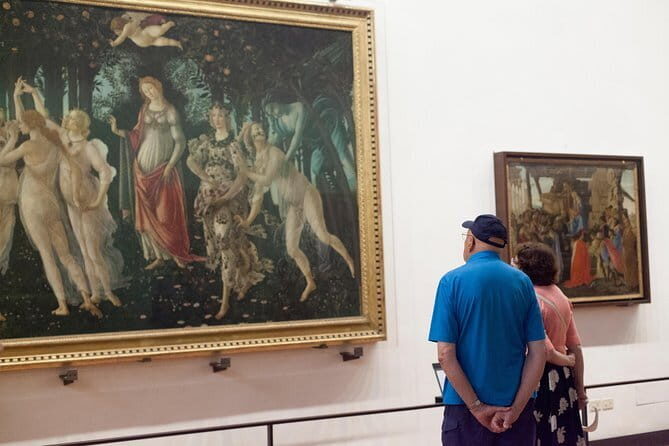
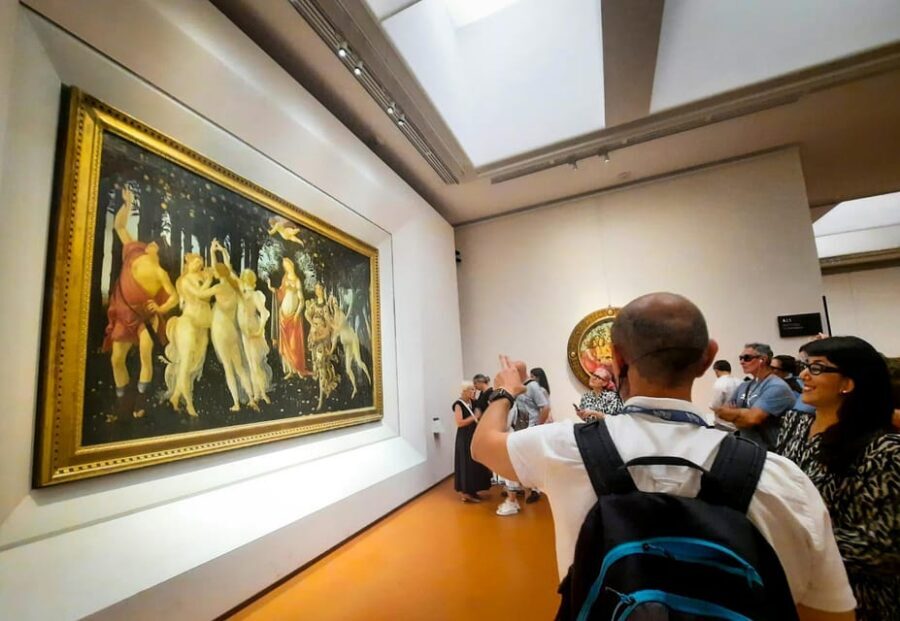
- You’ll see the famous works: Botticelli’s Birth of Venus and Primavera plus Michelangelo’s Doni Tondo
- 2 hours is tight but focused: It’s long enough for highlights, short enough to keep you moving
- Not for wheelchair access: Elevator closures mean the tour isn’t set up for wheelchair users
Why the Uffizi in Spanish Works So Well
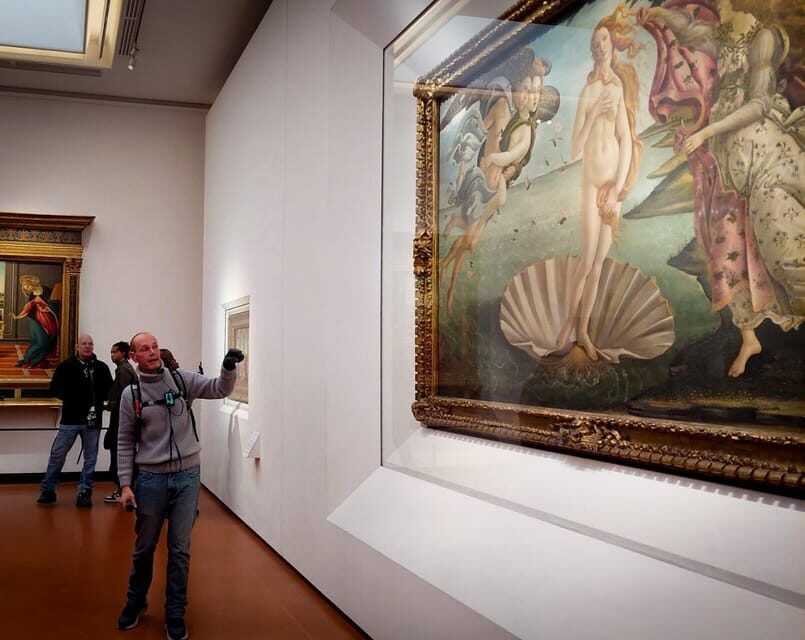
The Uffizi is famous for a reason, but it can also feel like information overload if you walk in cold. What I like about this tour is that you get a licensed, expert guide in Spanish, so you’re not just looking at masterpieces—you’re learning why they mattered. And because the group is capped at 25, the experience doesn’t turn into a silent stampede.
Another practical plus: when the group is bigger than 9, the tour uses headphones, so you’re less dependent on hearing distance and room acoustics. That matters in the Uffizi, where galleries are busy and people cluster around the same “must-see” pieces.
If your Spanish is intermediate, you’ll still pick up a lot from the pacing and clear references to artists and techniques. If your Spanish is beginner-level, you might find it harder, but you’ll likely recognize the works and catch enough context to keep the visit enjoyable.
Other skip-the-line Uffizi tickets we've reviewed in Florence

Meeting at Piazzale degli Uffizi and the Security Reality Check
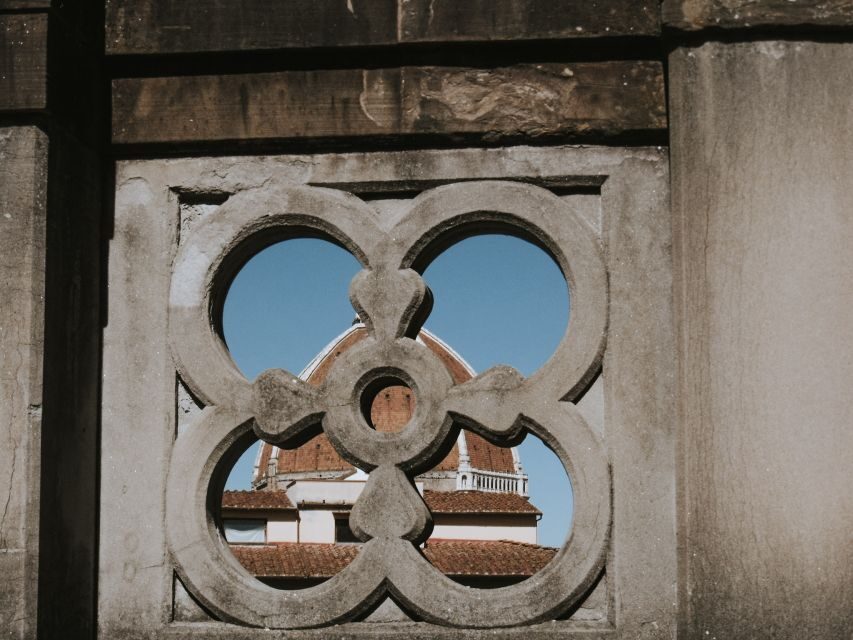
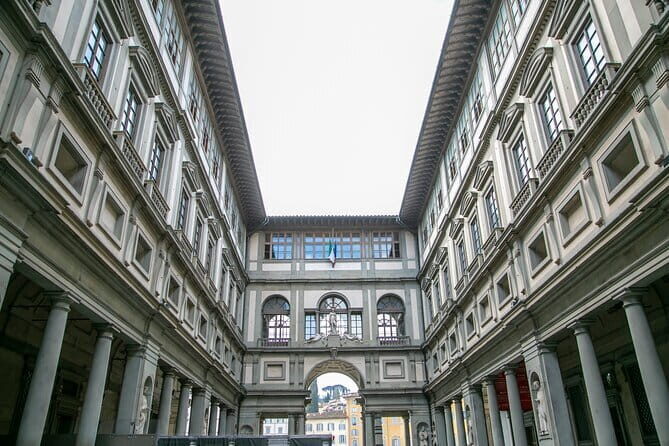
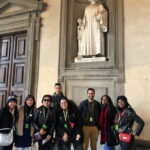
You meet at Piazzale degli Uffizi 6, right in front of the museum entrance—specifically at door number one, between the statue of Petrarca. This is one of those details that saves stress. The piazza around the museum can be chaotic, and “near the entrance” is not specific enough when you’re trying to link up with a group.
Plan for an airport-style security check at the Uffizi. The rules are straightforward: avoid sharp or dangerous items, and think of it as a place where you’ll be asked to show you’re traveling light. This isn’t the moment to roll in with a pocket full of metal tools or a bag that looks suspiciously oversized.
You’ll also want to be mindful of what doesn’t fly inside. Large bags and oversize luggage are not allowed, and backpacks are restricted too. Food and drinks are also not allowed, and water bottles larger than half a liter are off-limits. If you’re the type who likes to carry snacks and a big daypack “just in case,” you’ll need to adjust.
Inside the Uffizi: Botticelli and the Renaissance Story You’ll Follow

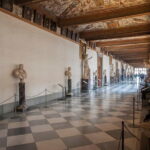
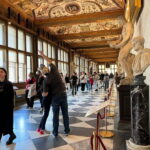
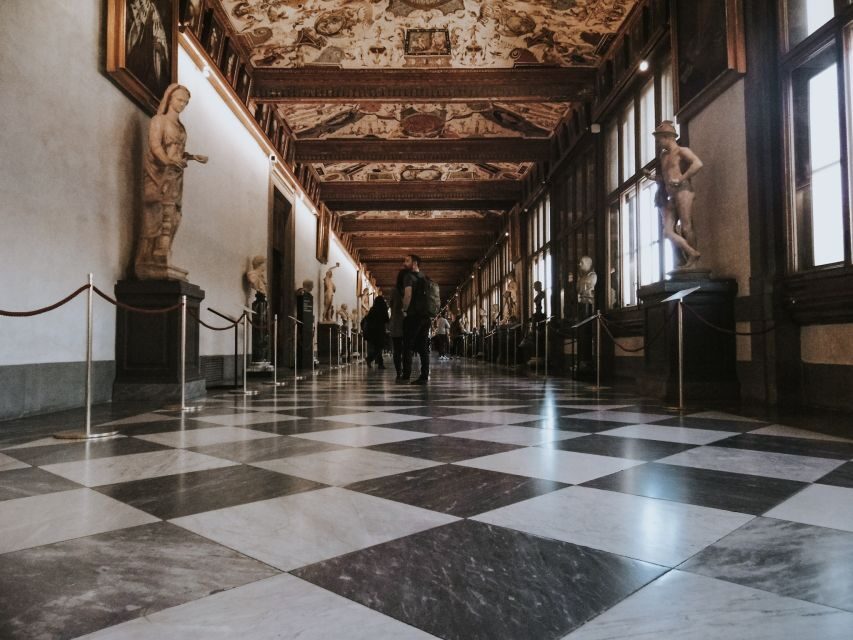
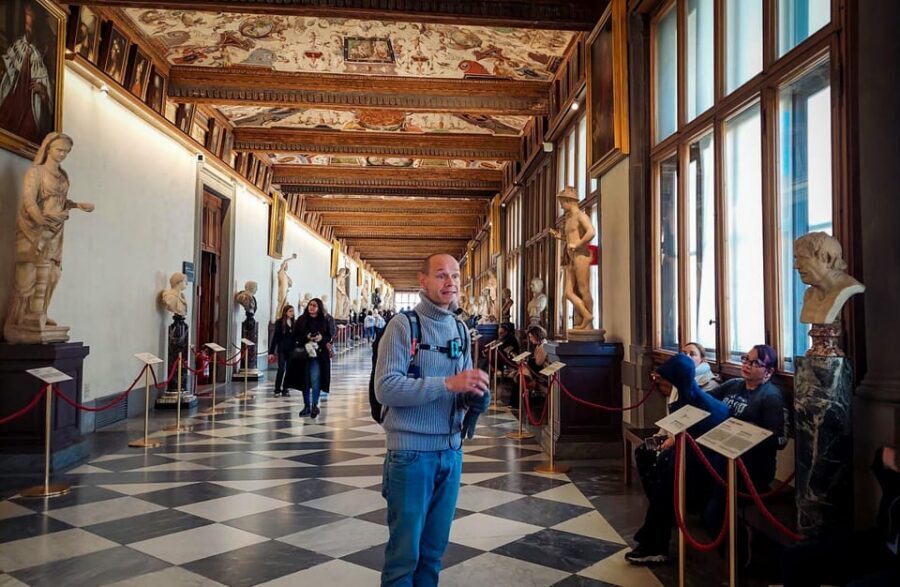
Once you’re through, the tour starts making the gallery feel less like a warehouse of art and more like a timeline with drama. The guide frames Florence’s role in the art world, moving from the Medieval period into the Renaissance, so the masterpieces don’t feel disconnected from each other.
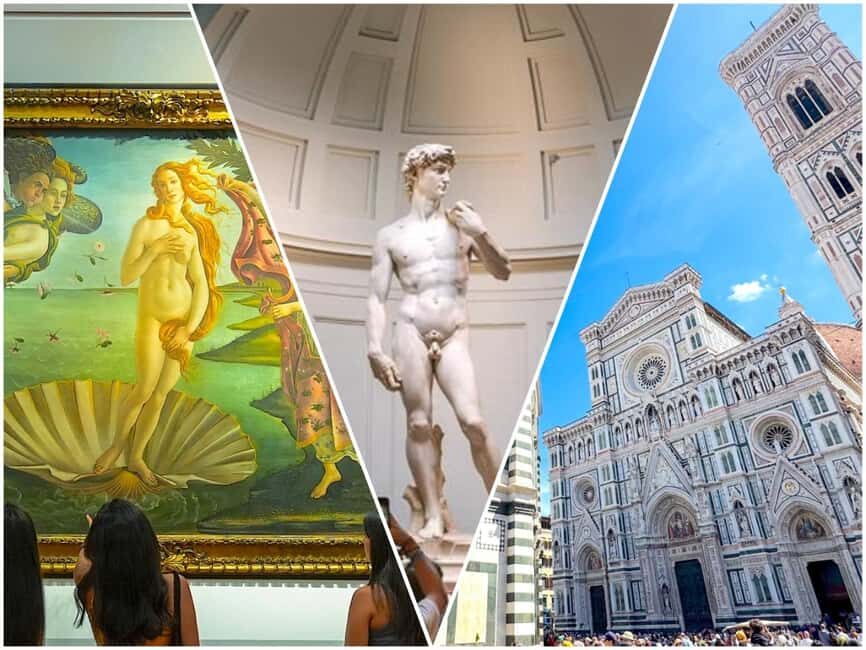
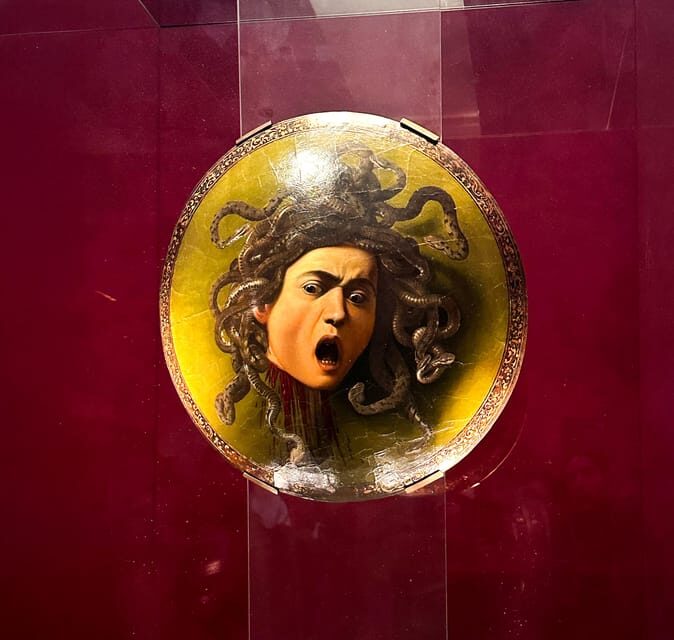
This is where Botticelli comes in strong. You’ll see iconic works including Birth of Venus and Primavera. Even if you’ve only seen these in books, they land differently in person—scale, color, and the details you can’t fully grasp on a screen. The guide’s job is to translate the “why this looks like that” into something you can actually understand: who these artists were, what themes they were working with, and what inspired their choices.
What you’ll probably appreciate most is the way the tour connects the artworks to the people and ideas behind them. Botticelli isn’t just beautiful painting here; it becomes part of a bigger Florence story. If you like art that has symbols and meaning, this is a strong match.
Michelangelo, Leonardo, Raphael: How the Tour Stays Focused in 2 Hours
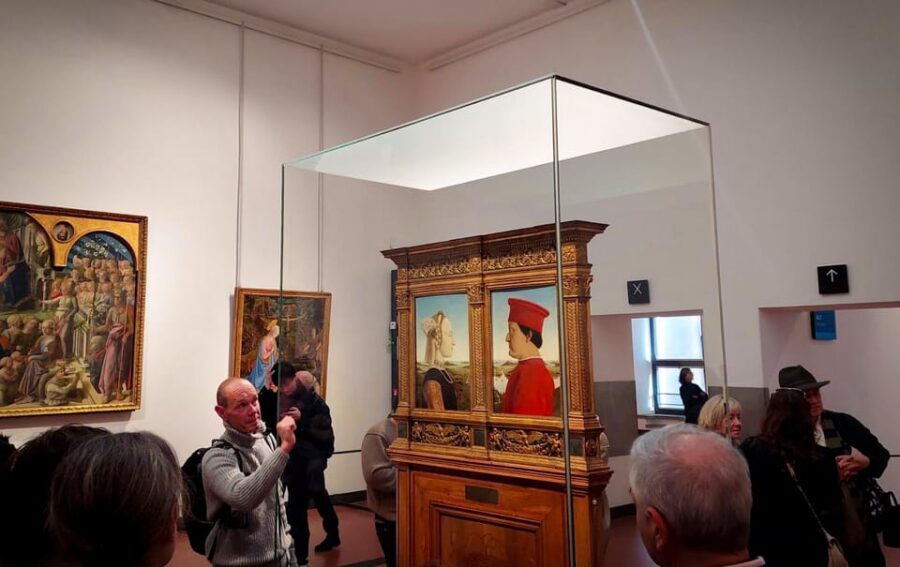
A common worry with any Uffizi tour is time. Two hours sounds short—until you realize that a guided highlight route is built for exactly that: getting you to the key rooms and the best-known works without turning your day into a marathon.
You’ll also see Michelangelo’s Doni Tondo, which is a great example of why guidance helps. Michelangelo’s work can feel instantly recognizable, but a guide can point out what to look for in composition and expression, and why this kind of piece belongs in this broader Renaissance context. You’re not just staring; you’re getting a lens.
Beyond those named works, the guide covers Leonardo da Vinci and Raphael, along with other Renaissance legends. Even when you don’t leave a room with a list of technical terms, you’ll walk out with clearer mental categories: who did what, how styles evolved, and why Florence became a magnet for artists.
If you’re the type who wants the full dissertation on each panel, this tour may feel like it moves fast. But if you want the most famous works explained in a practical way—this length is a real advantage. It keeps you engaged and prevents the “I saw a lot but remember nothing” problem.
Small Group Up to 25: Better Listening, Better Pace
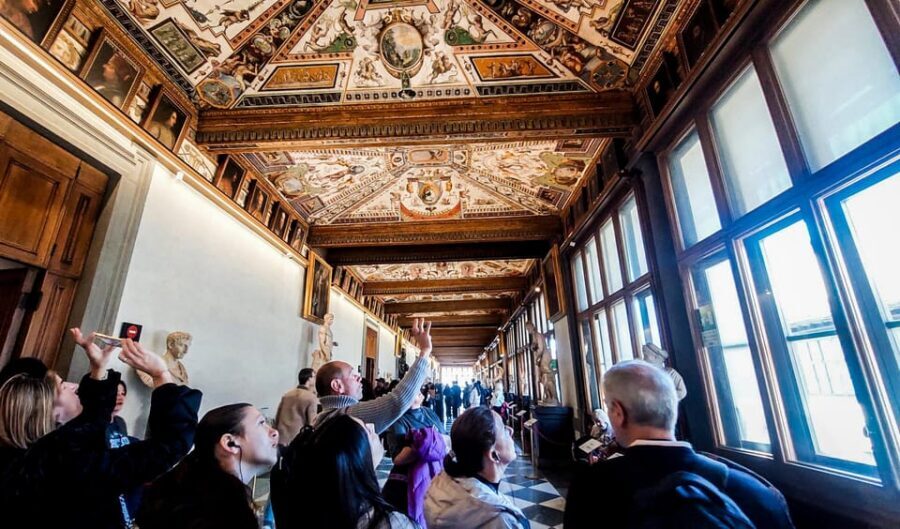
Up to 25 participants is a sweet spot for a museum tour. It’s small enough that your guide can keep control of the group and adjust explanations, but not so tiny that the tour feels slow or awkward. You’ll likely get a more conversational feel than you would on huge group runs.
And even when you can’t ask questions (museum crowding can limit that), a smaller group usually makes it easier to actually stand and look without being pushed around constantly. That matters around the most popular paintings, where space is limited and people linger.
There’s a trade-off, of course. With a group, you’re moving at the guide’s rhythm. If you love getting lost in side rooms or you have a strong personal agenda (for example, only wanting Botticelli), you may want extra time afterward on your own. Still, as a first or second visit strategy, this group size works.
Other guided tours in Florence




Price and Value: Is $87 Worth It?
At $87 per person for a 2-hour guided tour, you’re paying for three things that matter in Florence: time saved, interpretation provided, and admission handled for you.
First, the tour includes pre-booked entrance tickets. That’s a big part of the value because the Uffizi can be a bottleneck. Skip-the-line access is not just comfort—it’s scheduling power.
Second, you’re paying for a live, Spanish-language guide, which is usually the difference between seeing masterpieces and understanding what you’re seeing. Since you’re not relying on an audio app, you’re getting context in the moment, tailored to the tour route.
Third, headphones kick in for groups larger than 9, which helps the guide’s explanation land clearly. That’s one of those “small” inclusions that improves the experience more than people expect.
Transfers from/to the hotel are not included, so you’ll still handle transportation yourself. If you’re staying close, that’s fine. If your hotel is far, you may spend a bit more time and money getting to the meeting point. But the core museum experience is set up so you’re not scrambling.
What You’ll Have to Manage: Shoes, Bags, Water, and Timing
This tour is easy in spirit but strict in logistics, like many major European museums. You should wear comfortable shoes. The gallery area isn’t set up for fragile soles and flimsy sandals, and you’ll be moving from room to room.
For baggage, keep it simple. You should not bring oversize luggage, and you can’t bring large bags or backpacks. The museum also doesn’t allow food and drinks, and water bottles over half a liter are not allowed. If you’re used to carrying a full-day pack, plan to leave most of it behind.
Timing matters too. If you’re late, it may not be possible to join the group, and you won’t get reimbursement if you miss the start. That’s not a trick; it’s how these tours stay on schedule.
If you’re traveling with kids, there’s an extra rule: you need to present a children’s identity card for age verification at the museum. That’s the kind of requirement that can ruin a smooth entry if you don’t know it ahead of time.
Special Dates: First Sunday Free, But Not Guaranteed
One neat detail: on the first Sunday of each month, entrance is free. But because tickets can’t be reserved ahead of time, entry is not guaranteed.
This means that even though the day sounds tempting, it’s not the easiest day to count on a smooth plan. If your schedule is flexible, a regular day is calmer. If you’re locked into that first Sunday, expect more uncertainty and build in patience.
This is also a good reminder to treat skip-the-line tours as a scheduling tool, not just a comfort add-on.
Who This Tour Suits Best (and Who Might Want Another Option)
This tour is a strong fit if:
- You want a Spanish-language guided visit to the Uffizi, with key works explained
- You like Renaissance art and want the Florence “story” that connects Medieval to Renaissance
- You’d rather spend two hours looking well than three hours drifting and getting tired
- You’re visiting for the first time (or you’ve been once and want a guided reframe)
It’s not a good fit if:
- You need wheelchair access or have mobility impairments that rely on elevator access, since the tour isn’t accessible due to elevator closures
- You travel with large bags/backpacks or you don’t want to follow the museum restrictions
- You’re the type who needs total freedom to stop and start on your own schedule for extended periods
If you’re a Spanish speaker, you’ll get the most out of it. If you’re not, you might still enjoy the highlights, but you’ll miss half the benefit: the live guide explanations.
Should You Book This Florence Uffizi Skip-the-Line Spanish Tour?
I’d book it if you want a clean, guided highlights route that gets you into the Uffizi without wasting precious time in line. At $87 for 2 hours, it’s not the cheapest way to enter a museum, but you’re not just buying tickets—you’re buying interpretation from a Spanish guide, plus practical extras like headphones when needed.
I’d also book it if you’re visiting with limited time and you want the big-name paintings—Botticelli, Michelangelo, Leonardo, Raphael—in a coherent order with context that’s easier to remember later.
Skip this one if you rely on elevator access, need a fully accessible route, or you know you’ll be late. For most people, though, this is a smart way to do the Uffizi: structured, focused, and much less stressful than winging it.
FAQ
How long is the Florence Uffizi skip-the-line guided tour?
The tour lasts 2 hours.
What language is the tour guide?
The tour guide speaks Spanish.
Where do I meet the tour?
Meet in front of the Uffizi Gallery entrance at door number one, between the statue of Petrarca. The address is Piazzale degli Uffizi 6, 50122 Firenze.
What’s included in the price?
You get pre-booked entrance tickets for the Uffizi Gallery, a professional guide in Spanish, and headphones for groups with more than 9 people.
Is it wheelchair accessible?
No. The tour is not accessible to wheelchair users because elevators at the Uffizi are closed.
What items are not allowed?
You can’t bring weapons or sharp objects, oversize luggage, large bags or backpacks, food and drinks, and water bottles over half a liter.