REVIEW · FLORENCE
Florence: Uffizi Gallery Priority Access & Small Group Tour
Book on GetYourGuide →Operated by Tours About · Bookable on GetYourGuide
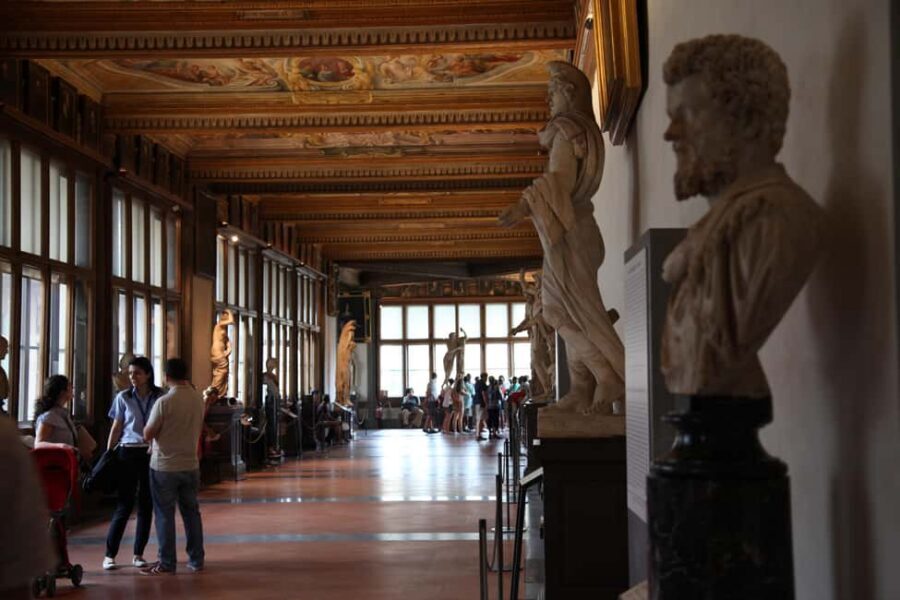
The Uffizi is famous for one thing: long waits. This Uffizi priority access small-group tour shortens that stress and keeps you focused on art, not logistics, with a live guide plus headsets. I like the tight 1.5-hour format because it pairs big-name works like Birth of Venus (Botticelli) with standout sculpture in the same visit window, so you leave with actual takeaways.
My second favorite part is the way the guide points out the hidden secrets inside well-known masterpieces—details you’d miss if you just wandered room to room. One drawback to keep in mind: the museum is enormous, so with only 1.5 hours you won’t see everything, and you still must pass a security check (often 15–20 minutes during peak hours).
In This Review
- Key Highlights You’ll Feel Immediately
- Priority Entry Meets Smart Timing at the Uffizi
- Meeting the Guide in Front of Leonardo’s Statue
- What You’ll Actually Do in 90 Minutes
- Botticelli’s Birth of Venus: What to Look For
- Michelangelo’s Wooden Work and Raphael’s Presence
- Leonardo’s Adoration of the Magi and the Medici Backstory
- Small Group, Headsets, and the Pace That Works
- After the Tour: Stay Until Closing Time
- Price, Value, and Who This Tour Fits Best
- Should You Book This Uffizi Priority Access Tour?
- FAQ
- FAQ
- How long is the Uffizi priority access tour?
- Where do we meet the guide?
- Does this tour skip the line?
- What art highlights will we see?
- What languages are available for the live guide?
- How many people are in the group?
- What’s included in the price?
- Is passport or ID required?
- Are there restrictions on bags or items?
- Can I stay in the museum after the tour ends?
Key Highlights You’ll Feel Immediately
- Separate-entrance priority access helps you skip the usual queue once you’re ready to enter
- Small group (max 9) means you can actually hear the guide and ask quick questions
- Headsets and earpieces make it easier to catch every explanation in busy rooms
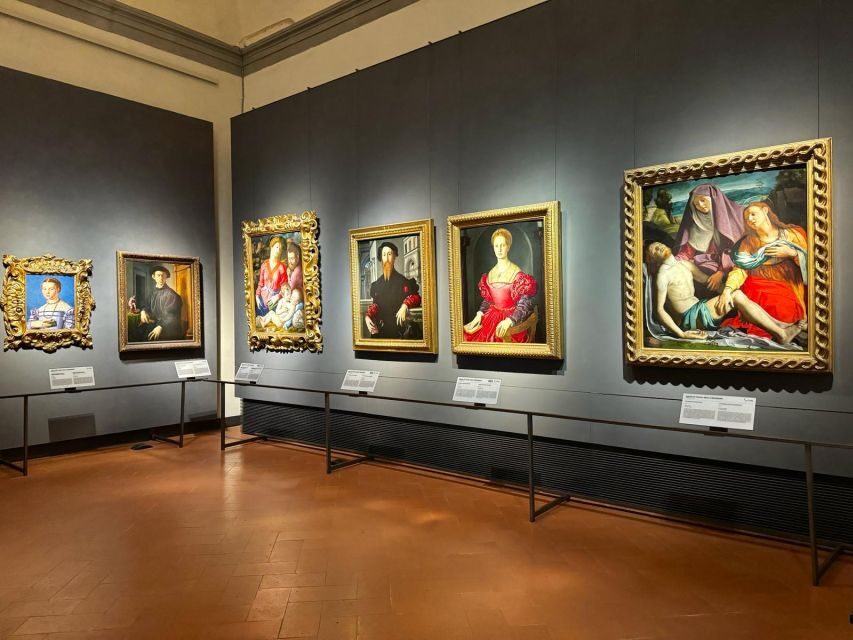
- Big anchors plus smart details: Botticelli, Michelangelo’s wooden work, Raphael, and Leonardo’s Adoration of the Magi
- Linger after the tour if you want more time with the works that stuck with you
Priority Entry Meets Smart Timing at the Uffizi
If you’ve ever tried to see the Uffizi without a plan, you know the drill: you stand, you shuffle, you lose half the day before you even start. This tour’s main promise is straightforward—fast entrance tickets and skip-the-line via a separate entrance—so you can get into the museum and start looking right away.
The tour runs 1.5 hours, which is a realistic sweet spot for first-timers. You get a guided route through major works, plus the context to understand why Renaissance painters and sculptors were doing what they did. In other words, it’s not just a highlight reel; it’s a “here’s what to notice” walk.
And because the group is capped at 9 participants, the pace stays human. You won’t feel like you’re being dragged like luggage through galleries, and the guide can slow down when a work needs a closer look.
Other skip-the-line Uffizi tickets we've reviewed in Florence

Meeting the Guide in Front of Leonardo’s Statue
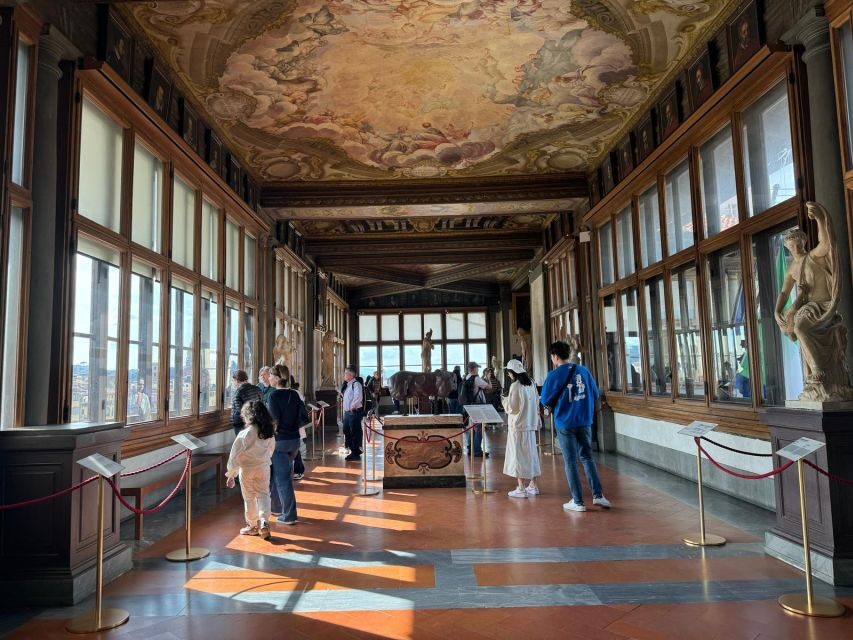
Your start point matters here, because the Uffizi area can feel like a maze once you’re juggling directions, time, and a crowd. Meet your guide in front of Leonardo da Vinci’s statue, and look for someone holding a white flag that says ENJOY ROME.
Bring passport or an ID card. The museum requires it, and tickets with incorrect names may not be accepted for entry. Also keep your bag situation simple: no large bags, and no pets or weapons/sharp objects.
Even with priority entry, plan for the museum’s security process. During peak hours, the wait for the security check is around 15–20 minutes. The good news is that this tour still reduces the typical bottleneck, so you’re not spending your best art-viewing hours stuck in the main line.
What You’ll Actually Do in 90 Minutes
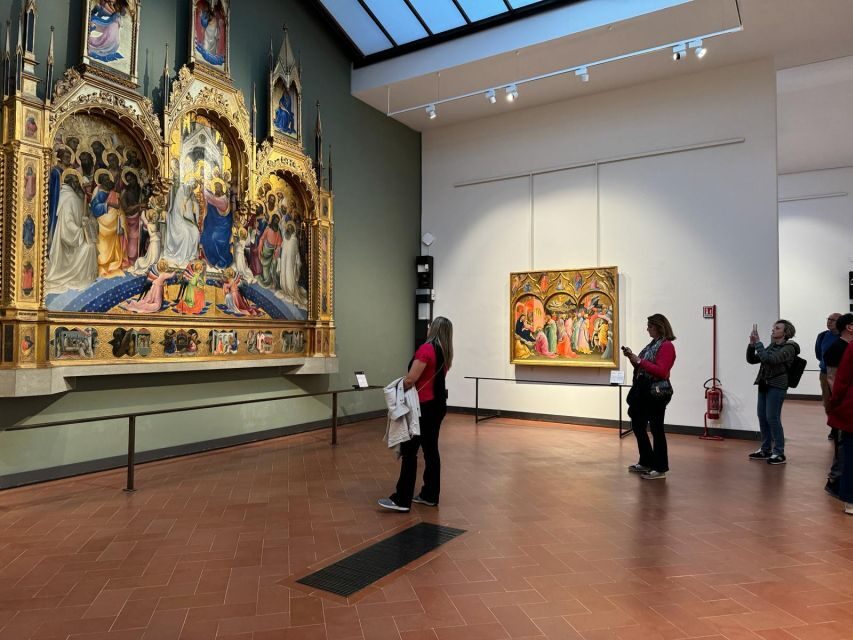
With only 1.5 hours, you need a route that’s built for attention. That’s exactly what this tour is designed to be: a guided look at the Uffizi’s most important works, with explanations that point you toward details rather than just facts.
The guide also aims to show you hidden secrets concealed within masterpieces. You can think of this as learning how to read Renaissance art fast. For example, you’ll get prompts on what the composition is doing—where your eye should go, why gestures and faces matter, and how the artist uses myth or religion to say something about power, faith, or human nature.
This is where a guided format beats solo wandering. Left alone, you’ll likely end up moving quickly past the works that would reward you if you spent a few extra seconds with them.
Botticelli’s Birth of Venus: What to Look For
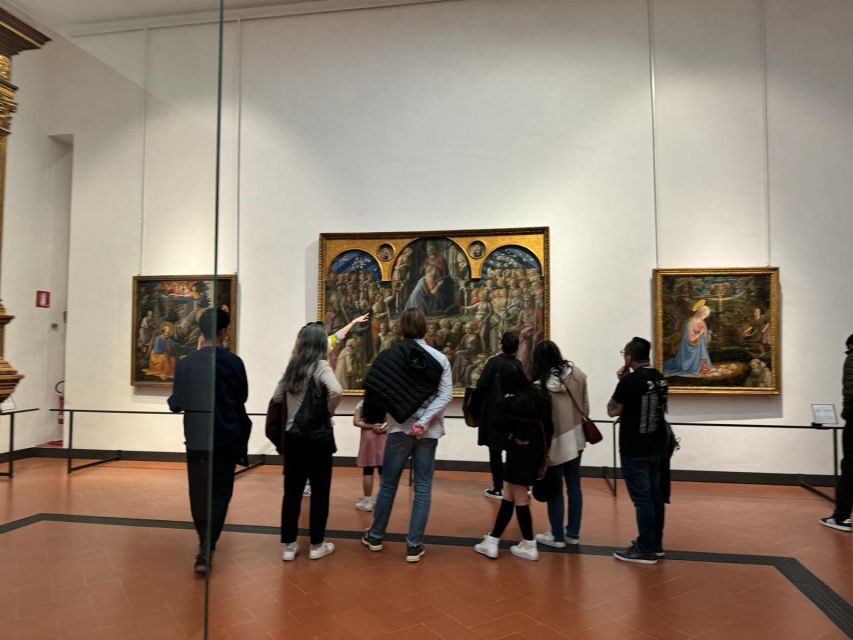
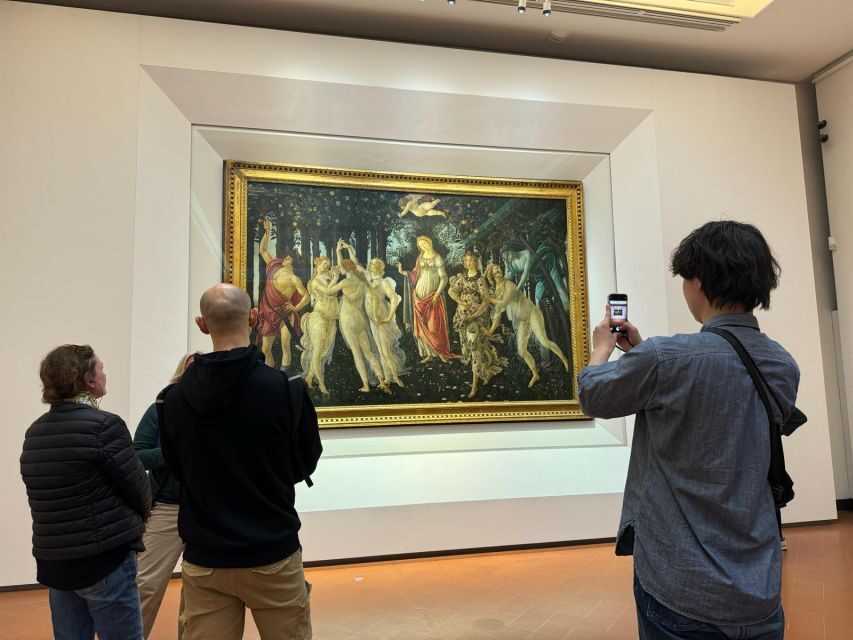
One of the anchors of the tour is Sandro Botticelli’s Birth of Venus. Even if you’ve seen this painting in textbooks, the real experience is different: the colors, the scale, and the way the figures are arranged make it feel less like an icon and more like a story you’re being asked to decode.
During the tour, you’ll get the kind of guidance that helps you notice the small stuff: how the figure’s pose carries meaning, how the surrounding elements frame the main subject, and how the work fits into the larger Renaissance fascination with classical mythology. The goal isn’t to memorize art history. It’s to help you understand why this image became so influential.
If you love getting “permission” to stare a little longer at one artwork, this is the moment. A good guide helps you focus your time where it pays off.
Michelangelo’s Wooden Work and Raphael’s Presence
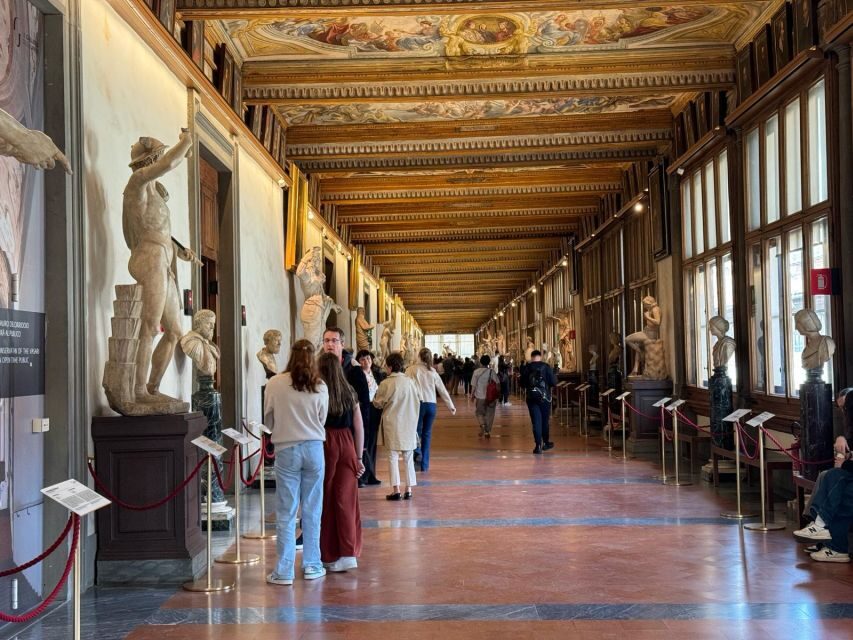
This tour doesn’t stop at paintings. You’ll also encounter Michelangelo’s unique wooden masterpiece, which changes the vibe fast. Seeing Michelangelo in a medium you might not expect is one of those moments that makes the Uffizi feel alive, not like a static museum of flat images.
Michelangelo’s presence often comes with intensity—shapes that feel carved with purpose, and a sense that form itself is the argument. With a guided explanation, you’ll have more than a “wow, that’s famous” reaction. You’ll have a framework for what you’re looking at and why it matters.
Then you’ll move through Raphael’s masterpieces. Raphael’s work tends to feel balanced and human in a way that invites slower looking. A guide can help you spot what makes Raphael different: the clarity of forms, the calm of expression, and the way scenes hold together. With a timed route, you may not be there long—but the tour helps you avoid the mistake of treating each masterpiece like just another photo-op.
Other small-group Uffizi tours in Florence

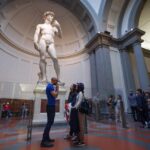
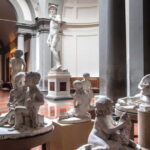
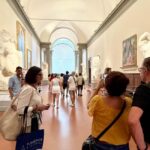
Leonardo’s Adoration of the Magi and the Medici Backstory
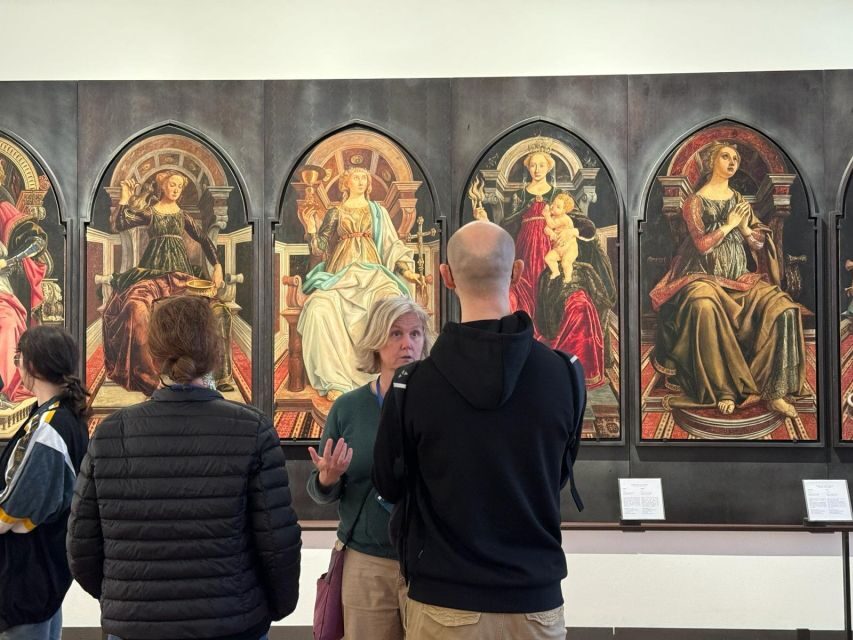
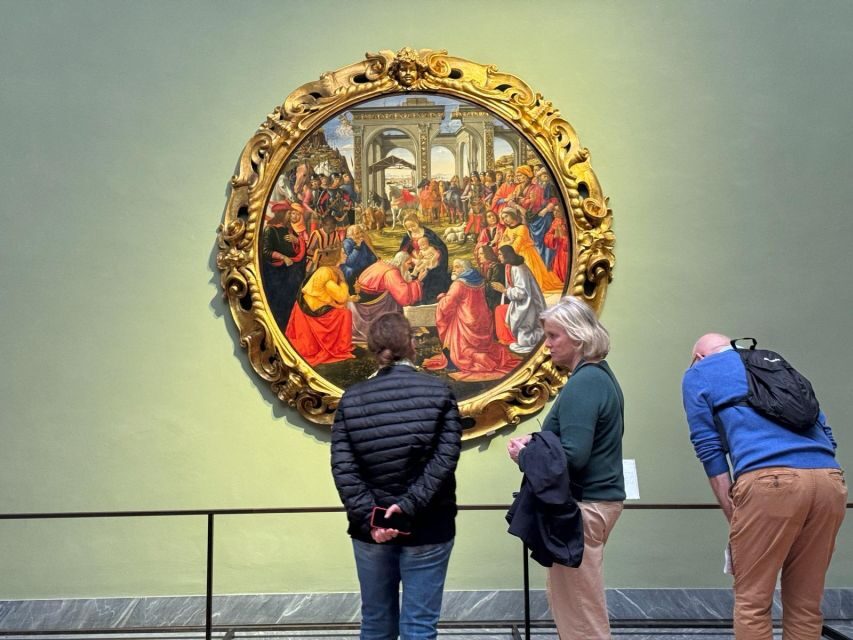
Leonardo da Vinci’s Adoration of the Magi is another standout stop. The painting tells a dramatic story, and Leonardo’s approach makes the scene feel crowded with attention—faces, actions, and the sense of meaning in where everyone stands.
In a guided tour, the value is the guidance on what the painting is communicating. You’ll be nudged to focus on details you might miss on your own, like how the narrative is organized visually and how the elements interact within the scene.
Then there’s the big museum context: the Uffizi connects directly to the Medici world. The gallery was originally initiated by Cosimo I de Medici, and it grew into one of Europe’s oldest art museums, built from the collections and commissions of one of the continent’s most influential families. When you understand that, the artworks stop feeling like isolated masterpieces. They start feeling like pieces in a larger project—power, taste, intellect, and legacy, all expressed through art.
Small Group, Headsets, and the Pace That Works
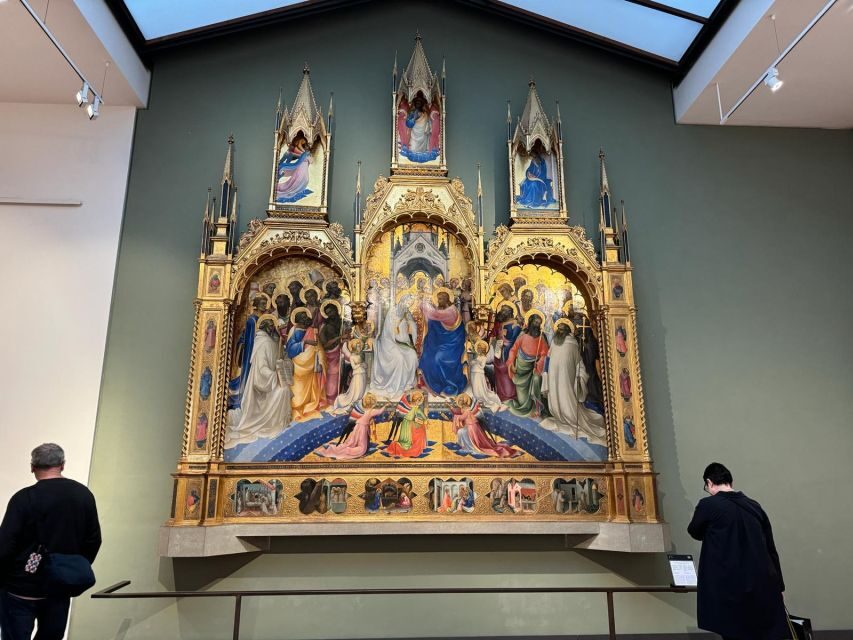
The tour is limited to 9 participants, and that matters more than it sounds. In crowded museums, small groups change everything: you can hear the guide, you can move as a unit without losing the explanation, and you can ask quick questions when something doesn’t click.
Headsets and earpieces are included, which helps a lot when galleries get loud. This is practical travel value. It means you’re not stuck saying things like what did you say? every five minutes.
Language options are also a real plus: guides are available in Italian, German, English, Spanish, and French. If you’re choosing Spanish (or another language), I strongly suggest you double-check your confirmation and aim to arrive on time. In one past booking experience (not a guaranteed pattern), there was an issue where a Spanish-speaking guide wasn’t present and the group ended up with English. That kind of mismatch can be frustrating, so it’s worth being proactive.
Finally, a quick note on pacing: one reason people sometimes prefer audio guides is control. If you want to wander at your own speed and linger without structure, a guided route can feel limiting. Here, the compromise is that you’ll get context fast, then you can adjust after.
After the Tour: Stay Until Closing Time
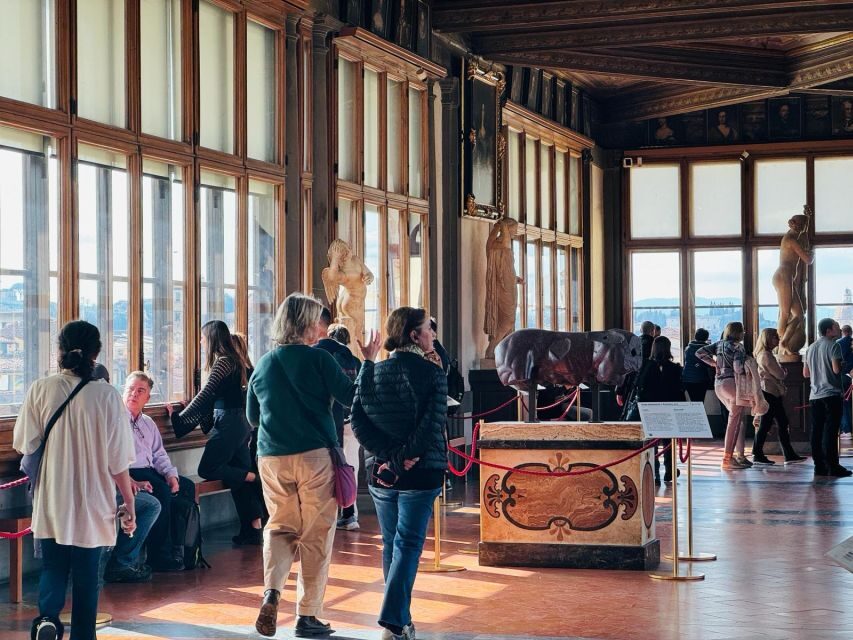
One of the best perks is what happens after the guided portion. When the tour ends, you’re free to linger inside the museum until closing time.
That’s a smart setup. The guide gets you oriented and excited in 1.5 hours, then you decide what you want to see again—maybe the works that clicked, maybe the ones you rushed past because your attention was still warming up. It’s also a good plan if you’re traveling with different interests: one person gets the guided learning, everyone can later split up to follow their own art instincts.
If you’re trying to balance a Florence schedule—churches in the morning, art in the afternoon—this structure helps you keep momentum instead of losing the whole day in lines and aimless wandering.
Price, Value, and Who This Tour Fits Best
At $82 per person, this tour isn’t the cheapest way to visit the Uffizi. But it does what you’re paying for: priority access, a live guide, and headsets within a small group.
Think of the value like this:
- If you’d otherwise spend a big chunk of your visit waiting, priority entrance is already a win.
- If you want to understand what you’re seeing, the guided explanations are the difference between collecting photos and collecting meaning.
- If you’re going with kids or a mixed-interest group, small groups and a good guide can keep energy focused.
This tour is a great fit for:
- First-time Uffizi visitors who want the major masterpieces in a focused format
- People who don’t want to guess their way through Renaissance art
- Anyone who hates long lines and prefers a plan
It may be less ideal if:
- You want to travel completely at your own pace from the start
- You’re extremely detail-focused and want hours in one room (this tour is short)
- You need special accessibility considerations and want certainty, since there’s a note about wheelchair accessibility and another note stating not suitable for wheelchair users
Should You Book This Uffizi Priority Access Tour?
I’d book it if your priority is seeing the right works with real context while avoiding the worst of the Uffizi waiting game. The separate entrance and headsets make the experience smoother, and the 1.5-hour length is ideal when you’re trying to see Florence’s big sights without burning an entire day inside the museum.
I’d hesitate if you’re the type who likes to roam freely with an audio guide and you’re okay doing some extra waiting. Also, if language matching matters a lot for you, arrive early and be sure your preferred language is confirmed.
FAQ
FAQ
How long is the Uffizi priority access tour?
The tour lasts 1.5 hours.
Where do we meet the guide?
Meet in front of Leonardo da Vinci’s statue. Look for your guide holding a white flag with ENJOY ROME written on it.
Does this tour skip the line?
Yes. You’ll use fast entrance tickets and skip the line through a separate entrance.
What art highlights will we see?
The tour includes major works such as Botticelli’s Birth of Venus, Michelangelo’s wooden masterpiece, Raphael’s masterpieces, and Leonardo da Vinci’s Adoration of the Magi.
What languages are available for the live guide?
The live guide is available in Italian, German, English, Spanish, and French.
How many people are in the group?
The group is small, limited to 9 participants.
What’s included in the price?
Included are fast entrance tickets, a live guide, and headsets and earpieces.
Is passport or ID required?
Yes. Passport or ID card is mandatory, and you should bring it with you.
Are there restrictions on bags or items?
Yes. No luggage or large bags are allowed, and pets and weapons/sharp objects are not allowed.
Can I stay in the museum after the tour ends?
Yes. After the tour, you can linger in the museum until its closing time.