REVIEW · FLORENCE
Florence Walking Tour with Accademia, Uffizi & Lunch
Book on Viator →Operated by CAF Tour and Travel · Bookable on Viator
Six hours in Florence is a smart art sprint. This full-day combo strings together Accademia (Michelangelo’s David) and Uffizi (Botticelli, Leonardo, Raphael and more) with timed entry so you spend less time stuck in lines and more time seeing the good stuff.
What I like most is the museum setup: timed entry + small-group guidance makes the biggest sites feel doable.
My second big win here is the included 3-course Tuscan lunch in the old town, which saves you from the usual Florence problem of hunting for a decent meal between museum stops. The main drawback to think about: the day can feel like separate sections with different meet-ups, so you’ll want to stay alert and use your phone maps if needed.
Key points to know before you go
- Timed entry for Accademia and Uffizi helps you dodge long waits and keeps the day on track
- Michelangelo-first at Accademia means you’re not just looking—you’re guided to what matters
- Duomo complex views from Piazza San Giovanni put the Cathedral, bell tower, and Baptistery into one easy loop
- Street-level Florence highlights (San Lorenzo, Piazza della Signoria, Ponte Vecchio, Porcellino) keep it real, not museum-only
- Lunch is included as a time saver, with set-menu Tuscan food and drinks paid separately
- Group size is capped at 25, so you’ll usually get to hear the guide and move as a unit
In This Review
- Timed entry and small groups: why this day actually works
- Accademia Gallery: Michelangelo’s David, and what your guide should point out
- Palazzo Medici Riccardi and San Lorenzo: seeing Renaissance power in the street
- Piazza San Giovanni and the Duomo complex: one square, three icons
- Porcellino Fountain and the Straw Market tradition: a tiny ritual with charm
- Piazza della Signoria to Loggia dei Lanzi: where Florence becomes an open-air museum
- Ponte Vecchio: the bridge walk that feels like theatre
- Lunch in old town: a practical reset, with drinks extra
- Uffizi Gallery with a guide: how the afternoon becomes art history (not just rooms)
- Walking pace, headsets, and the split-day reality
- Who this tour is best for—and who might want a different plan
- Value check: is $136.96 worth it?
- Should you book this Florence Walking Tour with Accademia, Uffizi & Lunch?
- FAQ
- How long is the Florence tour?
- What’s included in the price?
- Is Uffizi included if I choose the half-day tour?
- Do I need tickets for Accademia and Uffizi?
- What should I bring for museum entry?
- Where do I meet, and how strict is timing?
Timed entry and small groups: why this day actually works
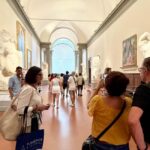
Florence can chew up your schedule fast—one wrong line, one slow ticket office, and suddenly you’ve lost your afternoon. This tour is built around the two heavy hitters: Galleria dell’Accademia and Uffizi Gallery. Both come with reservation/timed entry, so you’re not gambling on walk-up access.
The format also leans toward small-group touring. The day is listed as a small group (max 25), and you’re guided through the museums rather than left to roam with a map and hope you read Italian art labels correctly. That matters if you want the museum experience to feel clear, not random.
Also note the order of stops can change, and you might spend more or less time outdoors depending on the flow. That’s normal in Florence. The smart move is to keep your expectations flexible, especially if your priority is Uffizi time.
Accademia Gallery: Michelangelo’s David, and what your guide should point out
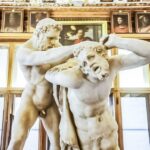
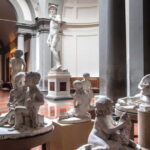
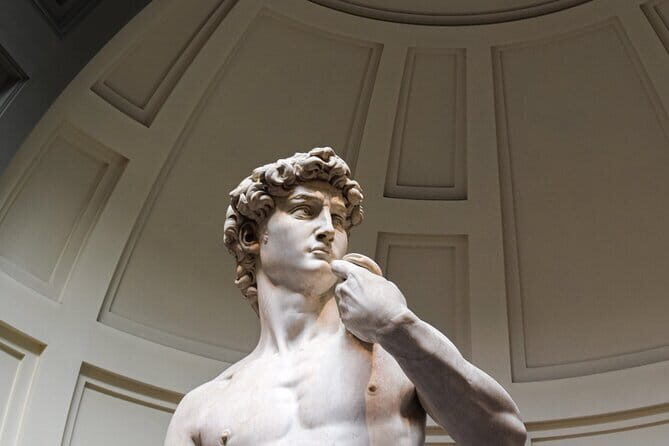
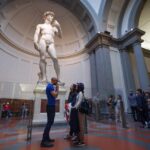
Accademia is where the day starts to feel like Florence is doing the work for you. You go straight into the guided visit of Michelangelo’s key works, with David as the center of gravity. You’ll also see other major pieces such as I Prigioni, San Matteo, and the Palestrina Pietà.
Here’s why this stop is worth paying for with a guide: David isn’t just famous because it’s famous. It’s famous because it’s tied to the Renaissance idea of power, anatomy, and civic identity—and the guide’s job is to connect the sculpture to the moment that created it. When the commentary is strong (some guides like Alicia have a reputation for making Michelangelo’s context click), you’ll look longer and leave with more than a photo.
You also get a practical benefit: admission ticket with reservation fee is included. That reservation is what turns Accademia from a time-waster into a focused art hour. Plan on standing, walking, and listening—this isn’t the type of museum where you sit down and drift.
Other Uffizi + Accademia (David) tours in Florence

Palazzo Medici Riccardi and San Lorenzo: seeing Renaissance power in the street
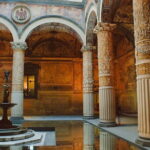
After Accademia, you shift from sculpture to political architecture. Palazzo Medici Riccardi is a short stop, but it’s an important one because it points at how wealth and banking became visible in stone. The palazzo was designed by Michelozzo di Bartolomeo for Cosimo de’ Medici, and even a quick exterior look gives you a sense of why the Medici family mattered.
Then comes Basilica di San Lorenzo, tied directly to the Medici legacy and designed by Brunelleschi. This church is known for its Renaissance harmony, and it also houses the Medici tombs—where art, faith, and power overlap in a very Florentine way.
One quick heads-up: both stops are short. If you want a slow, deep look inside, you won’t get that here. This part works best as orientation—like placing pushpins on your mental map so later, when you wander on your own, you know what you’re looking at.
Piazza San Giovanni and the Duomo complex: one square, three icons
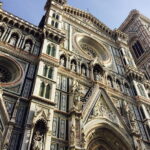
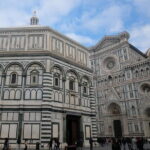
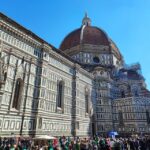
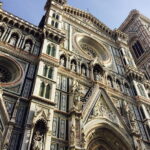
You’ll reach Piazza San Giovanni—also called Piazza del Duomo—and this is one of the smartest “big payoff” moments on the walking portion. From here you can admire the Cathedral (Duomo) with Brunelleschi’s Cupola, Giotto’s bell tower, and the Baptistery of St. John, including the famous Gates of Paradise.
Even if you don’t go inside, this stop helps you understand Florence’s visual rhythm. The Duomo complex is basically a set piece: scale, height, and design all work together. A guided explanation can keep you from staring at the façade like it’s just stone decoration. It’s design as messaging.
There’s also an upgrade option depending on the tour choice: you may get a guided visit with direct and dedicated access to Florence Cathedral (not always included in every variant). If Duomo interior time is a priority, choose accordingly before you book.
Porcellino Fountain and the Straw Market tradition: a tiny ritual with charm
Then you get a stop that feels like Florence in miniature: the Porcellino Fountain. It’s the bronze wild boar in the Straw Market, and it comes with a fun local tradition—people rub the boar’s snout for luck and drop a coin in its mouth, believing it helps ensure a return to Florence.
This is one of those stops that sounds silly until you’re standing there and realize it’s exactly the kind of lived-in tradition that makes a city feel human. You also get a nice change of pace from big monuments. You’ll walk, look, and keep moving, rather than waiting for another ticket.
If crowds thin out enough, you’ll probably get a better photo. If not, don’t stress. The fountain is still worth a moment because it anchors your day in everyday Florence rather than only museum highlights.
Piazza della Signoria to Loggia dei Lanzi: where Florence becomes an open-air museum
Piazza della Signoria is the kind of place where you feel the city’s ambition immediately. The square is dominated by Palazzo Vecchio, and it’s packed with sculpture and references to Florence’s political identity.
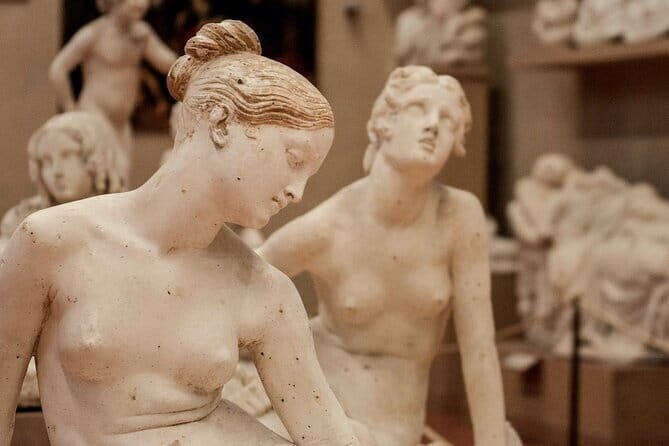
You’ll likely notice key landmarks such as the Fountain of Neptune, the statue of Cosimo I, and the Loggia dei Lanzi. This is an outdoor “museum room” where history is displayed like furniture in a grand living space.
The big advantage of having a guide here is pacing. Without guidance, people tend to wander and then end up with a general impression of impressive. With guidance, you catch what each piece is referencing—who commissioned what, why the symbolism mattered, and how the square functioned as a civic stage.
Other Florence city tours including the Uffizi in Florence


Ponte Vecchio: the bridge walk that feels like theatre
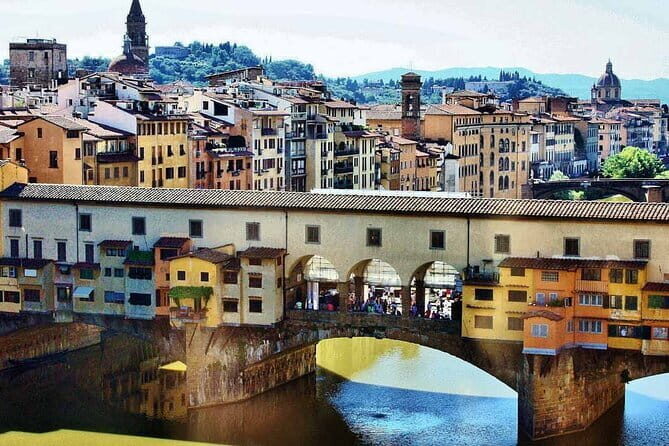
Next up: Ponte Vecchio, the oldest bridge in Florence. The iconic detail is its line of jewelry shops along the span. When you’re walking the bridge with a group, you’re moving through a living storefront corridor that somehow still feels historic.
This stop is brief, so the goal isn’t slow browsing. The goal is to absorb the location and vibe: the Arno below, the buildings above, and that distinct sense that Florence never really “empties out,” even at busy hours.
If you’re chasing photos, consider saving your best shots for when your timing is calm. Florence crowds can make the bridge feel like a standing-room-only corridor. Keep your phone secure and your elbows close.
Lunch in old town: a practical reset, with drinks extra
After museum time, you get a break for lunch. This tour includes a 3-course Tuscan lunch at a typical restaurant in the old city. Set menus mean you won’t spend time asking what’s best, which is exactly what you want when your afternoon has another major museum.
Drinks are paid on the spot, so don’t assume lunch means free wine or soda. This is a common point of disappointment when expectations get too big. In the real world, you’ll still likely find the meal filling and convenient.
Quality can vary. Some people report the lunch as good, others call it average or not great. I treat it as what it is: a scheduled reset designed to keep the day efficient, not a destination food festival. If food is your #1 priority, you might still book an extra dinner later so you can eat on your own terms.
Uffizi Gallery with a guide: how the afternoon becomes art history (not just rooms)
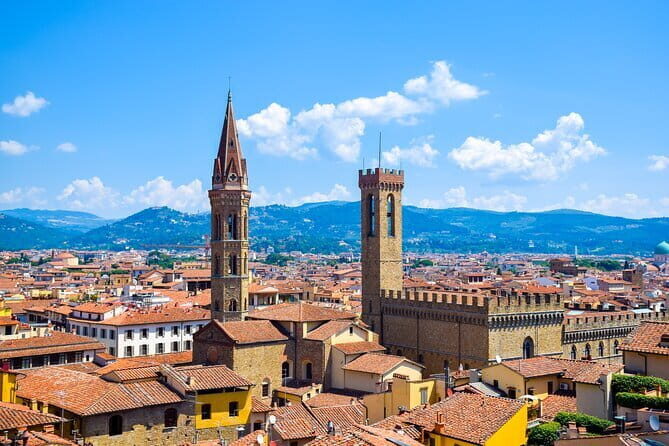
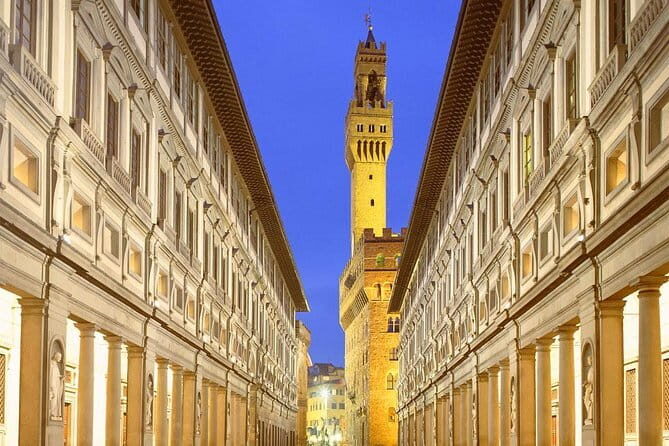
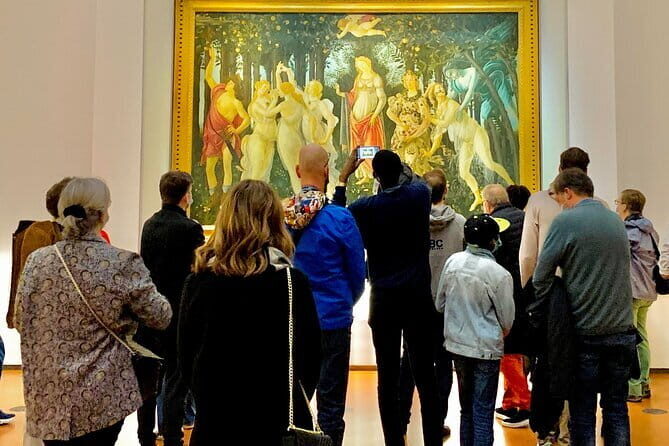
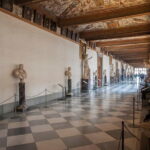
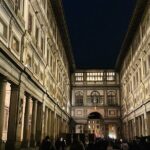
Uffizi is why most people plan Florence around art. This tour schedules a guided visit in small group after lunch, with admission ticket included (and it also notes a standard surcharge of €29). The museum’s lineup includes major artists such as Botticelli, Leonardo da Vinci, Michelangelo, and Raffaello.
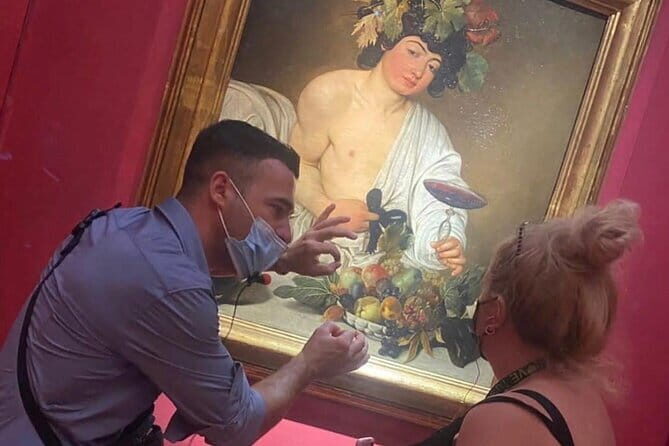
The Uffizi you get with a guided walkthrough tends to feel different from wandering solo. Instead of seeing room after room, you get a thread: how themes repeat, how schools and eras connect, and what to notice as you move from one gallery to the next. When the guide is sharp (some people highlight guides like Ilaria or Riccardo as especially strong at making the history make sense), the visit can feel like you’re watching art ideas evolve rather than flipping through paintings.
You’ll have about 1.5 hours for the guided Uffizi portion. That’s enough time to hit major highlights, but it’s not enough time to linger over everything. If you’re an art superfan, think of this as a curated sprint through must-sees, not a slow reading session.
Walking pace, headsets, and the split-day reality
Here’s the part you should plan for honestly: the tour can feel like multiple sections. Even if everything is connected, you might have different guides at different points, and you’ll be expected to transition between parts on your own.
This has two practical implications:
- Navigation matters. The meeting point is Via Ricasoli, 68, and the activity ends in a different location. If you’re arriving by transit, build in a buffer so you’re not late. If you miss a check-in window, you may not be able to join the visit.
- Audio quality can make or break the experience. Some people report headsets where the audio wasn’t clear enough. If that happens to you, ask quickly for a fix rather than “waiting it out.” A museum guide works best when you can actually hear the explanation.
Also, the schedule can be tight. One person described the city walking portion as fast and hard to follow because of audio. Another noted the overall structure felt choppy because they had to find their way between sections. You can reduce stress by downloading offline maps before you go, and by keeping the voucher info handy.
Who this tour is best for—and who might want a different plan
This experience is ideal for you if you want:
- A single-day plan that hits Florence’s top art stops (Accademia + Uffizi)
- A structured introduction to the historic center without turning your day into ticket lines and guesswork
- A mix of art and city landmarks—from David to Piazza della Signoria to Ponte Vecchio
It may be less ideal if you prefer slow travel. The outdoor stops are short, and the museum time is limited to what fits the schedule. If you want deep time in one place, you’ll likely end up craving more hours at Uffizi or more interior time around the Duomo.
This tour also suits travelers who don’t mind walking. You’re moving constantly: museum rooms, street segments, plazas, bridges. Bring comfortable shoes. Florence can look flat on a map, and then your legs remind you it’s still a city.
Value check: is $136.96 worth it?
On paper, $136.96 sounds like a lot for a walking tour. The value comes from what’s folded in:
- Guides for the big-ticket sites (Accademia and Uffizi guided visits)
- Accademia admission with reservation fee included
- Uffizi admission with a standard surcharge (€29) noted as part of the pricing structure
- A 3-course Tuscan lunch in the old town
If you were to book museum entry and timed access plus a guided experience separately, you’d likely spend more once you add up the time savings and the guided interpretation. The small-group cap (max 25) also keeps things from turning into a full-on herd.
That said, value depends on your tolerance for schedule tightness and split sections. If you get good audio, good guidance, and smooth transitions, this is a strong deal. If you struggle with directions between parts or the pace feels too fast, you may feel like you spent more energy moving than learning. I’d treat it as a smart shortcut through Florence’s essentials, not a relaxed “wander and see what happens” day.
Should you book this Florence Walking Tour with Accademia, Uffizi & Lunch?
Book it if you’re in Florence for a short visit and you want the heavy hitters done efficiently, with guided context and timed entry. The combination of Accademia + Uffizi + included lunch is exactly the kind of planning that helps you avoid Florence’s most common time trap: lining up.
Skip it (or choose a different format) if you hate tight schedules, don’t like split-day logistics, or you’re mainly interested in one museum. Also, if you’re the kind of traveler who wants a long, slow sit-down in every gallery, you may find the guided museum time too short.
If you do book, do this before you go: arrive early at Via Ricasoli, 68, keep the voucher details on your phone, and plan to move fast. Florence rewards momentum—just keep your wits about you, especially in crowded areas around major sights.
FAQ
How long is the Florence tour?
It’s listed as about 6 hours (approx.).
What’s included in the price?
A local professional guide, guided small-group visits of Accademia, and (if selected) Uffizi. It also includes a comprehensive guided visit of the Florence city center and a 3-course Tuscan lunch. Accademia admission with reservation fee is included, and Uffizi includes a standard surcharge noted as €29 if that option is selected.
Is Uffizi included if I choose the half-day tour?
If you select a half-day tour, either Uffizi Gallery or Duomo Visit is not included (depending on the option you choose).
Do I need tickets for Accademia and Uffizi?
Accademia admission ticket with a reservation fee is included. Uffizi has a ticket surcharge noted as €29 if the Uffizi option is selected, and the Uffizi guided visit includes the ticket.
What should I bring for museum entry?
You must present an original identity document that matches the name provided at booking. If you’re entering Uffizi, your ID must match the name on the ticket.
Where do I meet, and how strict is timing?
The tour starts at Via Ricasoli, 68, 50122 Firenze FI, Italy. You must arrive at the meeting point at the check-in time listed; if you’re late, you may not be able to join the visit.