REVIEW · FLORENCE
Skip the Line: Florence’s Uffizi Gallery Guided Tour
Book on Viator →Operated by Ciao Florence Tours Srl · Bookable on Viator
The Uffizi line can swallow your day. This skip-the-line guided tour gets you inside faster with a fully licensed guide and provided audio headsets.
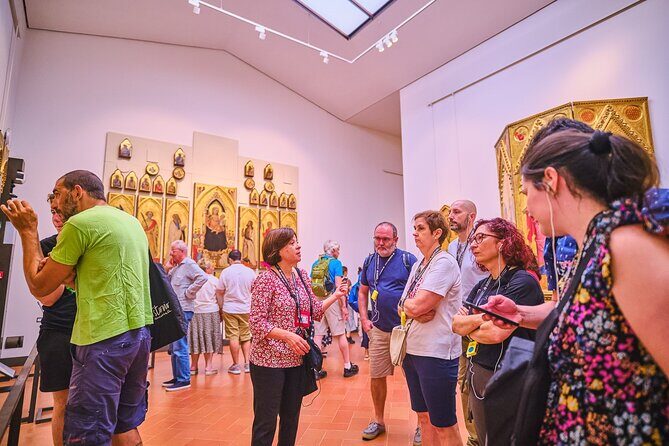
I also love the small group size (up to 9) and the chronological route that helps you connect one art style to the next.
The catch: with about 1 hour 45 minutes, you’ll hit key works, but you won’t tour every corner in the slow, thorough way a full museum visit does.
In This Review
- Key takeaways before you go
- Skip-the-line at the Uffizi: what changes for your morning
- Price and value: what $58.52 buys you (and what it doesn’t)
- Meeting spot, walk-in, and how to avoid start-of-tour stress
- The guided rhythm: a time-walk through the centuries
- Stop 1: the Uffizi area and a fast entry
- Stop 2: 13th-century beginnings and Giotto’s shift
- Stop 3: International Gothic to the 1400s experiments
- Stop 4: Botticelli, plus the Leonardo and Michelangelo moments
- Stop 5: big halls with Raphael, Titian, and Caravaggio
- Botticelli, Leonardo, Michelangelo: why this tour hits the right emotional beats
- Windows, city views, and the practical magic of pacing
- After the guide: how to use your extra time wisely
- Who should book this Uffizi skip-the-line tour
- Should you book this tour?
- FAQ
- How long is the Uffizi guided tour?
- Does the tour include skip-the-line entry?
- What’s included in the price?
- Where do we meet and where does the tour end?
- Is it a small group?
- Can I explore the museum after the guided portion?
- What languages are offered?
- Do I need to bring anything special for entry?
- Is free cancellation available?
Key takeaways before you go
- Skip-the-line entry: You bypass the ticket bottleneck and go straight in with your guide.
- Small group (max 9): Easier pace, better chance to hear the guide, and less shoulder-to-shoulder pressure.
- Audio headsets included: Especially useful for larger groups or busier rooms.
- Oldest-museum context: You get an organized walk through major centuries of European art.
- See Florence from inside: The museum’s windows offer city-center views between artworks.
Skip-the-line at the Uffizi: what changes for your morning
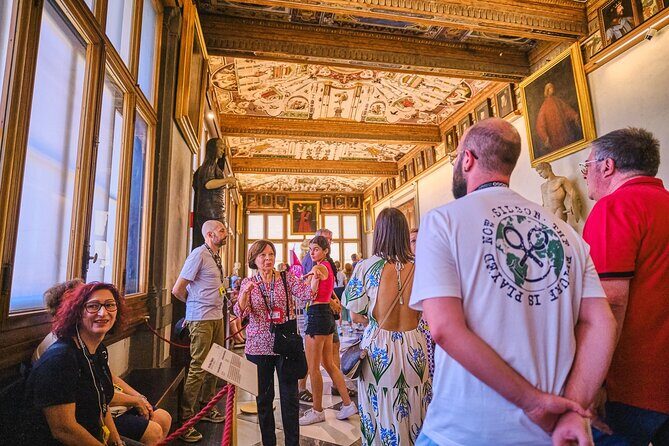
The Uffizi is famous for one reason: it’s packed, and the line can be the main event. This tour fixes that by arranging skip-the-line access, so you spend your time looking at paintings and sculpture instead of waiting behind the glass doors.
You’re also using a mobile ticket, which keeps things straightforward at check-in. On the busiest days, there can still be short delays getting into the museum, but the general idea holds: you’re not starting the day in queue mode.
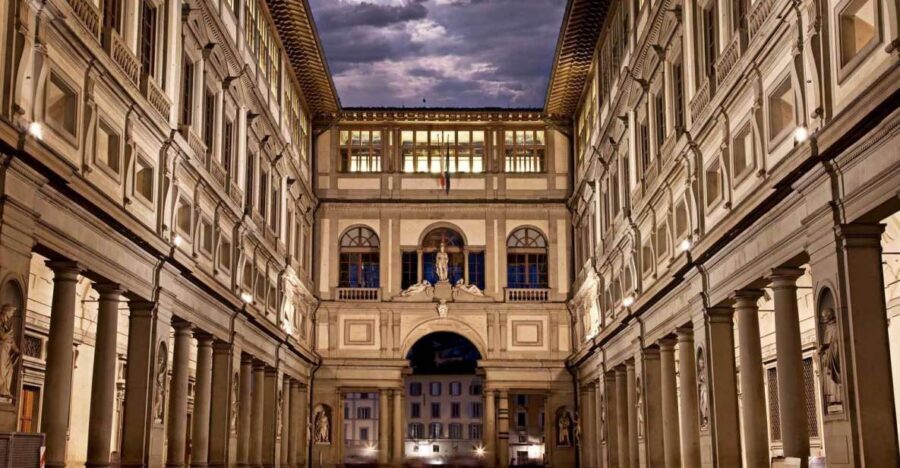
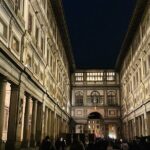
The meeting point is in central Florence near Via Camillo Cavour (18). From there, you’ll walk about 15 minutes to the Uffizi entrance area, which is long enough to get oriented but short enough that you’re not losing half your tour to transit.
Other skip-the-line Uffizi tickets we've reviewed in Florence

Price and value: what $58.52 buys you (and what it doesn’t)
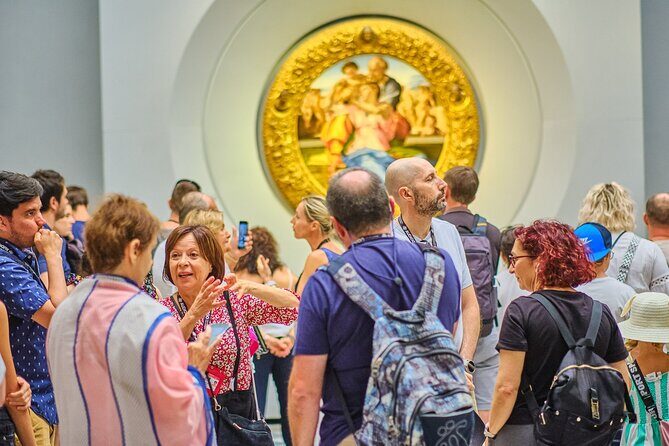
At $58.52 per person, this tour costs about what you might expect for a guided skip-the-line museum experience in peak season. What matters is what’s included: you’re not just paying for a guide’s patter. The tour includes entrance, a professional guide, and audio headsets (earphones are noted for bigger groups). That combo is often the real value, because it saves you from juggling tickets, crowds, and a difficult-on-your-own plan.
It also helps that the group is capped at 9 travelers, which tends to make the experience feel more like a guided walk with art stops, not a school assembly in a palace. And because the guided portion ends inside the museum, you can keep going after the tour instead of racing to “beat the clock.”
What’s not included is hotel pickup and drop-off, so you’ll be on your own for getting to the meeting point (easy since the tour is near public transportation).
Meeting spot, walk-in, and how to avoid start-of-tour stress
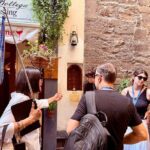
Plan to arrive a few minutes early. You meet your guide near Via Camillo Cavour, 18, then you’ll head toward the Uffizi with a short 15-minute walk.
Why this matters: the Uffizi’s surroundings are busy, and you don’t want your tour to start with you sprinting down a street you only partly recognize. Comfortable shoes are a must. Even if the tour is “only” 1 hour 45, the museum is large and the rooms can feel packed.
The tour ends inside the Uffizi Galleries at Piazzale degli Uffizi, 6 (so you won’t need to find your way back out immediately). You’ll also be free to keep exploring at your own pace after the guide finishes.
The guided rhythm: a time-walk through the centuries
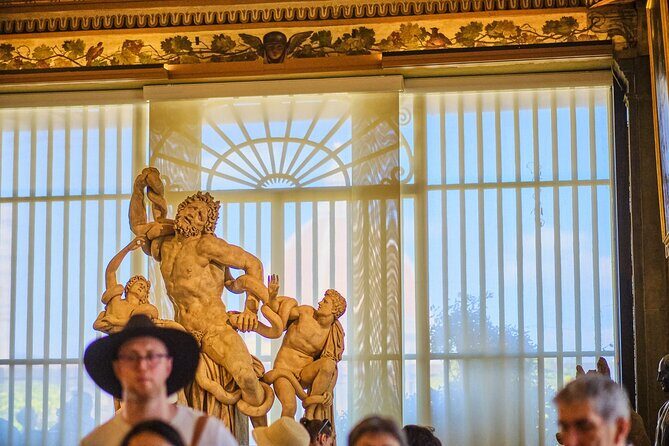
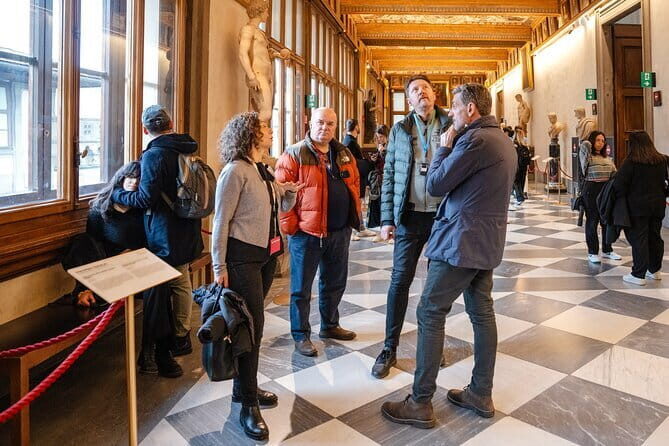
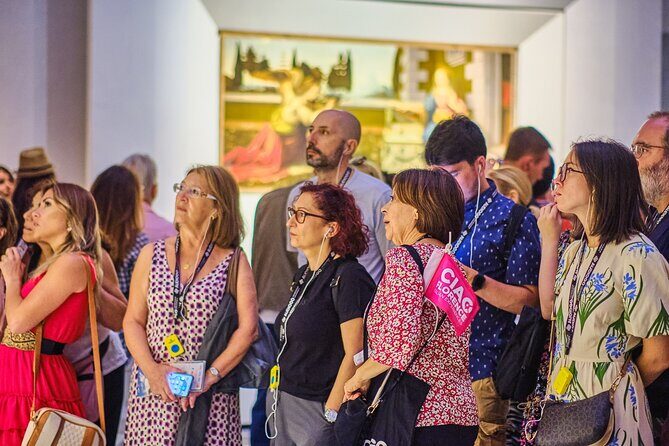
This is built as a structured, chronological walkthrough, moving from early Renaissance-era foundations toward later periods and major “name” works. The guide uses an audio headset system so you can follow along even when rooms get crowded.
The tour is laid out in about five segments, each focusing on a cluster of artists and styles. That “grouping” is useful. Without guidance, it’s easy to wander into a hall, see a few famous paintings, and then lose the bigger story about how artists changed what they painted and how they painted it.
Here’s what that pacing feels like as you move through stops:
Stop 1: the Uffizi area and a fast entry
You start near Via Camillo Cavour and then walk to the museum entrance. Once you arrive, the skip-the-line access does its job quickly. You get inside and can focus on the art instead of logistics.
Other guided tours in Florence




Stop 2: 13th-century beginnings and Giotto’s shift
Early on, you’re looking at artwork that reflects the medieval-to-Renaissance transition. The tour’s angle includes the shift toward more dimensional, more expressive forms.
A key moment in this segment is the explanation around Giotto, especially how he used three-dimensional elements in his work to change the way people felt and understood art. Even if you only catch pieces of that conversation, it sets up everything later: you start noticing when artists move from symbols toward scenes with space, weight, and emotion.
Stop 3: International Gothic to the 1400s experiments
This is where the story gets more narrative. You spend time with International Gothic works, including Adoration of the Magi by Gentile da Fabriano. The guide frames it as art becoming more story-driven rather than just presenting figures.
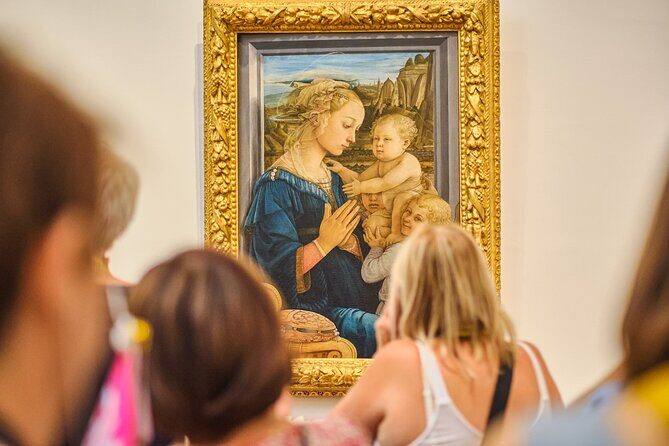
Then you move into the 1400s and the period of new techniques and spatial experiments. The tour includes Battle of San Romano by Paolo Uccello, which is a great example of how artists started exploring depth and structure. You also see works by Filippo Lippi and Piero della Francesca, with discussion that connects their idealized human forms to influences that followed.
Practical note: with only a limited total time, this stop can feel dense. The upside is that the guide helps you “read” what you’re seeing instead of getting lost in the museum’s scale.
Stop 4: Botticelli, plus the Leonardo and Michelangelo moments
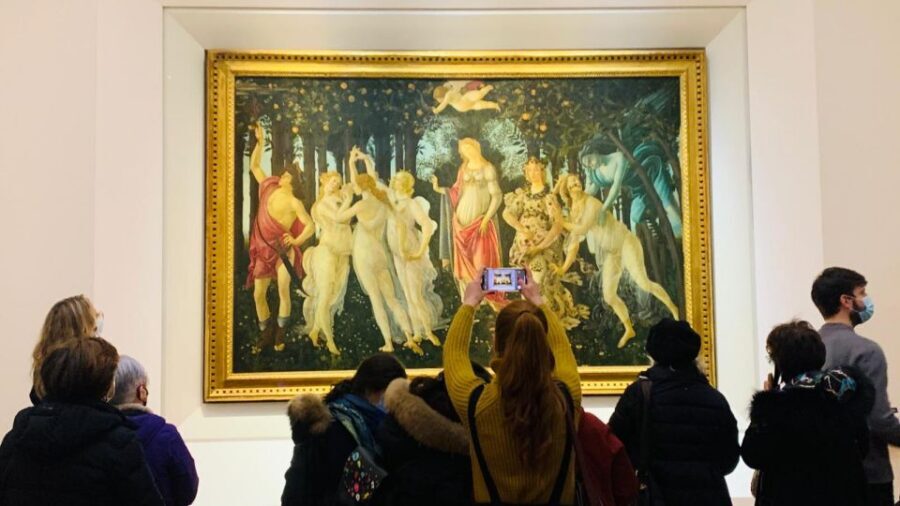
This is the stop many people wait for. The tour spends real time in the areas associated with Botticelli, including The Birth of Venus and Primavera. If you’ve ever felt a little intimidated by the Uffizi’s wall-to-wall reputation, this is the segment that grounds you. It’s the kind of artwork that makes you slow down, not scroll past.
Then the route moves on to major Renaissance artists. You’ll see Tondo Doni by Michelangelo, plus Leonardo’s Baptism of Christ and Annunciation. Even when a painting isn’t “your style,” it helps to have context for why the artists mattered and how their approach connects to what came before.
One small reality check: the Uffizi is huge. This tour gives you focused time at landmark pieces, not a full survey of every Leonardo panel and every Michelangelo-related detail.
Stop 5: big halls with Raphael, Titian, and Caravaggio
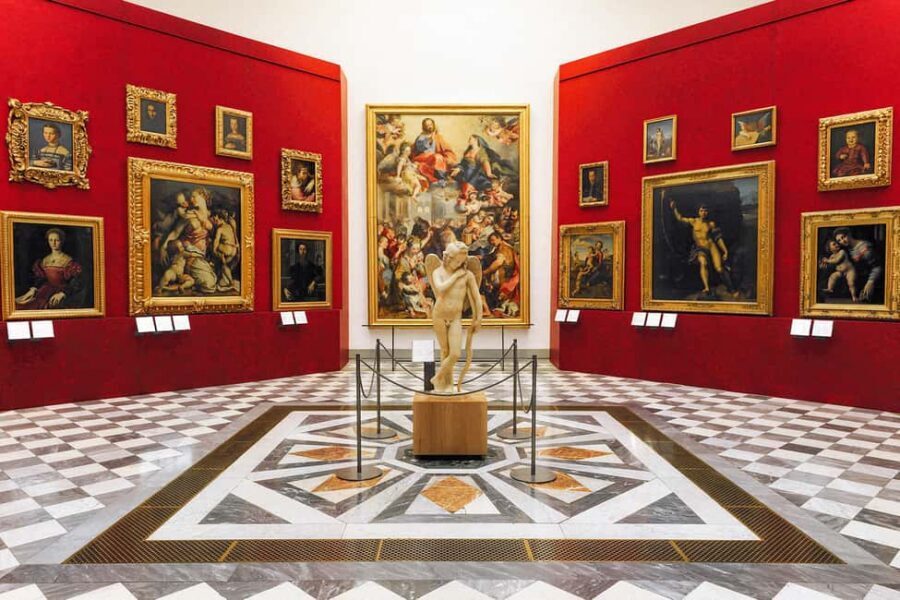
The final segment takes you into larger halls and a higher concentration of works. The guide focuses on major names including Raphael, Titan (as listed), and Caravaggio. The energy shifts here: you’re no longer just building the story, you’re testing how the story lands when you’re staring at works that defined later taste.
This stop is also your best moment to ask questions. Since you’re in bigger rooms, you might find it easier to pick the guide’s brain while you pause in front of the paintings.
Botticelli, Leonardo, Michelangelo: why this tour hits the right emotional beats
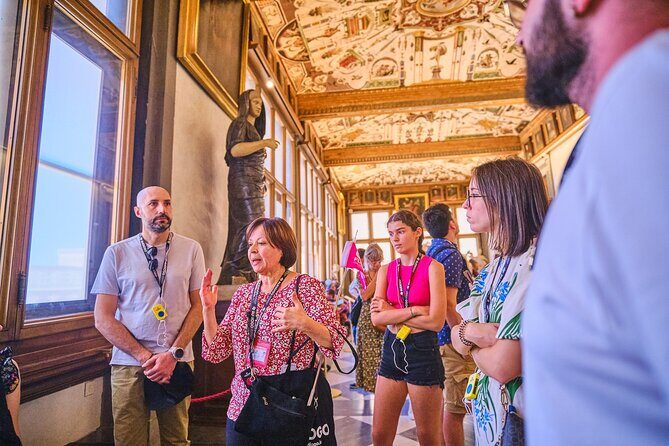
If you’re going to do the Uffizi in one guided run, you want two things: major works and a narrative thread. This tour delivers both by pairing Botticelli’s star power with the “craft gravity” of Leonardo and Michelangelo.
- The Birth of Venus is the painting people know before they know the museum. Seeing it with the guide’s context helps you move beyond surface familiarity.
- Primavera works well in the same segment because you can connect symbols and themes while they’re still fresh in your mind.
- Tondo Doni and Leonardo’s Annunciation are great anchors because they represent different ways of thinking about form and storytelling.
Even with limited time, you leave with that key feeling: you understand what changed in art across centuries and why the Uffizi kept becoming more important to artists and patrons.
Windows, city views, and the practical magic of pacing
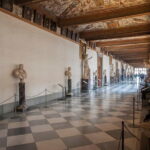
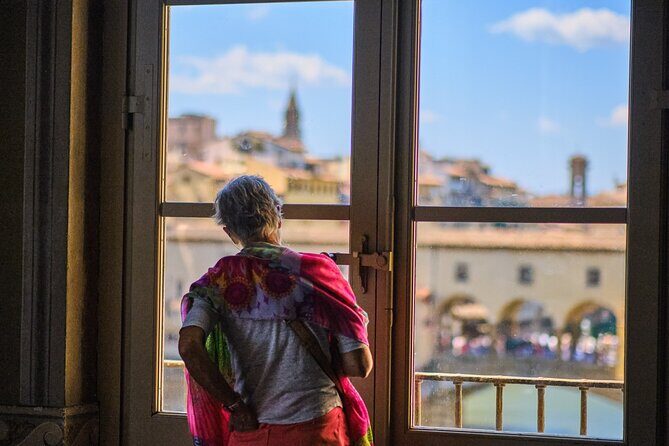
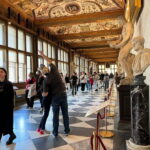
One overlooked perk: the Uffizi building offers impressive views of Florence’s city center from inside. The tour weaves in those “reset” moments between viewing artworks. That matters because fatigue hits hard at the Uffizi. Short breaks for your eyes and brain make the second half more enjoyable.
The other pacing trick is how the group size and audio system work together. When you’re not fighting for space or for volume, you can actually keep up with the guide’s explanations instead of just nodding along.
If you’re sensitive to noise or hearing in busy spaces, the included audio headsets are a real help. Still, the museum can be loud in certain halls, so keeping your expectations realistic for a 1.5-hour tour is smart.
After the guide: how to use your extra time wisely
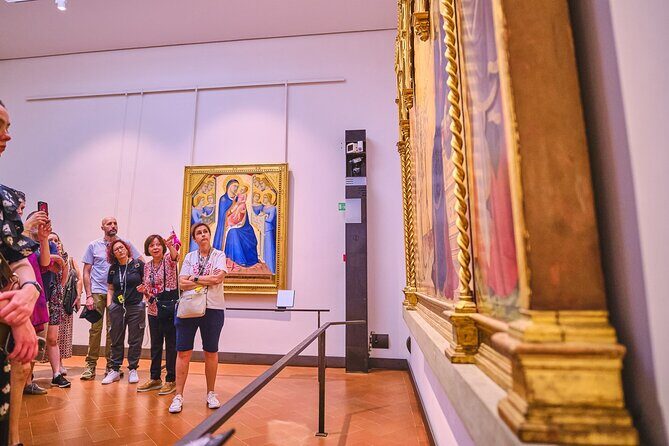
You’re free to explore on your own after the guided portion. Don’t treat that time like an afterthought. Use it strategically.
Here’s how to make your independent time feel satisfying rather than chaotic:
- Revisit 2–3 artworks the guide emphasized most.
- If there was a stop that felt too fast, spend your extra time in that same wing or section.
- Use the story you heard as a map. When you understand what changed over time, it’s easier to spot patterns without needing a second guide.
The tour ends inside, so it’s easy to keep wandering. Just remember that you’re inside a living museum experience. Some halls will be quieter than others depending on the flow, so give yourself permission to linger.
Who should book this Uffizi skip-the-line tour
This fits best if you:
- want skip-the-line access and a guided plan that saves you from decision fatigue
- prefer small groups (max 9) and clearer guide communication
- have limited time in Florence but still want a structured introduction to the Uffizi’s major names
- like the idea of seeing a chronological overview and then choosing your follow-up stops afterward
It may not be your best choice if you:
- want a full, slow museum day covering every major artist in equal depth
- are the type who likes to read everything at length and spend long stretches on one painting
- expect the guide to cover every single famous work in a 1 hour 45 format
Should you book this tour?
I’d book it if you’re aiming for the best return on time: quick entry, a clear art timeline, and enough “wow moments” that you leave excited to explore more. The skip-the-line setup plus included entrance fees and audio headsets makes the $58.52 feel like practical value, especially with a small group.
I wouldn’t book it if you’re trying to turn the Uffizi into a deep research project. In that case, you may want a longer self-guided visit (or a different tour format) so you can spend more time per room without feeling rushed.
If you only have room for one organized Uffizi experience in Florence, this one is a solid pick.
FAQ
How long is the Uffizi guided tour?
It lasts about 1 hour 45 minutes.
Does the tour include skip-the-line entry?
Yes. You get skip-the-line entrance to the Uffizi Gallery with your ticket.
What’s included in the price?
Included are the professional guide, the Uffizi skip-the-line ticket, entrance to the museum, and audio headsets (earphones for bigger groups), plus the small group tour format.
Where do we meet and where does the tour end?
You meet near Via Camillo Cavour, 18, Florence. The tour ends inside the Uffizi Galleries near Piazzale degli Uffizi, 6.
Is it a small group?
Yes. The tour has a maximum of 9 travelers.
Can I explore the museum after the guided portion?
Yes. After the guided tour ends, you can stay inside and explore on your own.
What languages are offered?
From November to March, it is confirmed in English and Spanish. From April to October, the tour is held in a monolingual small group. For Italian, French, and German in low season, there is a minimum required number of 4 people.
Do I need to bring anything special for entry?
Participants over 12 must present one of the following: proof of full vaccination, proof of first vaccination at least 15 days ago, proof of a Covid-19 infection in the past 6 months, or a negative test taken no more than 48 hours before the activity starts.
Is free cancellation available?
Yes. You can cancel up to 24 hours in advance for a full refund.