REVIEW · FLORENCE
Florence: Uffizi Gallery Master Class Skip-the-Line Tour
Book on GetYourGuide →Operated by Keys of Italy · Bookable on GetYourGuide
Skip the line, then learn how to see. This Uffizi master class is built for people who want more than names on a wall, with an expert guiding a small group through Florence’s Renaissance story and the Medici family’s art connections. I like the skip-the-line entry because it keeps your time for the paintings, not the queue, and I also like the small group format that makes it easier to ask questions.
One thing to plan around: on the first Sunday of each month, general entrance is free, but tickets can’t be reserved in advance, so entry is not guaranteed.
In This Review
- Key Points You Should Know Before You Go
- Where You Meet and How the Skip-the-Line Feels in Real Life
- A 2.5-Hour Renaissance Master Class: What You’re Really Paying For
- How the Medici Story Changes the Way You Look at Uffizi Paintings
- Botticelli at the Uffizi: The Birth of Venus and the Power of Myth
- Leonardo’s Adoration of the Magi and the Feeling of Movement
- Giotto’s Ognissanti Madonna: A Different Kind of Devotion
- Small Group Size (Up to 9) and Why It Makes Uffizi Less Intimidating
- Audio Guide vs. Live Guide: What to Expect Inside the Rooms
- Price and Value: Is $121.21 Worth It for 2.5 Hours?
- Accessibility at the Uffizi: What You Should Know
- When the First Sunday of the Month Turns Into a Wild Card
- Who This Tour Fits Best (And Who Might Skip It)
- Should You Book the Uffizi Gallery Master Class Skip-the-Line Tour?
- FAQ
- How long is the Uffizi Gallery Master Class tour?
- Where do we meet for the tour?
- What is included in the tour price?
- How big is the group?
- Is the tour wheelchair accessible?
- What should I know about the first Sunday of the month?
Key Points You Should Know Before You Go

- Skip-the-line entry so you can start focusing on art instead of waiting.
- Small group (max 9), which makes it easier to get personal attention and ask questions.
- English live guide with an art-expert approach and a guided route designed for understanding.
- Renaissance focus through the Medici lens, tying Florence’s power and politics to the paintings.
- Major works included, including The Birth of Venus, Adoration of the Magi, and Ognissanti Madonna.
Where You Meet and How the Skip-the-Line Feels in Real Life
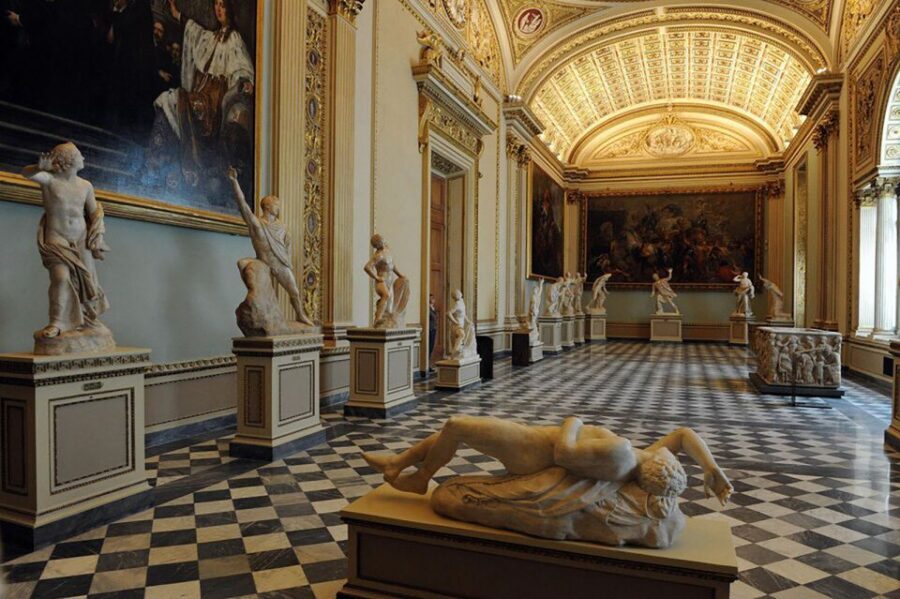
You’ll meet in front of Door 1 at the Uffizi Gallery, right next to the Petrarca statue. That matters more than you might think. In busy museum areas, having a clear meeting point reduces stress, especially if you’re trying to time everything with the rest of your day in Florence.
Then comes the practical win: skip-the-line entrance. This doesn’t make Uffizi empty, but it does change your morning. Instead of spending your limited time hovering outside, you’re already moving into the galleries with your guide. For a tour that lasts about 2.5 hours, that time saving can be the difference between feeling rushed and actually enjoying the art.
The tour ends back at the meeting point. So you’re not stuck figuring out how to exit, or where your group splits, after your last rooms. It’s a small detail, but it helps you keep your day on track.
Other skip-the-line Uffizi tickets we've reviewed in Florence



A 2.5-Hour Renaissance Master Class: What You’re Really Paying For

This isn’t a quick walk past masterpieces. You join a certified art expert for an extended guided experience that’s structured like a master class: context first, then you look again with better questions in mind.
The heart of the lesson is Florence’s role in the Renaissance, plus the Medici family’s bond with the arts. That theme helps you connect what you see to why these works were made in the first place. When you understand the patronage and the ambition behind the images, the paintings stop feeling like isolated icons and start feeling like part of a bigger human story.
You’ll also get time for questions and discussion in a small group setting. That’s a real value-add in a museum like the Uffizi, where it’s easy to look at something and wonder what you’re missing. The people who come away happiest are usually the ones who ask, wait, and let the guide explain what matters visually and historically.
English is the working language for the live guide. And if your group is larger than six people, you’ll also receive an audio guide. The audio doesn’t replace the live guide; it’s there to support the group during the visit, which can be helpful when rooms get louder and tighter.
How the Medici Story Changes the Way You Look at Uffizi Paintings
Here’s the thing I love about this style of tour: it gives you a lens. Florence in the Renaissance wasn’t just about genius artists. It was also about money, power, and taste, and the Medici family is central to that story.
As the guide walks you through the collection, you’re not only seeing what’s famous. You’re learning how patrons shaped subjects, symbolism, and even what kinds of art could influence public life. That makes a big difference in a museum where many works share themes like devotion, mythology, and moral lessons.
This is also where your small group helps. With up to 9 participants, you’re less likely to get lost in a crowd’s shuffle. You can hear the guide better, you can see what they point out, and you can ask follow-ups without feeling like you’re stealing time from a big mass of strangers.
Botticelli at the Uffizi: The Birth of Venus and the Power of Myth
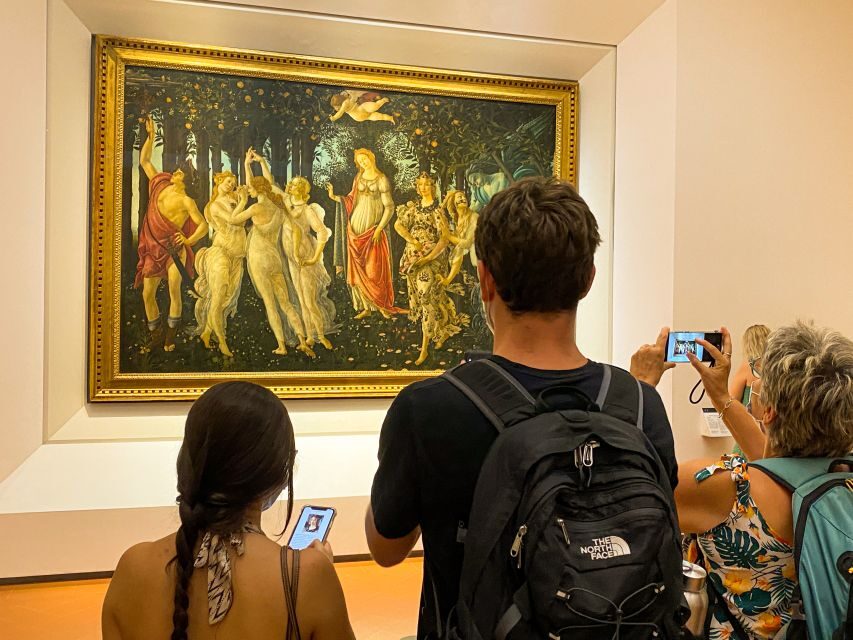
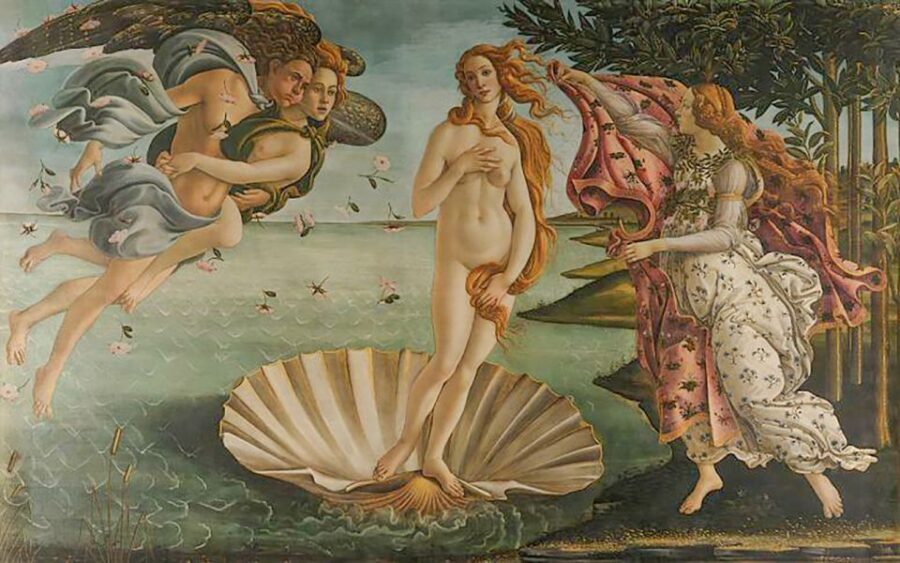
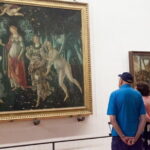
One of the headline works you’ll see is Sandro Botticelli’s The Birth of Venus. Mythology has a way of feeling distant if you only read the story summary online. A good guide bridges that gap by explaining how these myths were treated in Renaissance culture and how artists used recognizable figures and symbols to say something bigger than the plot.
During your visit, the guide’s job is to help you slow down. You’ll look at the painting with a better sense of what to notice: the pose and gesture language, the decorative choices, and the way myth becomes a vehicle for ideas people cared about in Florence.
This is a great stop if you’re the kind of person who likes to understand meaning instead of just admiring technique. And it’s also a good “first big wow” moment for people who are new to Botticelli. Seeing it with context tends to make the image feel less like a postcard and more like a message.
Leonardo’s Adoration of the Magi and the Feeling of Movement
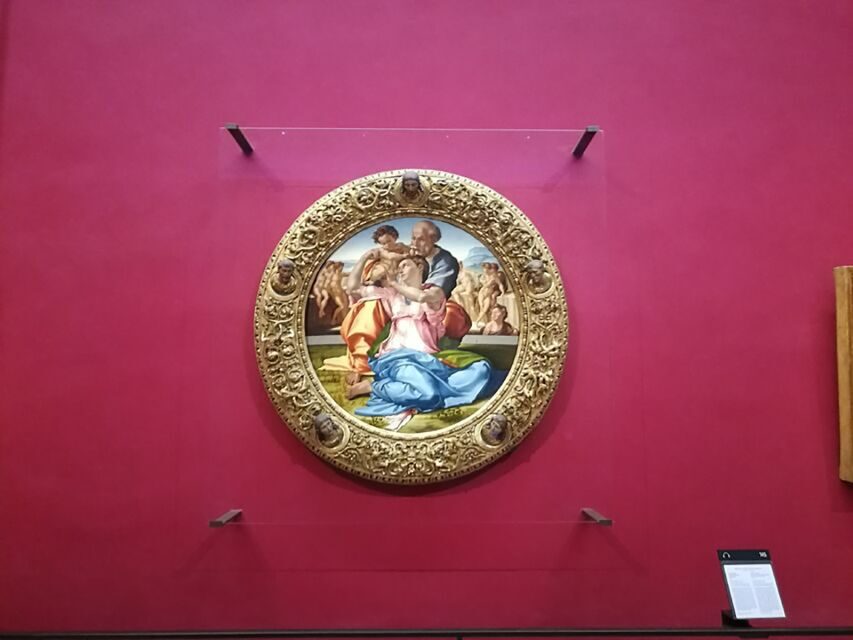
Another major work included is Leonardo da Vinci’s Adoration of the Magi. Leonardo’s paintings often leave you wanting to know how he thinks, not just what’s pictured. That’s why a guided session helps. Without context, you might notice the scene and still miss how Leonardo creates a sense of depth and focus.
On this tour, the guide ties the work back to the broader Renaissance shift in attention to human expression and storytelling. The Magi theme also gives you a chance to discuss how religious subjects were interpreted through a Renaissance worldview.
If you’re an art enthusiast, this is where the guide explanations can turn your “I’ve seen it before” moments into real learning. Even if Adoration of the Magi is familiar to you, being shown what to look at and why can make it click in a new way.
Other Renaissance art tours at the Uffizi in Florence


Giotto’s Ognissanti Madonna: A Different Kind of Devotion
You’ll also see Giotto’s Ognissanti Madonna. Giotto often feels like a pivot point in art history because of how he handles form and emotion. With this guided format, you don’t just view the Madonna as an iconic religious image. You learn how the artist’s choices affect the feeling of devotion and closeness.
The tour keeps the experience coherent by building from Florence’s artistic and cultural environment. When you understand the broader Renaissance framework, Giotto’s presence feels less like a random name and more like a step in the evolution of visual storytelling.
This stop can be especially meaningful if you care about how art communicates without needing modern explanations. Sometimes the guide’s best trick is pointing out what seems obvious only after you’re told where to look.
Small Group Size (Up to 9) and Why It Makes Uffizi Less Intimidating
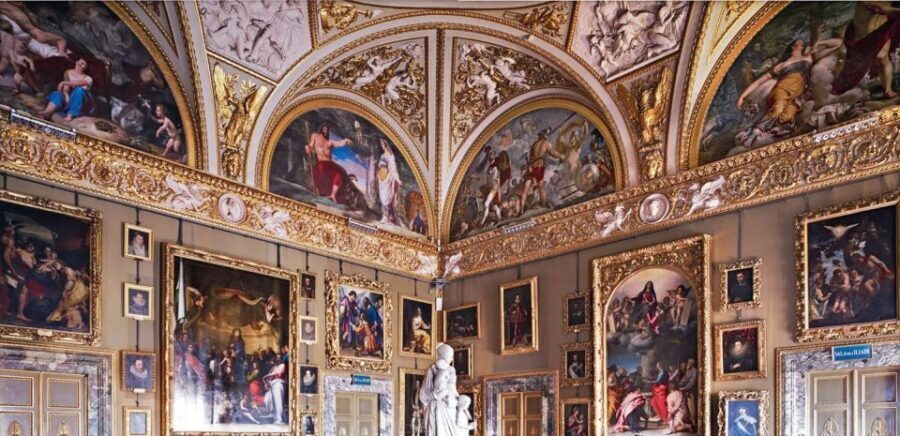
Uffizi can be overwhelming if you walk in cold. Not because the museum is bad, but because you’re facing a firehose of masterpieces in rooms that don’t slow down for anyone.
This tour helps you breathe. With a small group capped at 9 people, you’re not pressed into shoulder-to-shoulder movement. You’re also more likely to hear explanations clearly and keep up with the guide’s path through the galleries.
The best moments in a tour like this usually come from the exchange. When you can ask a question and get a direct answer in plain English, you start noticing details you would otherwise skim past. That’s also why guides like Gianna and Martina stand out in the feedback: they’re praised for making the experience feel personal, kind, and full of real insight, not just facts.
If you get nervous in museums, this format is a relief. You’ll have structure, a plan, and permission to ask things that would otherwise stay stuck in your head.
Audio Guide vs. Live Guide: What to Expect Inside the Rooms
The tour includes a live, English professional guide. That’s the main experience. If your group is more than 6, you’ll also get an audio guide for added support.
Practically, that means you can expect a guided pace and clear points of focus. It also means you’re not forced to rely on your own interpretation the whole time. In a museum full of busy visual detail, having both live guidance and audio support can help you keep your place and avoid the frustration of walking into a room and thinking, now what?
Price and Value: Is $121.21 Worth It for 2.5 Hours?
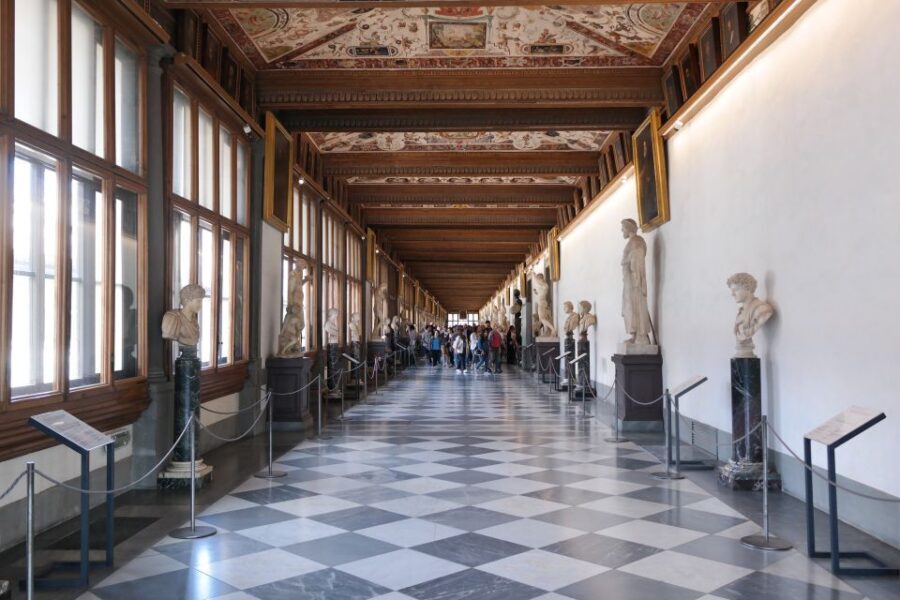
At $121.21 per person for about 2.5 hours, you’re paying for three things at once: skip-the-line entry, a live expert guide, and a small-group learning format. If your goal is to get more meaning out of the Uffizi than you can on your own, that pricing often makes sense.
If you’re the type who enjoys self-guided museum wandering, you might feel the price is high. But if you want the guide to translate what’s happening in the paintings and connect it to Florence and the Medici story, you’re essentially buying time and clarity.
Also, skip-the-line is not just about convenience. It protects your energy. You start the experience already in “learning mode” instead of being tired from waiting. In a city like Florence, that kind of time protection can be a big part of the value.
Accessibility at the Uffizi: What You Should Know
This tour is listed as wheelchair accessible. If you use a wheelchair, that’s a good sign for a smoother visit. Still, Uffizi rooms can have their own navigation challenges, so it’s wise to plan for slower movement and allow extra time for entering rooms and watching where you’re going.
The small group size can be a plus here too, because it’s easier to manage movement when the group is smaller rather than huge.
When the First Sunday of the Month Turns Into a Wild Card
On the first Sunday of each month, entry is free. The catch is important: tickets can’t be reserved ahead of time, so entry is not guaranteed.
If you’re traveling around that date, don’t treat the day like a sure thing. You might arrive ready for free entry and still need to adjust your expectations based on what’s available on site. A guided tour can still be a smart choice because you’re paying for structure, but the free-day policy changes the reliability of entry in general.
Who This Tour Fits Best (And Who Might Skip It)
This tour is a great match if you:
- love Renaissance art and want context tied to Florence and the Medici family
- want an expert guide to point out what to look for in big-name works like Botticelli, Leonardo, and Giotto
- prefer small group interaction over feeling anonymous in a giant crowd
- would rather learn efficiently in 2.5 hours than spend a whole day trying to figure it out yourself
You might choose something else if you:
- want total freedom to move at your own pace without guided stops
- need a very long museum session and don’t want a timed format
- are mainly collecting “must-see” photos and don’t care about interpretation
Should You Book the Uffizi Gallery Master Class Skip-the-Line Tour?
I’d book it if you want to feel like you understood the Uffizi, not just visited it. The combination of skip-the-line access, an English live guide, and a small group that supports questions makes this a strong choice for first-timers and art lovers alike.
It’s also a good value for people who don’t want to guess their way through symbolism and patronage. When the guide explains how Florence became the setting for this Renaissance work, the masterpieces land with more weight.
The only time I’d hesitate is if you’re traveling on the first Sunday of the month and your plan depends on guaranteed free entry. If that’s you, plan with flexibility.
FAQ
How long is the Uffizi Gallery Master Class tour?
The tour lasts 2.5 hours.
Where do we meet for the tour?
You meet in front of Door 1 at the Uffizi Gallery, next to the Petrarca statue. The tour ends back at the same meeting point.
What is included in the tour price?
The tour includes skip-the-line entrance, a live English professional tour guide, and a small group format (up to 9 participants). If your group is more than 6 people, you’ll also receive an audio guide.
How big is the group?
The group is limited to a maximum of 9 participants.
Is the tour wheelchair accessible?
Yes, the tour is listed as wheelchair accessible.
What should I know about the first Sunday of the month?
On the first Sunday of each month, entrance is free of charge, but tickets can’t be reserved ahead of time, so entry is not guaranteed.