REVIEW · FLORENCE
Uffizi Gallery private tour with skip the line ticket
Book on Viator →Operated by Ciao Florence Tours Srl · Bookable on Viator
Skip-the-line beats the Uffizi crush. This private guided tour is built for first-timers who want to see the Uffizi’s core masterpieces without feeling lost, plus it includes a skip-the-line ticket for easier entry. I like that the guide can set the pace to your group’s interests, not the other way around.
What I really love is the structure: you’re guided through key works in a chronological flow, so the Renaissance doesn’t feel like a blur of names and dates. I also like that the guide is with you for the whole stretch, so you can ask questions instead of just staring at labels.
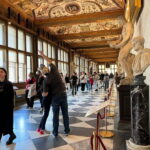
One possible drawback to plan for: a museum this crowded can make it hard to slow down and actually look for yourself. If you’re the type who wants time to stand close and study, say so early and ask the guide to pause.
In This Review
- Key things to know before you go
- Why this Uffizi private tour feels faster than the usual line
- Meeting at Piazzale degli Uffizi: the small details that make it smooth
- The 2-hour game plan: a chronological route that keeps you oriented
- Stop by stop: what you’ll see and why it matters
- Early Renaissance foundations: from Gothic color to first breakthroughs
- A turning point toward depth: battle scenes and experimenting with space
- Botticelli and the big-name era: where the tour slows for the masterpieces
- The heavyweights in three giant halls: Raphael, Titian, and Caravaggio
- The value question: $189.27 per person and what you get for it
- The guide matters: how to get the pacing you want
- Headsets aren’t included: plan for quieter listening in loud rooms
- Who should book this Uffizi private tour?
- Should you book this Uffizi private tour?
- FAQ
- How long is the Uffizi private tour with skip-the-line ticket?
- Where do we meet for the tour?
- Is the skip-the-line ticket included?
- Is this tour private or shared?
- What language is the guide?
- Do I need headsets?
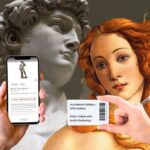
- Is the ticket mobile-friendly?
- What if the museum can’t confirm my requested departure time?
- Is the tour refundable if I cancel?
- Is this tour suitable for most people?
Key things to know before you go
- Skip-the-line entry included so you spend less time queueing at the door
- Private, only your group with an English-speaking guide
- Mobile ticket makes entry simpler on the day
- Chronological route from the early Renaissance through later masters
- You can ask questions throughout, and the pace is meant to match your group
Why this Uffizi private tour feels faster than the usual line
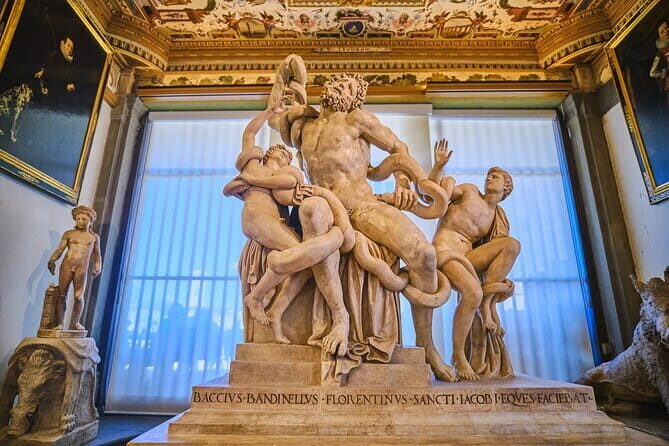
The Uffizi isn’t short on masterpieces, but it can be short on breathing room. This tour is designed around a simple idea: when crowds slow you down, you miss the art. By arriving with a skip-the-line ticket, you get through the entry process more smoothly and can spend your limited museum time where it counts—inside.
The other speed factor is the guide. A good guide won’t just recite facts; they help you prioritize. In a museum that covers centuries, that matters. Instead of trying to build your own route on the spot (while people stream past you), you follow someone who already knows what to hit and what connects one period to the next.
Other skip-the-line Uffizi tickets we've reviewed in Florence



Meeting at Piazzale degli Uffizi: the small details that make it smooth
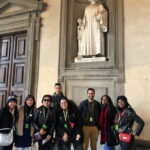
Meet at Piazzale degli Uffizi, 2059, 50122 Firenze FI, Italy. The meeting point is right where you want to be—out front—so you’re not wandering the streets while your start time slips away.
You’ll meet your guide holding a sign with your name. That detail sounds minor, but it saves the usual first-10-minutes stress: scanning faces, checking confirmations, and trying to decode who is with which group. It’s also why arriving a bit early helps. You can get your bearings, then step right into the tour.
The tour ends back at the meeting point, so you don’t have to figure out a second “where do we go now?” problem after you’re done.
The 2-hour game plan: a chronological route that keeps you oriented
Expect about 2 hours (approx.). That length is long enough to see real highlights, but short enough that you won’t feel like you’ve been inside forever. The secret is the flow: you move chronologically, starting around the Renaissance’s earlier roots and moving forward through major stylistic shifts.
Why that helps: the Uffizi is full of “wow” moments, but without context they can feel random. A chronological guide route turns those moments into a story. You start to see how artists changed their approach—composition, space, figures, symbolism—decade by decade.
Also, this is a private tour, so you’re not getting dragged at someone else’s pace or forced into a rigid group rhythm.
Stop by stop: what you’ll see and why it matters
Early Renaissance foundations: from Gothic color to first breakthroughs
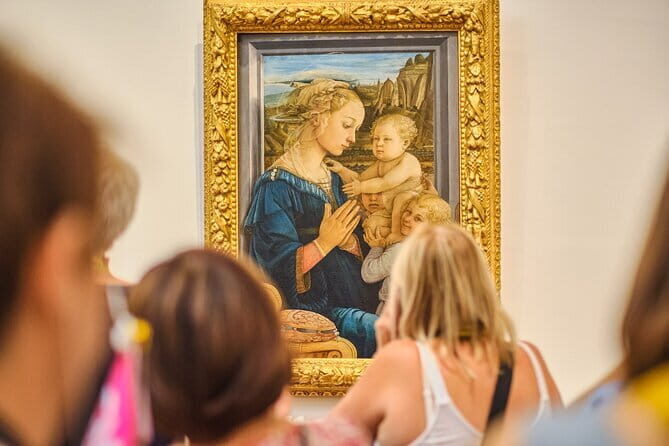
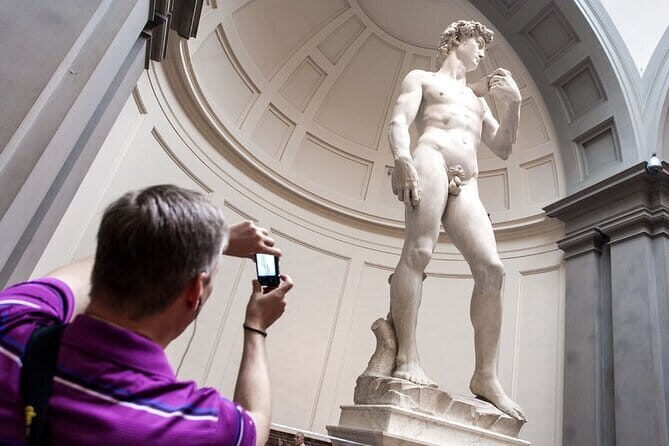
Your tour begins at the galleries and moves into the collection with a guided, period-by-period approach. You’ll start with the “birth of the Renaissance,” including works like Madonna and the Child with bright colors and golden accents.
This is the phase where art looks almost like a new language. Faces are stylized. Scenes feel symbolic. Then the story gets more interesting with painters like Giotto, often highlighted as an artist who broke barriers by bringing more three-dimensional presence into painted space and figures.
You’ll also hit the world of international gothic—a style shift where painting begins to tell a story more clearly, instead of just presenting figures. One example your guide focuses on is Adoration of the Magi by Gentile da Fabriano. It’s a great anchor work because it shows how narrative and detail can expand while the overall look evolves.
Practical note: in the early rooms, crowds can bunch near the most famous pieces. Your guide can help you avoid hovering in the wrong spot, but you’ll still want to be ready for tight viewing conditions.
Other private Uffizi tours in Florence



A turning point toward depth: battle scenes and experimenting with space
As you move forward, the guide takes you through major shifts in style, including works that show artists experimenting more with three-dimensional space and more natural presence in figures.
You’ll see Battle of San Romano, a vivid painting that tells a story of a battle between Siena and Florence in 1432. This kind of work is perfect for a guided tour because it’s not just beautiful—it’s loaded with context: why the subject mattered, what changed in artistic style, and how politics and culture can shape what ends up on canvas.
Then the tour continues with works like Madonna with Child and Two Angels by Filippo Lippi and Dukes of Urbino by Piero della Francesca. These are strong “transition” choices. They help you notice how idealized human features and composed realism begin to influence later giants, including names like Leonardo da Vinci and Raphael.
If you like art for the craftsmanship, this section is a good place to ask questions. The guide’s explanations can connect technique to the final look, not just the date on the wall.
Botticelli and the big-name era: where the tour slows for the masterpieces
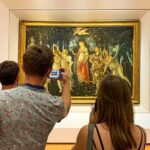
Later in the tour, you’ll reach the era of Sandro Botticelli, where the museum’s most famous emotional imagery is front and center. Plan on spending extra attention here. The guide gives vivid descriptions of Botticelli’s major works, including Primavera and Birth of Venus.
Why this stop feels special: these paintings are famous for a reason, but they can also feel overwhelming when you’re trying to read symbolism while people press in around you. A guide can help you focus your eyes—what to notice first, what to track across the scene, and how the visual storytelling works.
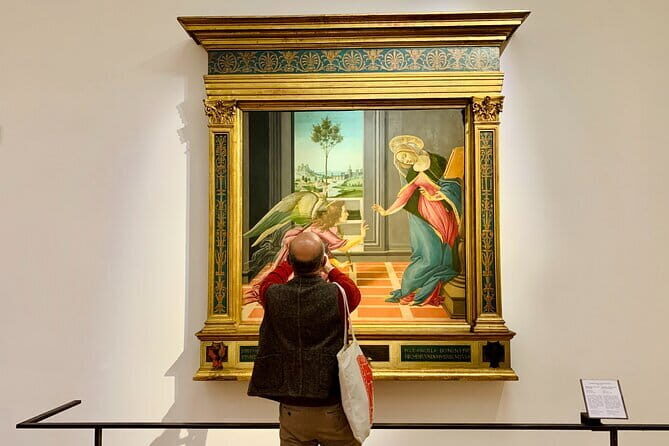
From there, you continue through the highlights, including major stops connected to Michelangelo and Leonardo. You’ll spend time at Michelangelo’s Rondo Tondi, and you’ll also see Leonardo’s Annunciation and Baptism of Christ.
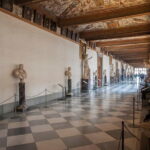
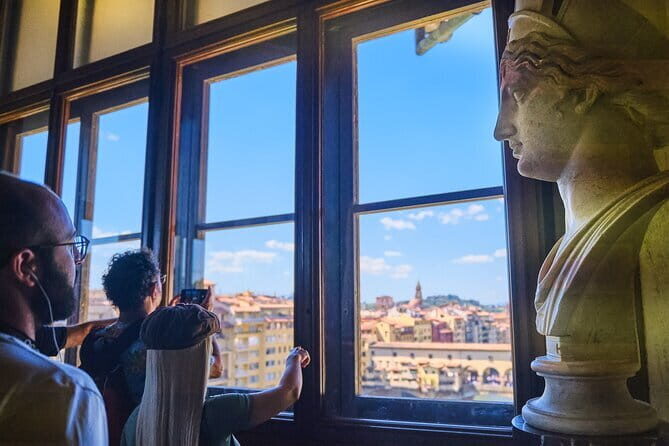
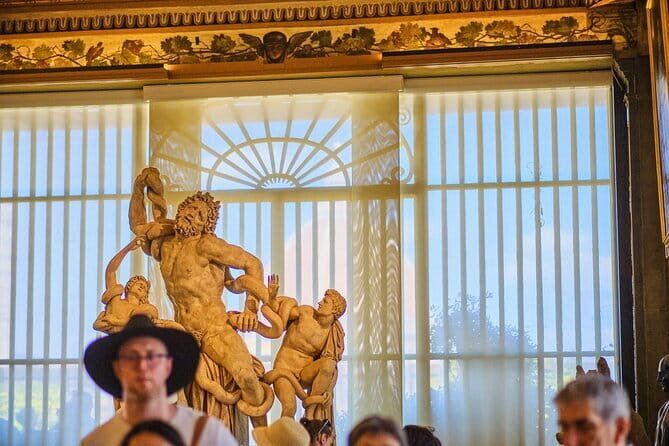
One extra detail that’s genuinely enjoyable: along the way, you get views of Florence from the tall windows in the halls. They’re a nice break from the press of faces and paint surfaces, and it helps you remember these artists once looked at the same city—just from a different century.
The heavyweights in three giant halls: Raphael, Titian, and Caravaggio
Near the end, the tour moves through some of the most impressive “name-brand” rooms—three giant halls featuring works by Raphael, Titan (Titian), and Caravaggio.
This part of the Uffizi can feel like a highlight overload, which is where having a guide really helps. Instead of sprinting from room to room, you get a guided thread through the styles and personal stories that shaped each artist’s approach.
This is also a good time to ask your questions. Caravaggio especially tends to generate curiosity because of his intense approach to light and drama. A guide can point out what to look for so you’re not just thinking, I’ve seen this before in books, but you’re actually seeing it fresh.
Then, after the guided portion wraps around the 2-hour mark, you’re free to continue exploring on your own.
The value question: $189.27 per person and what you get for it
At $189.27 per person, this is not a budget-only option. So I’d ask: what are you buying?
You’re buying two things that are hard to replace with DIY touring:
1) A private, English-speaking guide for about 2 hours
2) A skip-the-line ticket that helps you start faster
That combination matters in the Uffizi because time is your limiting factor. A DIY plan can work if you’re laser-focused and comfortable moving quickly through crowds. If you’re not, the guide becomes the time-saving tool.
Also, the “private” part is key. Even if you’d rather see museums at your own pace, the Uffizi’s crowd flow tends to shove you into the same bottlenecks anyway. With a private guide, you can ask for pacing that fits your group and you can pivot when someone wants to linger—especially in rooms with Botticelli or Leonardo where the temptation to stare is real.
Is it worth it? If you’re visiting for the first time, want the big names plus the connections between periods, and you value not waiting in line, it’s a strong way to spend your Florence museum time.
The guide matters: how to get the pacing you want
The tour experience depends partly on your guide’s style. I’ve seen examples of guides who were praised for staying flexible and full of enthusiasm, including people with names like Giacomo, Alessandro, Tiziana, Carmen, and Francesca. There are also cases where the guide’s pacing felt too fast and didn’t leave enough time to look closely.
So here’s the practical move: at the start, tell your guide how you want the visit to feel. If you want a moment to stand back and really see the brushwork, say that. If you prefer deeper explanations on fewer artworks, ask for that too.
Because the tour is private, your guide can adjust more easily than in a fixed group. You’re not stuck just listening while people drift forward.
Headsets aren’t included: plan for quieter listening in loud rooms

Headsets are not included. In a museum, that means you’re relying on your own hearing and your guide’s volume and positioning. In crowded rooms, sound can bounce around and make details harder to catch.
Again, private touring helps. If your guide knows you’re listening from close range, they can keep you in the right spot. If you’re sensitive to noise, this is another reason to start with a clear “we want to be able to hear and look” request.
Who should book this Uffizi private tour?
This works especially well if you:
- are a first-time Uffizi visitor and want a guided route through the most important works
- prefer English commentary without the stress of planning a route
- want a private experience where you can ask questions and control your pace a bit
- love art history connections, like how early Renaissance experimentation leads to later masters
You might want to think twice if you:
- want a long, slow museum crawl with lots of unstructured wandering
- expect the guide to do all the heavy “looking for you” work—this is still a museum where you’ll need time to see the works yourself
Should you book this Uffizi private tour?
If your main goal is to get oriented fast, see the Uffizi’s biggest masterpieces, and avoid time lost to lines, I think this booking makes sense. The skip-the-line ticket and the private guide are doing real work for you, especially with a chronological route that keeps the museum from turning into a blur.
My only caution is pacing. If you’re the type who needs time to stare at paintings (not just listen), speak up early and ask for pause moments. Do that, and you’ll get the best of both worlds: expert guidance and actual looking time.
Overall: this is a smart choice for first-timers and art lovers who want value in time, not just value in ticket price.
FAQ
How long is the Uffizi private tour with skip-the-line ticket?
It’s about 2 hours (approx.).
Where do we meet for the tour?
The meeting point is Piazzale degli Uffizi, 2059, 50122 Firenze FI, Italy.
Is the skip-the-line ticket included?
Yes. A Uffizi Gallery skip the line ticket is included.
Is this tour private or shared?
This is a private tour/activity. Only your group participates.
What language is the guide?
The tour is offered in English.
Do I need headsets?
No. Headsets are not included.
Is the ticket mobile-friendly?
Yes. The tour uses a mobile ticket.
What if the museum can’t confirm my requested departure time?
Departure time depends on museum availability. If your selected time can’t be confirmed, you’ll be contacted to agree on an alternative departure time.
Is the tour refundable if I cancel?
No. The experience is non-refundable and cannot be changed for any reason.
Is this tour suitable for most people?
The info says most travelers can participate.
If you tell me your travel month and whether you care more about Botticelli/Leonardo or Caravaggio/Raphael, I can suggest a good starting strategy for how to pace your own “looking time” during the 2 hours.