REVIEW · FLORENCE
Private Tour of Uffizi and Accademia Gallery with David
Book on Viator →Operated by City Florence Tours · Bookable on Viator
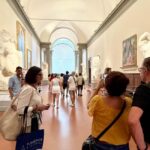
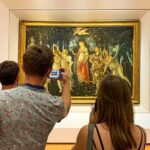
Florence’s art hits come fast. This private tour strings together the Uffizi and the Accademia in about three hours, with skip-the-line style access and a real guide to help you see what matters. I like the way it spotlights the biggest names—Botticelli’s Birth of Venus and Spring, Caravaggio’s Medusa, and Michelangelo’s Tondo Doni—without turning your day into a frantic scavenger hunt.
I also like that you’re not stuck listening to loud crowds. With a licensed private guide reserved for your group, you can ask questions, slow down for details, and get answers that actually connect the artworks to Florence and the Renaissance.
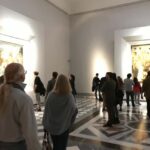
One thing to consider: even with priority entry, these museums are still popular, so you’ll be moving in a crowd. Also, it’s a compact visit—Uffizi is about 1.5 to 2 hours and Accademia about 1 hour—so if you want to linger for long stretches in every room, you may feel slightly rushed.
In This Review
- Quick hits
- The big idea: a Florence museum route that makes sense
- Uffizi first: how you walk through 800 years of art in one session
- Uffizi masterpieces you’ll prioritize (and why each one matters)
- Accademia Gallery next: the moment David stops being a statue
- Priority entrance at the Accademia: fast start, but not magic
- Guide impact: why names keep showing up
- Price and value: what $272.21 buys you (and what to compare)
- What to do before you go: practical prep that prevents headaches
- Bring the right ID for Uffizi
- Wear shoes built for museum walking
- Plan your meeting and ending point
- Bring water if you’re going during heat
- Who this tour suits best (and who might want another plan)
- Should you book this Private Uffizi & Accademia Tour with David?
- FAQ
- How long is the Uffizi and Accademia private tour?
- Is this tour offered in English?
- Are the museum tickets included?
- Do I need to bring ID for the Uffizi?
- Where do we meet, and where does the tour end?
- Is there free cancellation?
Quick hits
- Two museums, one tight route: Uffizi first, then Accademia, with a logical flow through Renaissance art.
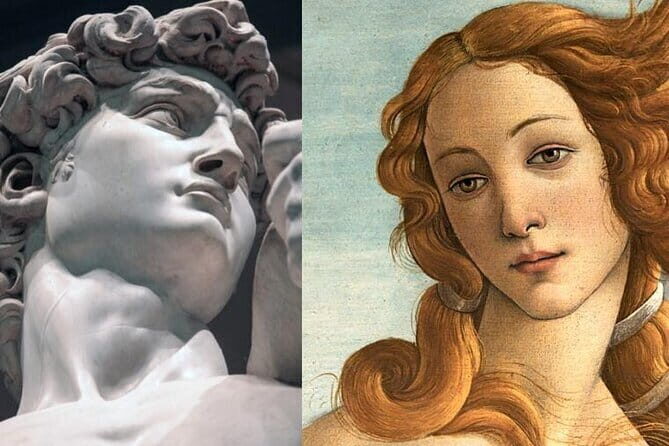
- Icon art, up close and explained: Botticelli, Caravaggio, and Michelangelo show up more than once in the story.
- Priority entrance at the Accademia: helps you start sooner where the clock matters most.
- Michelangelo’s David is the anchor: plus rooms devoted to sculpture and even musical instruments.
- Private guide pace: your group sets the tempo, and you can ask questions the whole way.
- It ends at Accademia: easy to keep going with your day right after the tour.
The big idea: a Florence museum route that makes sense
Florence’s top museums can feel like a maze. This tour’s real value is that it gives you a plan for what to see and in what order, instead of you guessing where the masterpieces are hiding. You’re guided through the Uffizi across the story of art from the Middle Ages into the Italian Renaissance, then you move straight to the Accademia for Michelangelo’s sculpture-focused world.
I also like the pacing choices. You get enough time in each place to feel satisfied, but not so much that you’re worn out at the wrong museum. In a city where “one more room” can swallow your whole afternoon, that’s a practical win.
Other private Uffizi tours in Florence

Uffizi first: how you walk through 800 years of art in one session
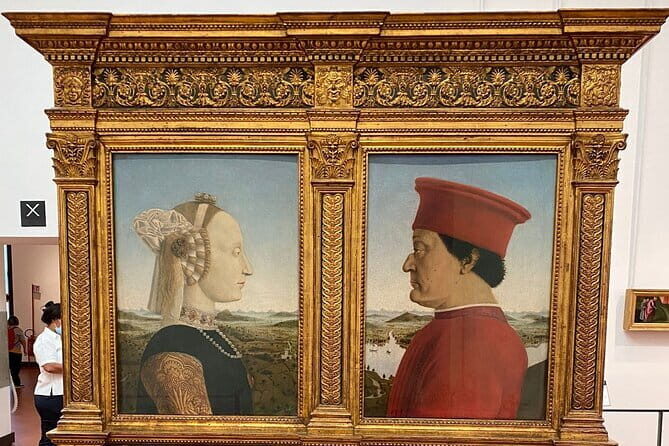
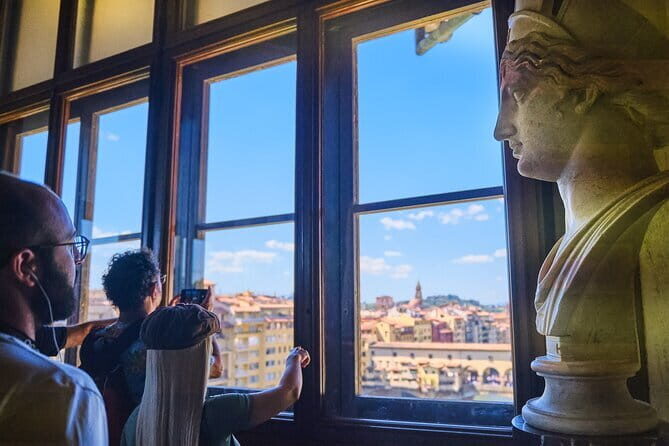
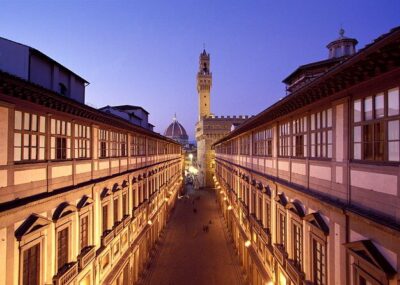
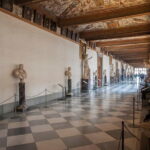
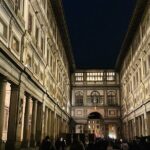
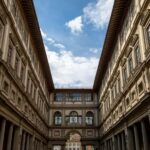
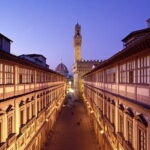
Your tour starts at the Uffizi (meeting point is Via dei Castellani, 14, 50122 Firenze). From there, you’ll spend about 1.5 to 2 hours with a licensed private guide, moving through key sections that trace how Italian art changed over time. This is not a random highlights tour. The guide’s job is to connect styles, themes, and the people behind the work, so you don’t just stare—you understand what you’re seeing.
At the Uffizi, you’ll get your bearings fast. That matters because the Uffizi is big, and if you’re wandering on your own you can easily miss the pieces that define the museum. The guide helps you focus on the “main story beats,” then positions you so the best viewing moments are actually workable during busy hours.
Practical note: the Uffizi requires ID that matches the name on your reservation, and you’ll need that at entry. If names don’t match exactly, you can be refused entry—so don’t treat that like a minor detail.
Uffizi masterpieces you’ll prioritize (and why each one matters)
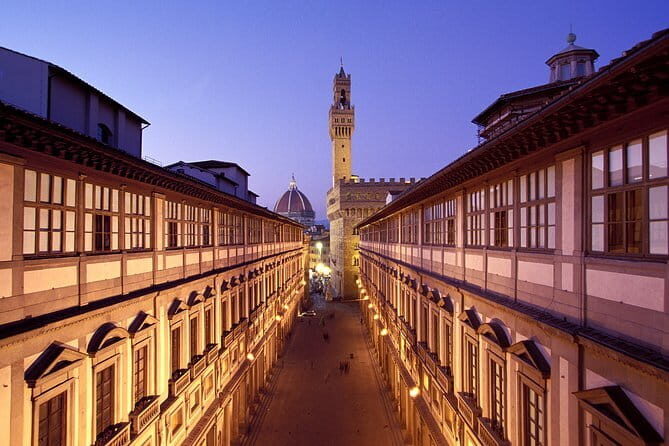
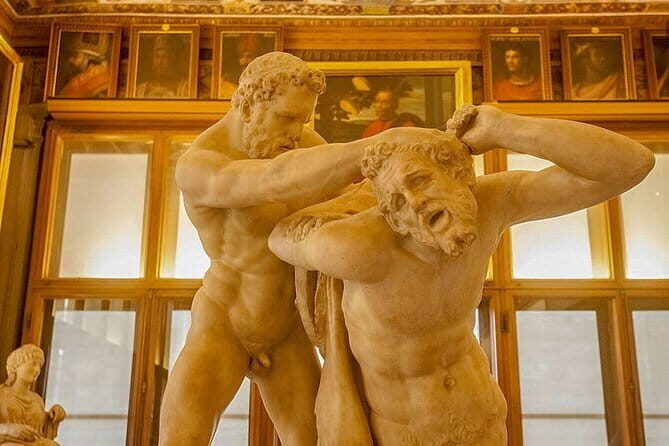
The Uffizi stop is built around the works most people come for, but the tour’s smart because it doesn’t stop at spotting famous titles. You’re guided so the art feels like part of a bigger argument about Renaissance ambition and technique.
Here are the Uffizi highlights you should expect to focus on:
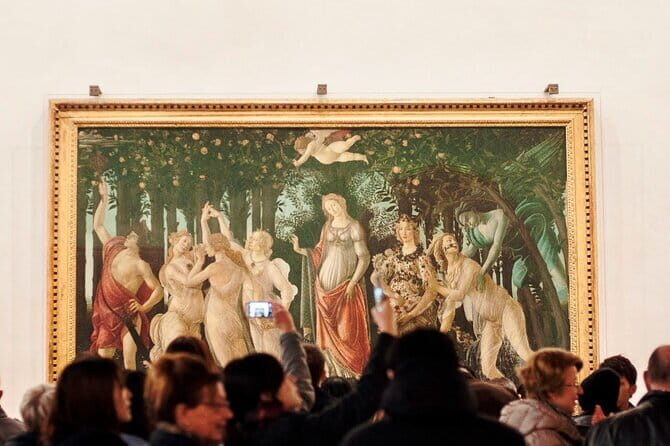
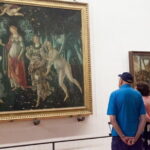
- Botticelli’s Birth of Venus and Spring: these paintings are the headline acts, and the guide helps you understand what makes them tick beyond their popularity.
- Caravaggio’s Medusa: a strong tonal shift from the more idealized Renaissance look, and a great reminder that Florence wasn’t one-style-fits-all.
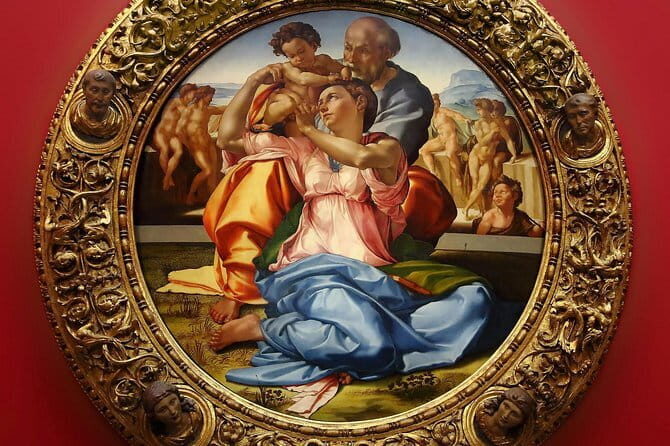
- Michelangelo’s Tondo Doni: you’ll see it as part of Michelangelo’s broader artistic path, and it’s especially interesting because it’s noted as the only painting made on wood by Michelangelo.
If you care about technique—how artists built depth, used symbolism, or shifted styles—this is where your guide pays off. The guide can point out details that are easy to miss when you’re doing a quick self-guided pass. It’s also a good stop if you’ve got mixed interests in the group, because the range (Botticelli to Caravaggio to Michelangelo) helps everyone find a hook.
One drawback with the Uffizi portion: because it’s guided and time-boxed, you may not see every room. That’s the trade. This tour is designed for “best-of with context,” not museum wandering.
Accademia Gallery next: the moment David stops being a statue
Then you move to the Accademia Gallery, where the tour shifts from painting to sculpture. You’ll spend about 1 hour there with your guide, and this is where the experience gets emotionally loud—even if you’re not the type who gets star-struck.
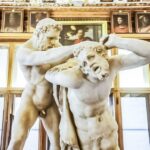
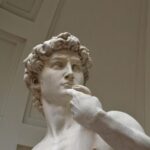
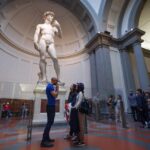
Michelangelo’s David is the anchor. The sculpture is described as a marble masterpiece by Michelangelo Buonarroti, made between 1501 and the beginning of 1504, with a height of 520 cm. Seeing David is one thing. Understanding what you’re looking at—scale, intention, and the Renaissance meaning behind the pose—is another, and that’s what the guide brings to the table.
The Accademia is also more varied than people expect. You’ll cover:
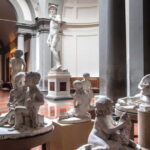
- the museum’s sculpture focus, including the sculpted spaces tied to Michelangelo’s work
- the Sala dei Prigioni (Prisoners’ Room), with sculptures designed for Pope Julius II
- the museum of musical instruments
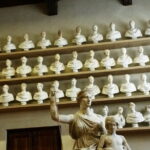
- the largest collection of paintings with a golden background
This mix matters because it keeps you from walking through David and calling it a day. The guide helps you retrace where Michelangelo’s influence lives throughout the building, so the museum becomes more than a one-piece stop.
Priority entrance at the Accademia: fast start, but not magic

You get priority entrance to the Accademia as part of the included features. In practice, that usually means less dead time standing around while other people shuffle forward. Since David is the main target, shaving off waiting time is real value.
Still, a quick reality check: the Accademia is busy. Priority entrance can reduce delays, but it doesn’t turn the museum into a quiet chapel. If your goal is total peace and elbow-room, you’ll need to manage expectations.
A small heads-up from the nature of the experience: you’ll be on your feet a good amount. One review note that came up in feedback was that you should plan for standing and walking for roughly three hours. So if you have mobility issues, it’s worth thinking twice—or at least bring good shoes and expect frequent pauses only if your group can.
Other Uffizi + Accademia (David) tours in Florence

Guide impact: why names keep showing up
This is a private tour, so the guide has a big effect on how the day feels. In feedback, several guides earned strong praise by name, including Manuela, Laura, Ilaria, Francesca, Pam, Marta, and Mary. The common thread is that they’re animated, easy to follow, and good at shaping the route so you don’t get lost in the museum size.
What I like about this kind of guide-led private structure is that it gives you permission to ask questions. If something looks strange—like a detail in a painting or an angle on a sculpture—you can ask right then and move on with clarity.
Also, you should expect guides to explain not just what the artwork is, but how it fits into Florence’s bigger story during the Renaissance. That’s the difference between seeing a masterpiece and actually understanding why it changed art.
Price and value: what $272.21 buys you (and what to compare)
The price is listed at $272.21 per person for about 3 hours. That sounds steep until you break down what’s included and what you avoid.
Here’s what you’re paying for:
- a private guide reserved for your group
- included entrance ticket to Uffizi (noted as €29.00)
- entrance ticket to the Accademia
- priority entrance to the Accademia
- an efficient route between two major museums, ending at the Accademia
What you’re not paying for: private transport, tips, and food.
For value, the key comparison isn’t only “private vs. group.” It’s “guided meaning vs. self-guided guessing.” If you’re short on time in Florence—or you know you’ll get overwhelmed in the galleries—a guided private route can actually be cheaper than spending hours trying to DIY your way to the key works.
One more value point: you’re not just buying access. You’re buying time control. The guide helps you avoid the trap of arriving, waiting, and then losing your best window to queues.
What to do before you go: practical prep that prevents headaches
This tour runs on ticket rules and tight timing, so prep matters.
Bring the right ID for Uffizi
Each traveler must present a valid passport or ID that matches the name provided at booking. Make sure your reservation has your full name exactly as it appears on your ID.
Wear shoes built for museum walking
You’re on your feet through two museums. Even when you stop, the pace is still museum pace. Comfortable walking shoes are not optional here.
Plan your meeting and ending point
- Start at Via dei Castellani, 14, 50122 Firenze
- The tour ends at the Galleria dell’Accademia di Firenze, on Via Ricasoli, 58/60
Ending at Accademia is handy. You can pivot directly to nearby streets for gelato or a late lunch rather than trekking across town again.
Bring water if you’re going during heat
Food and beverages are not included. Florence can be hot, and even a short museum sprint can feel long if you forget hydration.
Who this tour suits best (and who might want another plan)
This private Uffizi and Accademia tour is best for you if:
- you want the top Renaissance hits without wasting half your afternoon figuring out where to go
- you prefer questions and explanations over silent wandering
- you’re traveling with a group that needs structure (kids, mixed interests, first-timers)
It might be less ideal if:
- you want to spend many hours in the Uffizi alone, room by room
- you hate crowds and think priority entrance guarantees empty galleries
- you need long seated breaks or a very slow pace
Also, if your goal is to see everything, this isn’t built for that. It’s built for seeing the most important masterpieces efficiently, with context.
Should you book this Private Uffizi & Accademia Tour with David?
I’d book it if you’re coming to Florence for a first visit and you want the museum day to feel organized, not stressful. The pairing of Uffizi plus Accademia is smart because it connects painting and sculpture within the Renaissance story, and you get to focus on the big names—Botticelli, Caravaggio, Michelangelo—without losing your energy to confusion.
Skip this only if you’re determined to browse every corner on your own, or if you’re sensitive to crowded indoor spaces. For most people, though, the private guide + priority access combo is exactly what turns these two huge museums into a satisfying, memorable afternoon.
If you do book: double-check your ID names for Uffizi, wear comfy shoes, and go in ready to ask questions. That’s where the tour really pays off.
FAQ
How long is the Uffizi and Accademia private tour?
The tour lasts about 3 hours, with around 1.5 to 2 hours at the Uffizi and about 1 hour at the Accademia.
Is this tour offered in English?
Yes. The tour is offered in English.
Are the museum tickets included?
Yes. The Uffizi ticket is included, and the Accademia entrance ticket is included as well. Priority entrance to the Accademia is also included.
Do I need to bring ID for the Uffizi?
Yes. You must present a valid passport or ID that matches the name provided at booking for entry to the Uffizi.
Where do we meet, and where does the tour end?
The meeting point is Via dei Castellani, 14, 50122 Firenze. The tour ends at the Galleria dell’Accademia di Firenze (Via Ricasoli, 58/60).
Is there free cancellation?
Yes. You can cancel up to 24 hours in advance for a full refund. If you cancel less than 24 hours before the start time, the amount paid is not refunded.